Skip to content
Facing the Texas legal system can be a terrifying and isolating experience, especially when your family's future hangs in the balance. If you're a parent with a past felony arrest, the fear that this record could be used against you in a CPS investigation or custody battle is overwhelming. The question, "can you get a felony expunged in Texas?" isn't just a legal curiosity—it's a desperate search for hope and a path to protect your children. While the answer is often yes, it's generally only possible if the case never led to a final conviction. This legal process, called an expunction, is a powerful tool designed to give families like yours a true fresh start by completely destroying the record, wiping the slate clean as if it never happened.
The Weight of a Felony and the Path to a Clean Slate

A felony record carries an immense, almost physical weight. It creates barriers that can feel permanent, casting a long shadow over your life long after a case is closed. For parents here in Texas, this burden is especially heavy. It can complicate everything from child custody disputes and CPS investigations to your basic ability to provide the stable home your children deserve. The fear that one past mistake will forever define your family's future is a heavy one, indeed.
Let's put this in real-world terms. Imagine a mother, Sarah, who was arrested for felony theft years ago after a desperate situation. The charges were ultimately dismissed, but the arrest record remains. Now, she's involved in a difficult CPS case, and the other party is using that old arrest to paint her as an unfit parent, despite her having turned her life around completely. That public record, even without a conviction, becomes a weapon used against her and her children. The past holds their future hostage.
Your Right to a Second Chance
Thankfully, Texas law recognizes that good people deserve a second chance. The legal process of expunction was created for situations just like Sarah's—to give parents who were not convicted of a crime the ability to completely clear their name and move forward without a record holding them back. An expunction isn't just about clearing a record; it's about reclaiming your life, protecting your family, and ensuring your past doesn't unfairly impact your children's future.
For many felony cases where charges were dropped or dismissed, Texas law allows for an expungement after a certain amount of time has passed. Typically, you have to wait three years from the date of the arrest. However, for more serious offenses like theft or burglary, that waiting period stretches to five years. This isn't just a theoretical possibility; official court data shows that 9,555 expungements were granted between September 2018 and February 2025. Thousands of Texans achieve this fresh start every year. You can get more insights on Texas expungement statistics and trends here.
An expunction doesn't just seal a record—it destroys it. This means you can legally deny the arrest and charge ever occurred on job applications, housing forms, and in most other circumstances, including family court.
This guide is designed to give you a clear, compassionate roadmap through the often-confusing Texas expunction laws. We understand the emotional and practical challenges you're facing, especially with CPS involved. Our goal is to empower you with the knowledge you need to pursue the clean slate your family deserves.
Understanding Expunction Versus Nondisclosure
When you're fighting to clear your name in Texas, you'll hear two legal terms tossed around a lot: expunction and nondisclosure. They both aim to give you a fresh start, but they get you there in vastly different ways. For a parent concerned about CPS or custody, understanding this difference is the first crucial step in figuring out if you can get a felony off your record for good.
Here’s a simple way to think about it: an expunction is the complete and total destruction of a record. It’s like taking a file, running it through a shredder, and then setting the pieces on fire. Legally speaking, the arrest and the charge simply cease to exist. A nondisclosure, on the other hand, is like taking that same file and locking it away in a high-security vault. The public can't get to it, but it isn't gone forever.
What Expunction Truly Means
An expunction is the absolute gold standard for clearing your record in Texas. When a judge signs an expunction order, it legally compels every government agency involved—from the local police department that made the arrest to the Texas Department of Public Safety—to physically destroy every single document and digital file related to your case.
This is an incredibly powerful legal tool for parents. Once your record is expunged, you can legally and honestly deny that the arrest ever happened. That means on job applications, housing forms, and most importantly, in family court proceedings, it's as if it never occurred. It wipes the slate completely clean.
How Nondisclosure Differs
An Order of Nondisclosure works by sealing your criminal record from public view. This means that private employers, landlords, and your nosy neighbors won't see the charge when they run a background check. However, the record itself is not destroyed. It remains accessible to:
- Law Enforcement Agencies: Police, prosecutors, and other criminal justice entities can still see the sealed record.
- Government Licensing Agencies: State boards that issue professional licenses (for nurses, teachers, lawyers, etc.) can often access these records.
- Certain Government Employers: Jobs in sensitive fields, especially those involving work with children or the elderly, may also have access. This can include CPS.
For a deeper dive into this alternative, you can learn more about how an Order of Nondisclosure works in Texas in our detailed guide.
An expunction permanently destroys the record, allowing you to deny the event ever happened. A nondisclosure seals it from public view but keeps it accessible to government and law enforcement agencies, including CPS.
To help clear things up, let's break down the key differences between these two powerful legal options.
Expunction vs. Nondisclosure Key Differences
| Feature | Expunction (Record Destruction) | Order of Nondisclosure (Record Sealing) |
|---|---|---|
| Record Status | Permanently destroyed and erased from all government records. | Sealed from public access but still exists for certain agencies. |
| Legal Denial | You can legally deny the arrest and charge ever occurred. | You cannot legally deny the arrest, but you don't have to disclose it. |
| Who Can See It? | No one. The record is gone. | Law enforcement, CPS, state licensing boards, and some government employers. |
| Typical Eligibility | Arrests that did not result in a conviction (e.g., dismissal, acquittal, case never filed). | Cases that resulted in a successfully completed deferred adjudication. |
| Outcome | True "clean slate." The incident is legally forgotten. | "Second chance." The incident is hidden from most public inquiries. |
Understanding this table is critical because eligibility for each path is worlds apart. Expunction is almost always reserved for cases that were resolved in your favor—meaning you were never convicted. This includes arrests where the prosecutor never filed charges, cases that got dismissed, or if you went to trial and were found not guilty.
On the flip side, nondisclosure is often the go-to remedy for folks who successfully completed a special kind of probation called "deferred adjudication." While this isn't technically a final conviction, the law treats it differently, making nondisclosure the right tool for the job instead of a full-blown expunction. The right path for you hinges entirely on the specific outcome of your felony case.
Checking Your Eligibility for Felony Expungement
The road to a clean slate starts with one simple question: do you actually qualify for an expunction? Figuring this out can feel like navigating a legal maze, but Texas law is very specific about who gets this powerful remedy. Your eligibility all comes down to how your felony case ended.
Not every arrest can be wiped away. The Texas Code of Criminal Procedure reserves expunction for cases where the justice system ultimately cleared you. Think of it less as an eraser for a conviction and more as a way to destroy the record of an accusation that never stuck.
The Primary Paths to Qualification
To have a felony expunged in Texas, your situation has to fit neatly into one of several strict categories. The most common routes are for cases that never led to a final conviction.
You're generally eligible for an expunction if:
- You were acquitted at trial. This is a clear-cut win. It means a judge or jury found you "not guilty" of the felony charge.
- You received a pardon based on actual innocence. This is rare, but if the governor issues a pardon that specifically says you were innocent, you're eligible.
- Your case was dismissed or never formally charged. For Texas families, this is the most common path to getting an arrest record destroyed.
That last category is where most people find their opportunity. If a prosecutor looked at your case and decided not to move forward, or if they dropped the charges later, you're on the right track. But you can't file the paperwork right away—there's a critical waiting period you have to respect.
Understanding Mandatory Waiting Periods
Even after a dismissal, you can’t rush to the courthouse. The law demands a "cooling off" period to make sure the statute of limitations has run out. This just means the state can't legally bring that same charge against you again in the future.
These waiting periods are non-negotiable and are set by law. Attempting to file your petition before the waiting period is over will result in an automatic denial by the court.
Let's imagine a parent was arrested for aggravated assault—a second-degree felony—after a misunderstanding during a heated argument. The prosecutor investigates, finds the evidence is flimsy, and dismisses the case. That's a huge relief, but the arrest still shows up on a background check, which could be a major problem in their ongoing CPS case. For this specific felony, they must wait three years from the date of the arrest before they can legally ask the court for an expunction. This waiting period is a vital part of the process that requires patience and precise timing.
The flowchart below breaks down the main decision points when you're figuring out whether an expunction or a nondisclosure is the right tool for your situation.
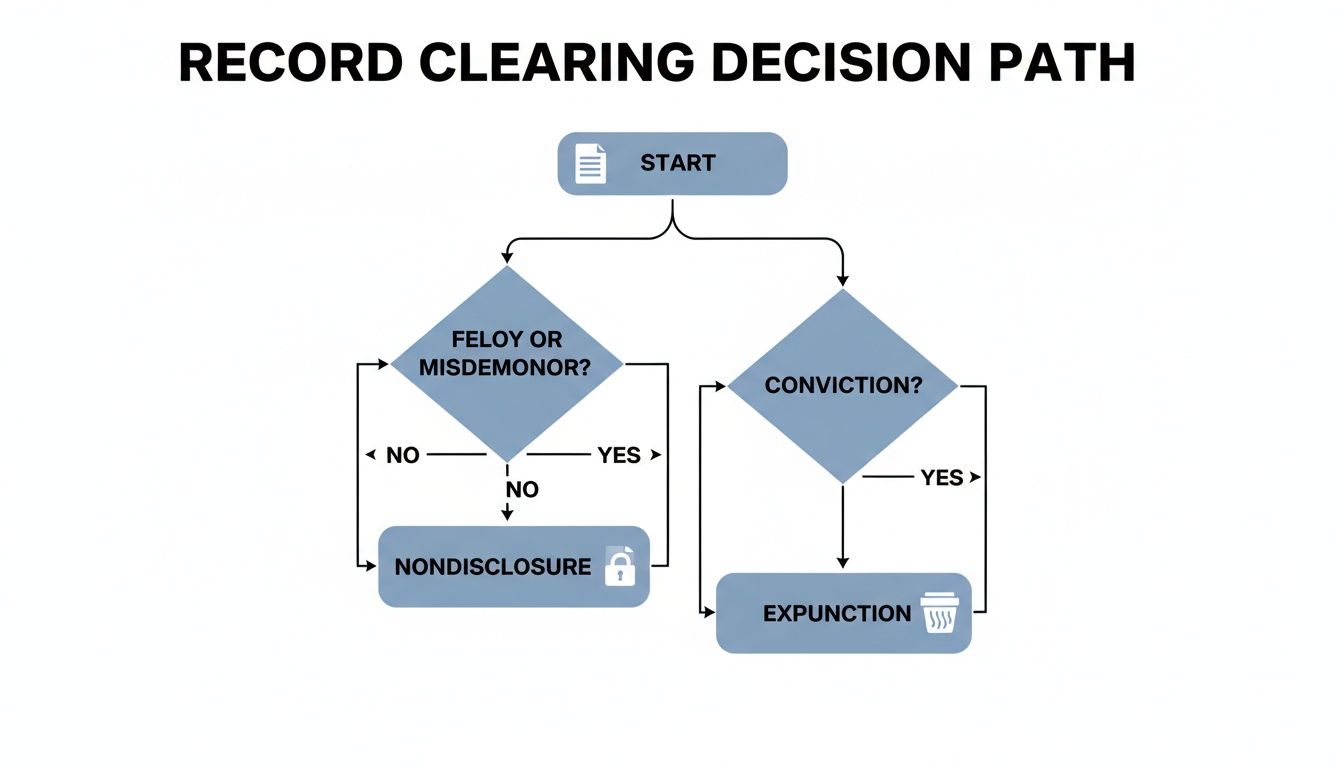
As the diagram shows, the outcome of your case—dismissal, acquittal, or deferred adjudication—is what determines which path is open to you.
Common Reasons for Ineligibility
Knowing who doesn't qualify is just as important as knowing who does. The single biggest reason people are denied an expunction is because their case ended with some form of conviction or community supervision.
You are generally not eligible for an expunction if:
- You were convicted of the felony, even if you only received probation.
- You pleaded guilty or "no contest" and were placed on deferred adjudication.
Deferred adjudication is a major source of confusion. It's a great outcome that lets you avoid a final conviction by successfully finishing probation, but the law doesn't treat it like a dismissal. If you completed deferred adjudication for a felony, you can't get an expunction. Your best option is likely an Order of Nondisclosure, which seals your record from the public instead of destroying it completely. Getting this first step right—determining your eligibility—is the foundation for the entire process.
Navigating the Felony Expungement Process Step-by-Step

So, you’ve confirmed that you’re likely eligible for a felony expungement. What now? The next phase is the legal process itself, and it’s important to understand this isn't just about filling out a simple form. You are actually filing a formal lawsuit against the State of Texas and all its agencies that hold your records.
This process demands precision and an unwavering attention to detail. Think of it like building something from a complicated blueprint. If you miss a single step or measure one angle incorrectly, the whole structure could be compromised. The same is true here—any mistake in drafting, filing, or serving your petition can lead to frustrating delays or even an outright denial from the judge.
Step 1: Gathering Your Documentation
Before a single word of your petition is written, you have to collect all the necessary paperwork. This is the foundation of your entire case. You'll need to track down every official record connected to the arrest you want to wipe clean.
This usually includes things like:
- The Offense Report: This is the initial report created by the police department that arrested you.
- Court Records: You'll need all documents from the court that handled your case, especially the official order of dismissal.
- Arrest Information: This includes the specific date you were arrested, the exact charge, and the case number assigned to you.
Hunting down all these documents can feel like a scavenger hunt at times, but they are absolutely essential. Without them, you can't properly identify every single agency that has a copy of your records, which is one of the most critical parts of the process. For parents navigating a CPS case, acting quickly to gather these documents is a crucial first step toward clearing your name.
Step 2: Drafting and Filing the Petition for Expunction
With your documents in hand, the real work begins: drafting a legal document called a Petition for Expunction. This is your formal request to the court, and Texas law is very strict about what it must contain. It needs to list your personal details, all the specifics about the arrest, and—most importantly—name every single government agency that has a record of it.
One of the most common and damaging mistakes people make is failing to list every single agency that holds a record. If an agency isn't named in the petition and properly served with the lawsuit, they are not legally required to destroy your record, even if the judge signs the order.
Once it's perfectly drafted, the petition has to be filed with the district court in the county where the arrest happened. This officially kicks off your lawsuit and gets the legal wheels turning.
Step 3: Serving Notice to All Agencies
After your petition is filed with the court, you are legally required to "serve" a copy of the lawsuit to every agency you listed. This is a formal notification process that lets them know you're taking legal action to clear your record.
The list of agencies is often much longer than people realize and can include:
- The arresting law enforcement agency (like the Houston Police Department or the Harris County Sheriff's Office).
- The District Attorney's office that was involved in the case.
- The District Clerk for that county.
- The Texas Department of Public Safety (DPS).
Properly serving these agencies is a procedural step you absolutely cannot skip. It guarantees they have a chance to respond and, more importantly, that they will be legally bound by the judge's final order.
Step 4: The Court Hearing and Final Order
The court will eventually set a hearing for your petition. In many cases, if the petition is drafted correctly and the state has no objections, the hearing is a straightforward affair. However, the prosecutor has every right to contest your expunction. This is where having an experienced attorney becomes invaluable, as they can argue on your behalf and present your case effectively to the judge.
If the judge agrees you meet all the legal requirements, they will sign an Order of Expunction. This is the powerful court command that instructs every agency you notified to find and destroy all records related to your arrest. But the process isn't quite over yet. The final step is to make sure every single one of those agencies actually receives and complies with the order. The entire journey can be quite a marathon, and you can learn more about how long an expungement might take in Texas in our detailed guide.
What to Do When Expungement Is Not an Option
Finding out you aren't eligible for an expunction can feel like a punch to the gut. It’s a moment that often brings a wave of disappointment and fear, especially when you're a parent just trying to build a stable life for your kids. The big question hits you: "What now? Is this record going to follow my family forever?"
Let me be clear: even if a conviction or deferred adjudication has slammed the door on completely destroying your record, you are not out of options. Texas law provides other powerful tools to help you move forward. While they might not incinerate the past like an expunction, they can place it securely under lock and key, giving you the breathing room your family needs to thrive. Hope is not lost; your path has just shifted.
Orders of Nondisclosure: Your Strongest Alternative
For many Texans with a felony on their record, the most realistic and powerful alternative is an Order of Nondisclosure. Think of it as the next best thing to an expunction. Instead of destroying your record, a nondisclosure legally seals it from the public’s view.
What does this mean for a parent in a CPS case? It means most private employers, landlords, and the general public won't see it during a standard background check. This is a game-changer for parents who have successfully completed deferred adjudication for a felony. While you can't get an expunction, a nondisclosure offers tremendous relief by limiting who sees your past. But it's important to know that not all felonies are eligible, and there are mandatory waiting periods.
Generally, you might be eligible to seal a felony record if:
- You successfully completed deferred adjudication community supervision.
- Your offense isn't on the list of ineligible crimes, which includes serious offenses like murder, aggravated kidnapping, or anything requiring sex offender registration.
- You have waited the required amount of time after your case was dismissed—this is typically two to five years for felonies.
For a parent trying to land a better job to support their family, a nondisclosure can be the very key that unlocks that opportunity. We take a much deeper dive into the specifics in our guide on how to seal a criminal record in Texas.
Seeking a Gubernatorial Pardon
A pardon from the Governor of Texas is another potential path, though it's an exceptionally difficult one to travel. A full pardon, especially one granted on the grounds of "actual innocence," can restore all your rights and make you eligible for an immediate expunction. It is the ultimate act of forgiveness from the state.
However, the reality is that pardons are profoundly rare. Securing one for a felony in Texas is a massive uphill battle. To put it in perspective, since Governor Greg Abbott took office in 2015, he had granted only 51 pardons by the end of 2023. In the 2023 fiscal year alone, the Texas Board of Pardons and Paroles recommended 105 applications for a full pardon, but the Governor granted only 3. You can dig into more data on Texas's record on executive clemency to understand just how steep the climb is.
While a pardon is a possibility, it's crucial for families to have a realistic perspective. The process is lengthy, the standards are incredibly high, and success is far from guaranteed.
Post-Conviction Relief and Challenging Your Conviction
Finally, in some very limited circumstances, you might be able to challenge the legal validity of the original conviction itself. This is done through a complex legal action known as a writ of habeas corpus. This isn't about re-arguing your guilt or innocence; it's about proving that a fundamental legal or constitutional error happened in your original case.
For instance, this could involve showing that your attorney provided ineffective assistance or that new, compelling evidence has emerged that proves your innocence. If a writ is successful and your conviction is overturned, the door to an expunction could swing right back open. This is a highly technical and difficult area of law reserved for very specific situations, but for some, it remains a potential avenue for justice.
How We Can Help You Reclaim Your Future
Trying to navigate the maze of Texas expunction and nondisclosure laws by yourself can feel like an impossible task. The stakes couldn't be higher—this is about your career, your family's financial security, and your chance to finally close a difficult chapter of your life. For Texas parents, a lingering arrest record from a felony charge can cast a long, dark shadow over everything, especially custody agreements and CPS cases, creating a constant state of fear.
You don't have to walk this path alone.
The whole process, from figuring out if you even qualify to filing the right paperwork and notifying every single required state agency, is littered with potential traps. One small mistake, like forgetting to serve one little agency, can derail your entire effort and leave that record exposed for good. At the Law Office of Bryan Fagan, we handle these intricate details with the precision they require, making sure your case is built on a rock-solid legal foundation from day one.
Your Dedicated Legal Partner
Our team has spent years helping clients all across Houston, Dallas, and the greater Texas area clear their records and get a fresh start. We get that this is so much more than just a legal case; it’s a deeply personal journey. We’ve seen firsthand how a clean slate can completely change a parent’s life—opening doors to better jobs, safe housing, and the future their children truly deserve.
Once the expungement process is successful, the next big step is often getting back into the workforce. This can feel like a challenge all on its own, a lot like the hurdles people face when finding a job after a long break. Our goal is to clear the legal roadblocks so you can focus on these next steps with real confidence.
We believe every Texan who qualifies for a second chance deserves the opportunity to reclaim it. Our role is to be your advocate, your guide, and your unwavering support system through every step of this fight.
We understand the emotional weight a criminal record carries, especially when your family is under the microscope of CPS. That’s why we provide the dedicated, compassionate legal support you need to fight for your future. If you're sitting there wondering can you get a felony expunged in Texas, let us help you find the answer.
Don’t let an arrest from your past dictate your family’s tomorrow. Contact the Law Office of Bryan Fagan today for a free, completely confidential consultation. We will listen to your story, go over the specifics of your case, and give you a clear, honest assessment of your legal options. Let’s take the first step toward reclaiming your future, together.
Frequently Asked Questions About Texas Felony Expungement
Trying to figure out how to clear a felony record can feel like wading through a swamp of legal jargon. It's confusing, and we know the stakes for you and your family are incredibly high. Let's cut through the noise and get you some clear, straightforward answers to the questions we hear most often from Texans looking for a fresh start.
How Long Does the Expungement Process Take in Texas?
Once the petition is filed, you can generally expect the process to take anywhere from three to six months. But that timeline isn't written in stone.
Several things can slow the process down or speed it up:
- The Court's Schedule: Some county courts are simply busier than others, and their caseload can create a backlog.
- State Objections: If the District Attorney’s office decides to fight your petition, that will definitely add more time.
- Serving Agencies: A big part of the process is formally notifying all the government agencies that have your record. How quickly they get served and respond plays a part.
This is where having an experienced attorney really helps. They know how to navigate these potential bumps in the road and keep your case moving forward as efficiently as possible.
Can I Expunge One Charge from a Multi-Charge Arrest?
This is a big one, and the answer is almost always no. Texas law is notoriously strict about this. To get any charge from a single arrest expunged, you have to be cleared of every single charge that came from that incident.
Think of it this way: if you were arrested for two different felonies at once, and one was dismissed but you got deferred adjudication for the other, you're out of luck. You can't just pick and choose the dismissed charge to wipe clean. The entire criminal episode has to end in your favor to qualify.
A core principle of Texas expunction law is the "all or nothing" rule for a single criminal incident. If a conviction or deferred adjudication resulted from any part of the arrest, it typically disqualifies the entire event from being expunged.
Can I Use Texas Law to Expunge a Federal Felony?
Unfortunately, no. The Texas expunction process is strictly for state-level criminal charges. Federal charges and convictions fall under an entirely different set of rules, and federal law offers almost no options for clearing a record.
For all practical purposes, erasing a federal felony requires a presidential pardon, which is an extremely rare and difficult thing to get.
What Is the Total Cost to Get a Felony Expunged?
The final bill for an expunction is made up of a few key parts: court filing fees, service fees (for notifying all those government agencies), and attorney fees. Depending on how complex your case is and whether the state puts up a fight, the total cost can range from a few thousand dollars on up.
The best way to get a clear picture is to talk to us. During a free consultation, we can look at the specifics of your situation and give you a transparent, honest estimate of what to expect.
Your family's future is too important to leave to chance. At The Law Office of Bryan Fagan PLLC, we are dedicated to helping Texans clear their records and reclaim their lives. If you are wondering if you can get a felony expunged in Texas, contact us for a free, confidential consultation to discuss your case. Let us help you take the first step toward the clean slate you deserve.
Contact The Law Office of Bryan Fagan PLLC for a Free Consultation