Skip to content
The moment you are charged with a crime, your world stops. The fear and confusion can be overwhelming, especially when you think about what this means for your children and your family's future. Getting charged with a Class A misdemeanor in Texas is serious. As the highest level of non-felony offense, it can come with penalties of up to one year in county jail and a fine of up to $4,000. But it's absolutely critical to remember that a charge is just that—a charge. It's not a conviction, and you have real options to protect your future and your family.
What a Class A Misdemeanor Means for Your Family

Whether it's an official notice in the mail or a stack of papers handed to you upon release from custody, the moment you see "Class A Misdemeanor" in black and white is filled with dread. The legal language is dense, the potential outcomes are frightening, and your mind immediately jumps to your kids, your job, and your family's stability. It’s a feeling of helplessness no parent should ever face alone, and it’s a situation where the stakes are particularly high if Child Protective Services (CPS) is involved. A criminal charge can complicate a CPS case under Texas Family Code Chapters 262 and 263, potentially leading to removal proceedings or delaying reunification.
Our goal is to replace that fear with clarity. A Class A misdemeanor is the top tier of misdemeanor charges in Texas, but facing one for the first time doesn't automatically mean the worst-case scenario is your destiny. In fact, what you do right now can dramatically change the outcome.
Understanding the Stakes of a First Offense
The law sets a high ceiling for these offenses because they're considered significant. To give you a clear picture of the statutory penalties, take a look at this quick summary.
| Penalty Category | Statutory Maximum |
|---|---|
| Jail Time | Up to one year in county jail |
| Fine | Up to $4,000 |
This table shows the absolute maximums the law allows for a wide range of offenses, from certain DWIs to assaults causing bodily injury.
However, the word "maximum" is the key here. For a first offense, a skilled attorney can often negotiate outcomes far less severe than jail time. It’s essential to understand the full picture, and you can learn more about what Class A misdemeanors are in Texas in our detailed guide.
How Good People Find Themselves Facing Charges
It happens faster than you’d think. Imagine a tense co-parenting exchange during a child custody drop-off. Words get heated, emotions run high, and in a moment of frustration, one parent shoves the other. The shove causes the other parent to lose their balance and scrape their arm, drawing blood. Someone calls the police.
Suddenly, a custody dispute has turned into "assault causing bodily injury"—a Class A misdemeanor. This isn't a story about a career criminal; it's a story about a single, stressful moment with life-altering legal consequences that could be used against you in family court and trigger a CPS investigation.
A single lapse in judgment or a terrible misunderstanding should not define the rest of your life or jeopardize your family's future. The Texas justice system has pathways for first-time offenders to move forward without a permanent conviction.
This kind of scenario shows just how quickly a situation can spiral. You are not just a case number; you are a parent who found yourself in a difficult, and likely regrettable, position. Understanding that good people make mistakes is the first step toward building a strong defense and seeking a resolution that lets you put this behind you. Your story matters, and presenting it effectively is everything.
How Everyday Situations Can Turn Into Serious Charges
It's a huge misconception that only "career criminals" find themselves facing serious charges. The truth is, a Class A misdemeanor charge in Texas can pop up from a situation that any one of us could stumble into. All it takes is one bad day, a heated argument that goes too far, or a single lapse in judgment to land you in a world of legal trouble.
Let's pull back the curtain on some of these common scenarios. It helps to see how easily good people, parents just like you, can get tangled up in the legal system. Most of the time, these charges aren't born from malicious intent; they're the result of a normal situation escalating way too fast.
Assault Causing Bodily Injury
This is one of the most common Class A misdemeanors we see. And it doesn't take much. Under Texas law, you don't need a weapon or a serious beatdown for an assault charge to stick. Any physical contact that causes someone pain can be enough.
- Here's how it happens: Picture a tense family argument at a holiday dinner. Things get heated between two brothers, and one shoves the other out of frustration. The brother who was pushed stumbles back, scrapes his arm on the corner of a table, and it starts to bleed. Someone calls the police. Because the shove caused pain and left a visible mark, an arrest is made for Assault Causing Bodily Injury. The intent wasn't to hurt anyone badly, but the action itself led to a very serious charge.
A Second DWI Offense
A first-time DWI is typically a Class B misdemeanor, which is serious enough. But a second offense gets automatically bumped up to a Class A. This is a perfect example of how the state raises the stakes for repeat behavior, even if nobody got hurt in either incident.
- Here's how it happens: A dad goes out for a couple of beers with some friends after a stressful week. He feels fine to drive—just like he did years ago when he got his first DWI. This time, he gets pulled over for a broken taillight, and the officer smells alcohol on his breath. Suddenly, he's facing a Class A misdemeanor with much, much harsher penalties on the table.
Theft of Property or Services
When it comes to theft, the value of what was taken is what determines the level of the charge. If you're accused of stealing property or services valued between $750 and $2,500, you're looking at a Class A misdemeanor.
This is an offense that often comes from a place of financial desperation. It’s not always about greed. Sometimes, it's about a parent backed into a corner, trying to provide for their family and making a terrible choice under immense pressure.
- Here's how it happens: A single mom gets laid off unexpectedly and falls behind on her rent. Panicked about how she's going to feed her kids, she tries to shoplift a high-end jacket from a department store, planning to sell it for cash. She gets caught by security, and because the jacket is worth $800, she's arrested and charged with a Class A misdemeanor.
Other Common Scenarios
Several other ordinary situations can quickly lead to these serious charges, showing just how broad these laws are:
- Burglary of a Vehicle: This is simply breaking into someone's car to steal what's inside.
- Cruelty to Non-Livestock Animals: This can include certain acts of neglecting or abusing a pet.
- Violation of a Protective Order: This often comes up in messy divorces or family disputes. Just sending a text to someone you're legally forbidden from contacting can trigger a Class A charge.
Every one of these examples drives home a critical point: you don't have to be a bad person to be in a bad situation. These are deeply human moments, often fueled by stress, simple mistakes, or desperation. Understanding this is the first step toward building a defense that actually tells your side of the story.
Your Journey Through the Texas Court System
The moment you’re accused of a Class A misdemeanor, you're thrown into the Texas court system—a world that can feel incredibly confusing and intimidating. Knowing what’s coming can make a world of difference, helping you feel less anxious and more in control. Think of it as a roadmap; while every case has its own unique twists and turns, the main highway looks pretty much the same for everyone.
This visual guide shows just how fast a simple argument, like a family dispute, can spiral into serious charges like assault or theft. It’s a stark reminder of where the legal journey begins.
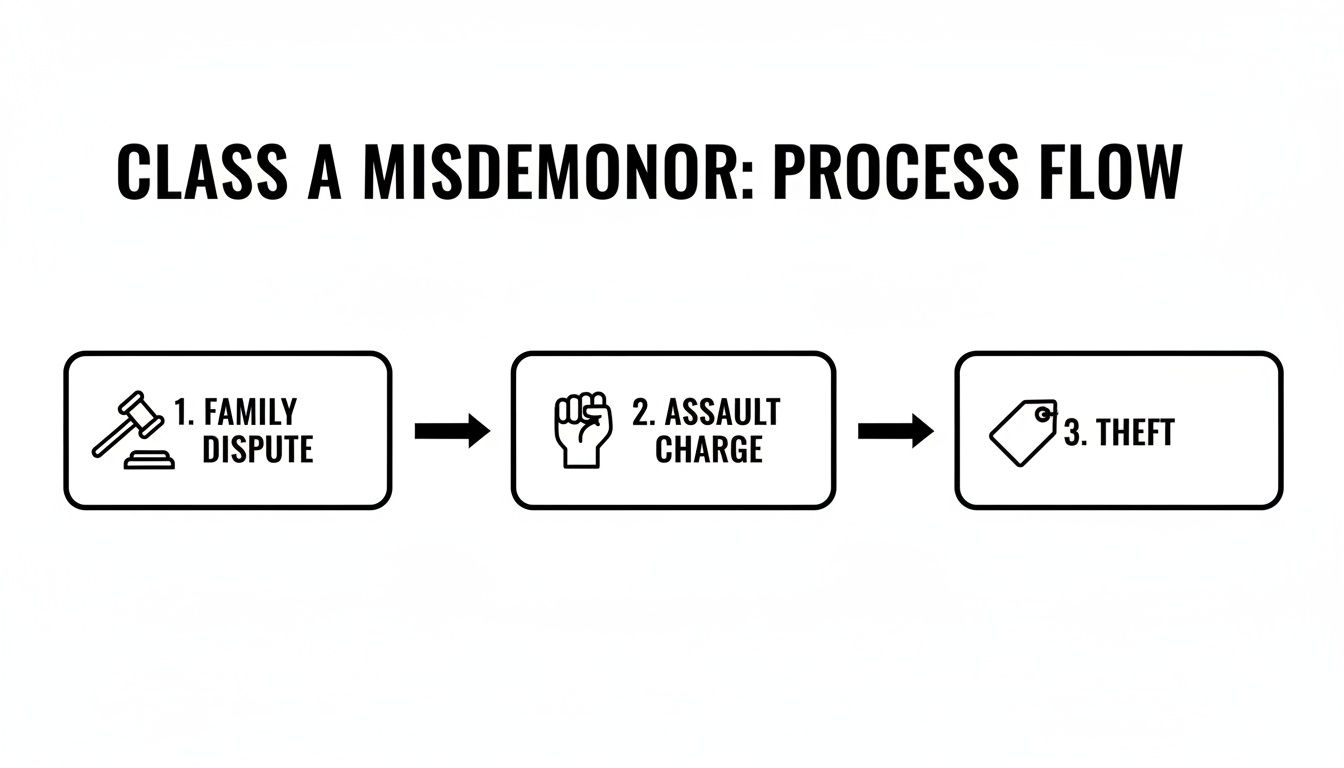
This process is exactly why understanding each step of the court system is so critical. A minor disagreement can quickly become a life-altering legal battle. Let's walk through what you can expect, step by step.
The Arraignment: Your First Day in Court
Your first official trip to court is called an arraignment. This isn't a trial. It's a formal hearing where the judge reads the official charge against you and you enter a plea. At this stage, that plea is almost always "not guilty."
This is a crucial first move. Pleading "not guilty" isn't about denying everything on day one; it's about protecting all your legal rights and giving your attorney the runway they need to dig into the evidence and start building a real defense. The judge will also use this time to review any bond conditions you have to follow while your case is active.
Pre-Trial Conferences and Negotiations
Once the arraignment is over, your case moves into the pre-trial phase. This is where the real work happens behind the scenes, involving a series of meetings between your defense attorney and the prosecutor. This is where a good lawyer truly earns their keep.
During these conferences, your attorney will:
- Review the Evidence: They'll file for "discovery," which is the formal process of getting every piece of evidence the state has on you—police reports, witness statements, body cam footage, you name it.
- Challenge Weaknesses: Your lawyer will comb through the state's case, looking for any holes, procedural mistakes, or moments where your constitutional rights might have been violated.
- Negotiate a Resolution: Based on how strong (or weak) the evidence is, your attorney will negotiate with the prosecutor to find a better outcome. This could mean getting the charge dismissed entirely, reducing it to a lesser offense, or striking a plea deal that keeps you out of jail, like deferred adjudication.
This negotiation stage is where an experienced attorney makes all the difference. Their reputation and skill at arguing your case can unlock resolutions you could never get on your own. It's also worth noting that the legal ground is always shifting. Recent legislative changes have changed how some offenses are classified, which raises the stakes for a Texas first offender facing a Class A misdemeanor. An act that might have been a lesser charge a few years ago could now come with much heavier penalties, a key factor your attorney will weigh during negotiations. To get a better sense of these evolving risks, you can learn more about how recent Texas bills impact criminal punishment.
The pre-trial phase is not about waiting; it's about actively working toward a resolution. A proactive defense strategy is your best tool for protecting your family and your future.
The Possibility of a Trial
If your attorney and the prosecutor can't reach a fair agreement during the pre-trial phase, your case might head to trial. While the vast majority of misdemeanor cases get resolved long before a trial ever happens, you have to be ready for the possibility.
At trial, the prosecutor has the heavy burden of proving your guilt "beyond a reasonable doubt" to either a judge or a jury. Your attorney will be there to present your side of the story, cross-examine the state's witnesses, and make the case for your innocence. Going to trial is undeniably stressful, but sometimes it’s the only way to clear your name and get your life back.
Exploring Outcomes That Protect Your Future
When you're hit with a criminal charge, it's not just about your freedom. A charge like this casts a long, intimidating shadow over your job, your home, and your reputation. If you're facing a Class A misdemeanor for the first time, it’s critical to understand that the outcome isn’t set in stone. Jail time is far from the only possibility, and there are paths forward that can protect your future.
The real goal of a strong defense is to find an outcome that lets you move on with your life and family with as little disruption as possible. This often means looking beyond simply fighting the charge itself and exploring smart alternatives that can prevent a permanent conviction from staining your record.
Alternatives To A Conviction
For a class a misdemeanor texas first offense, prosecutors and judges often have a lot more flexibility. Two of the most common—and beneficial—outcomes are community supervision (what most people call probation) and deferred adjudication.
-
Community Supervision (Probation): This is a sentence that lets you stay in the community instead of serving time behind bars. You'll have to follow specific conditions set by the court, which might include regular check-ins with a probation officer, attending counseling, completing community service, or paying fines. If you successfully complete the probation term, your case is closed, but here's the catch: the conviction stays on your record.
-
Deferred Adjudication: This is often the best-case scenario for a first-time offender. With deferred adjudication, you plead "guilty" or "no contest," but the judge defers finding you guilty. Instead, you're placed on a form of probation. If you complete all the conditions successfully, the charge gets dismissed, and you are never formally convicted. You can learn more about the powerful benefits of deferred adjudication in Texas in our detailed article.
To really grasp the difference, it helps to see them side-by-side. One path leaves you with a permanent criminal record, while the other offers a clean slate.
Comparing Deferred Adjudication vs. Straight Probation
| Feature | Deferred Adjudication | Straight Probation (Conviction) |
|---|---|---|
| Finding of Guilt | No finding of guilt is ever entered | You are found guilty and convicted |
| Final Outcome | Case is dismissed upon completion | Case is closed, conviction remains |
| Criminal Record | No conviction on your record | Permanent conviction on your record |
| Future Impact | Eligible for nondisclosure (sealing) | Limited options for record clearing |
Ultimately, deferred adjudication is the clear winner for protecting your long-term opportunities, making it the primary goal in most first-offense cases.
The Long-Term Impact Of A Conviction
Securing an outcome like deferred adjudication is so vital because a permanent conviction has consequences that ripple through every part of your life. It's much more than just a legal penalty; it's a barrier that can follow you for years.
A conviction can impact:
- Your Job: Most employers run background checks. A conviction for theft or assault can make it incredibly difficult to find or keep a good job.
- Professional Licenses: If you work in a field that requires a state license—like nursing, teaching, or real estate—a conviction can trigger disciplinary action or stop you from getting licensed in the first place.
- Child Custody: In family court, a criminal conviction can be used against you in custody battles, as it might be painted as evidence of poor judgment or creating a dangerous environment for your children.
- Housing: Landlords almost always run background checks these days, and a criminal record can be an automatic denial for a rental application.
The reality is that even misdemeanor charges frequently lead to jail bookings and short stays. Statistical patterns show these offenses account for a substantial share of court filings and jail admissions, underscoring the seriousness of the situation.
This is exactly why a strategic legal defense is about so much more than just avoiding jail; it's about protecting your entire future. Understanding the court process and having the right game plan is everything. To learn more, you can explore effective strategies for preparing for trial. By fighting for a dismissal or deferred adjudication, your attorney is working to make sure one mistake doesn’t slam the door on opportunities for you and your family forever.
How to Clear Your Record After a First Offense

The single biggest fear that comes with any criminal charge is the thought of it becoming a permanent part of your record. It’s that nagging worry that one mistake will follow you for the rest of your life, slamming the door on jobs, housing, and other critical opportunities for you and your family.
Thankfully, Texas law has built-in second chances. There are powerful legal tools designed to help people clear their names and truly move on. These remedies aren't automatic—they require a specific legal process—but just knowing they exist can bring a tremendous sense of hope.
The two main ways to clear your record in Texas are through an expunction or an order of nondisclosure. They each work differently, and your eligibility is tied directly to how your case was resolved.
Expunction: The Power to Erase
An expunction, sometimes called expungement, is the closest you can get to hitting a reset button on a criminal charge. Think of it like physically shredding a document. When a judge grants an expunction, every single record of your arrest and charge gets destroyed.
Police departments, court clerks, and prosecutors are legally required to wipe their files clean. This means that if someone runs a background check on you, it will be as if the arrest never even happened. You can legally deny it ever occurred.
As you might imagine, getting this powerful outcome is tough. Eligibility for an expunction is very narrow, and you can generally only get one if your case ended in one of these ways:
- You were found not guilty at trial (an acquittal).
- The prosecutor dismissed your case.
- You were arrested but never formally charged with a crime.
Orders of Nondisclosure: Sealing the Record
An order of nondisclosure is another incredibly valuable tool, but it functions in a different way. Instead of destroying your record, it seals it from public view. Imagine putting those files in a locked vault that only a few people have the key to.
While government and law enforcement agencies can still access the record in certain situations, the general public—including most potential employers, landlords, and licensing boards—cannot.
This is the path forward for people who successfully complete deferred adjudication for a Class A misdemeanor. Because you were never technically convicted of the crime, Texas law gives you the chance to petition the court to seal the record after a certain waiting period has passed.
Completing deferred adjudication is a huge win that opens the door to nondisclosure. It's a critical legal strategy that prevents a one-time mistake from becoming a lifelong public burden.
Securing either an expunction or an order of nondisclosure is a formal legal process. It involves filing a detailed petition with the court and often requires a hearing in front of a judge. The rules are strict, and even small mistakes in the paperwork can get your petition denied.
For a more detailed look at the steps involved, check out our guide on how to get a record expunged in Texas. Having an experienced attorney guide you through this process is essential to make sure everything is done correctly, giving you the best possible shot at getting the clean slate you deserve.
Your First Steps After Being Charged
The moments after being charged with a Class A misdemeanor are a confusing, terrifying blur. It feels like the world is closing in, but what you do in these first few hours and days is absolutely critical. Taking the right steps immediately can lay the groundwork for a much better outcome and protect your family from the worst of the fallout.
The single most important thing you can do is exercise your right to remain silent. You are not required to answer questions from law enforcement without a lawyer present. You can politely but firmly state, "I am exercising my right to remain silent and I will not answer any questions until I have spoken with my attorney." This isn't an admission of guilt; it's a constitutional right, and it's the smartest move you can make.
Creating Your Action Plan
Once you've asserted your right to silence, it's time to be strategic. Don't just wait for the system to decide what happens next—start building your defense right away. Here's a practical, actionable checklist to get you started on navigating your case and any potential CPS involvement:
- Don't Talk About Your Case: Avoid discussing the details with anyone—not friends, not family, and definitely not on social media. Anything you say or write can be twisted and used against you by the prosecution.
- Gather Every Document: Collect every single piece of paper you received related to the charge. This includes your bond paperwork, court notices, and any citations. These documents have vital information your lawyer will need.
- Understand CPS Timelines: If CPS is involved, be aware of the strict deadlines outlined in the Texas Family Code, especially the 14-day rule for the initial hearing under Chapter 262. Your proactive engagement is key to reunification.
- Call an Experienced Attorney Immediately: This is the most crucial step. The sooner you get a skilled criminal defense lawyer on your side, the sooner they can start protecting your rights, preserving evidence, and opening a line of communication with the prosecutor on your behalf.
Your future is too important to leave to chance. A first offense for a Class A misdemeanor doesn't have to ruin your life with a permanent conviction, but you simply cannot fight this battle alone.
The weight of a criminal charge is immense, but you don't have to carry it by yourself. The Law Office of Bryan Fagan is here to stand with you and your family. We will listen to your side of the story with compassion and build a defense designed to protect everything you've worked for.
Don't wait another moment. Contact The Law Office of Bryan Fagan today for a free, confidential consultation to go over your case and learn how we can help.
Answering Your Most Pressing Questions
When you're suddenly facing a criminal charge, your mind races. The questions are urgent, the stakes feel impossibly high, and the uncertainty can be crushing, especially when you’re worried about how all of this will affect your family. Let's tackle some of the most common questions we hear from good people who find themselves charged with a class a misdemeanor in texas for the first time.
Will I Go to Jail for a First Offense?
This is the number one fear for almost everyone we talk to, and the short answer is: probably not. While it's true that a Class A misdemeanor carries a potential penalty of up to a year in jail, that's the absolute worst-case scenario. It's not the typical outcome for a first-time offender.
For a first offense, judges and prosecutors are often much more open to alternatives that focus on getting you back on track, not just punishment. The primary goal for a skilled attorney is to negotiate for outcomes like probation or deferred adjudication. Both are designed to keep you out of a jail cell and in your community, living your life. The specific facts of your case and the strength of your legal defense will be the two biggest factors in determining the final result.
How Long Will This Case Stay on My Record?
A criminal charge doesn't have to be a life sentence on your record. The final outcome of your case is what really determines how it impacts your future.
- If your case gets dismissed or you're found not guilty: You'll likely be eligible for an expunction. This is the best possible outcome, as it completely destroys the record of the arrest and the charge as if it never happened.
- If you successfully complete deferred adjudication: This is a huge win because you are never actually convicted of the crime. Once you're done, you can petition the court for an order of nondisclosure, which seals the record from public view. Most employers, landlords, and background checks will never see it.
- If you are convicted and sentenced to probation: This is the outcome we work hard to avoid. A conviction will remain on your public record permanently unless you can get a pardon from the governor, which is incredibly rare.
This is exactly why fighting for a dismissal or deferred adjudication is so critical from day one. It preserves your ability to clear your name and protect your future.
Can a Class A Misdemeanor Affect My Child Custody Case?
Yes, it absolutely can, and this is a risk you can't afford to ignore. In any family law case involving children, a judge’s one and only focus is the "best interest of the child." A criminal conviction—especially for something involving violence, drugs, or just plain poor judgment—can be used by the other parent as powerful evidence that you're an unstable influence or even a risk to your kids.
A pending charge or a final conviction can become a major factor in a judge's decision on custody, who gets to decide where the kids live, and what the visitation schedule looks like. Protecting your parental rights is one of the most powerful reasons to build a strong, proactive defense against any criminal charge.
Even if you think the charge is minor or will eventually be dismissed, you have to treat it seriously. You must prevent it from causing permanent damage to your relationship with your children. Navigating the intersection where criminal defense and family law collide requires a specific type of experience to make sure a mistake in one case doesn't completely derail the other.
The weight of a criminal charge is immense, but you don't have to carry it by yourself. The team at the Law Office of Bryan Fagan PLLC is here to stand with you and your family. We will listen to your side of the story with compassion and build a defense designed to protect everything you've worked for.
Don't wait another moment. Contact us today for a free, confidential consultation to go over your case and learn how we can help. https://texascpslawyer.net