Skip to content
When Child Protective Services (CPS) contacts you about medical neglect in Texas, it feels like the ground has crumbled beneath your feet. A storm of fear, anger, and confusion hits all at once. You're suddenly terrified that the very agency meant to protect children is now challenging your love and dedication as a parent.
This guide is written for you—the caring Texas parent who has been blindsided by a report that, more often than not, starts with a simple disagreement with a doctor or a responsible choice to get a second opinion.
The Unexpected Call from CPS That Changes Everything
It can start with a knock on the door or a phone call that stops you dead in your tracks. A CPS caseworker is on the line, informing you that your family is now the subject of a medical neglect investigation. In that one gut-wrenching moment, your identity as a loving, protective parent feels like it’s under attack by the system designed to ensure child safety.
You’re not just a case number; you're a parent trapped in a nightmare.

This terrifying scenario is far more common than people realize. A report can be triggered by actions that have nothing to do with harming your child, but are instead responsible parenting choices. These often include:
- Seeking a second medical opinion after a serious diagnosis.
- Asking questions about a doctor’s recommended treatment plan.
- Looking into alternative or holistic care options to complement conventional medicine.
- Struggling financially to afford expensive procedures or prescriptions.
Your Feelings Are Valid
The wave of fear and defensiveness you feel is completely normal. You've poured your life into your child’s well-being, and now a stranger is dissecting every decision you've made. It’s only natural to feel like you're being cornered.
But it’s crucial to remember that an allegation is not a finding of guilt. You are not in this fight alone, and your parental rights are fiercely protected under Texas law.
At The Law Office of Bryan Fagan, we know that good, loving parents can get caught in impossible situations. Our entire practice is built on a foundation of compassion and strategic legal defense, not judgment.
This guide is here to help you replace that fear with facts. We'll give you a clear, reassuring roadmap to understand the confusing world of medical neglect CPS Texas cases. From breaking down what medical neglect actually means under the Texas Family Code to explaining your rights during an investigation, we want to empower you.
Our goal is to arm you with the practical tools and legal knowledge you need to protect your family and face this challenge with confidence.
You do not have to go through this by yourself. If you're a Texas parent feeling lost and overwhelmed by a CPS investigation, we are here to help. Contact The Law Office of Bryan Fagan for a free consultation to talk about your case and find out how we can defend your family.
What Medical Neglect Actually Means Under Texas Law
When a CPS caseworker drops the term “medical neglect,” it’s easy to feel like the floor has just fallen out from under you. The words alone sound terrifying and vague, like a legal blank check for the state to use against your family.
But in Texas, medical neglect isn’t just a feeling a caseworker has. It’s a specific legal standard with a high bar for CPS to prove. Understanding exactly what that standard is becomes your first line of defense.
Think of it this way: not all disagreements with a doctor are neglect. Responsible parenting often involves asking tough questions, getting a second opinion, or even exploring alternative treatments alongside conventional ones. These are your choices as a parent. Medical neglect sits at the complete opposite end of the spectrum. It’s not about making a different choice; it’s about a dangerous failure to make any choice when your child is clearly at risk.
The Three-Part Test for Medical Neglect
For CPS to build a legitimate case for medical neglect, they can’t just point to a missed appointment or a disagreement with a physician. They have the burden to prove three specific things. If even one is missing, their case against you shouldn't stand.
A caseworker must show evidence for all of the following:
- A Clear Medical Need: The child has a verifiable illness or injury that requires medical care to either stop it from getting worse or to relieve pain.
- Parental Awareness: You, the parent, knew about your child’s condition and understood that they needed medical help.
- Significant Risk of Harm: Your failure to get that care put your child at a “substantial risk of death, disfigurement, or bodily injury or a substantial risk of emotional or mental harm.”
That third point is often where a CPS case lives or dies. The key word is substantial. It’s not enough to prove you were slow to act or that a different doctor would have chosen another path. The agency has to prove your inaction created a serious, tangible danger to your child.
A dispute over the best way to treat a child is fundamentally different from a failure to provide any necessary treatment. This is a critical distinction that forms the core of many successful defenses against medical neglect claims in Texas.
It’s also helpful to understand where these cases fit into the bigger picture. We have a detailed guide explaining the difference between child neglect and child abuse, which can give you more context. While medical neglect makes up only about 1.5% of all confirmed child maltreatment cases in Texas, the potential for severe consequences—like removal—is incredibly high.
To clarify the line between making a parenting decision and crossing into potential neglect, it's useful to see some real-world examples.
Parental Choice vs. Potential Medical Neglect
This table breaks down common scenarios to show what's generally considered an acceptable parenting decision versus an action that might raise a red flag for CPS.
| Action | Generally Considered Parental Choice | Potential Red Flag for CPS |
|---|---|---|
| Vaccinations | Delaying or choosing an alternative vaccine schedule after consulting a doctor. | Refusing all vaccinations for a child with a compromised immune system against direct medical advice. |
| Second Opinions | Seeking a second or even third opinion for a serious diagnosis like cancer. | "Doctor shopping" until you find one who tells you what you want to hear, while ignoring a life-threatening diagnosis. |
| Mental Health | Seeking therapy or counseling for your child's anxiety from a licensed professional. | Refusing to get any help for a child who is demonstrating self-harming behaviors or suicidal thoughts. |
| Chronic Conditions | Managing a child's diabetes with a diet and exercise plan approved by their endocrinologist. | Failing to provide a diabetic child with insulin, leading to hospitalization. |
| Alternative Care | Using chiropractic care or acupuncture to supplement treatment for chronic pain. | Treating a child’s broken bone or bacterial infection solely with essential oils and refusing to see a doctor. |
These examples show that context is everything. The law protects your right to make reasonable decisions for your child, but that protection ends when a decision—or lack thereof—puts them in harm's way. The main takeaway is this: the burden of proof is squarely on CPS. They are the ones who must gather the evidence to prove you crossed a very specific legal line. Knowing exactly where that line is drawn is the first step in protecting your rights and your family.
Navigating the CPS Medical Neglect Investigation
The knock on the door from a CPS investigator is a moment no parent ever wants to experience. When the allegation is medical neglect, the situation can feel even more confusing and unfair. Suddenly, the choices you've made for your child’s health are under a microscope.
But this is not the time for panic. It's the time for a clear head and a solid plan. Understanding what a CPS investigator is looking for—and why—is your first and best defense. They operate under the rules of the Texas Family Code, and while that gives them authority, it also puts limits on what they can do. You are not without power here.
What Happens During the Investigation
A medical neglect investigation isn't a random search for problems. The caseworker is on a very specific mission: to gather facts that either prove or disprove the allegation. They are trying to build a case by confirming three specific elements: a clear medical need, your awareness of that need, and a failure to act that put your child at significant risk. This is the playbook they follow. If they can't establish all three points, their case against you falls apart.
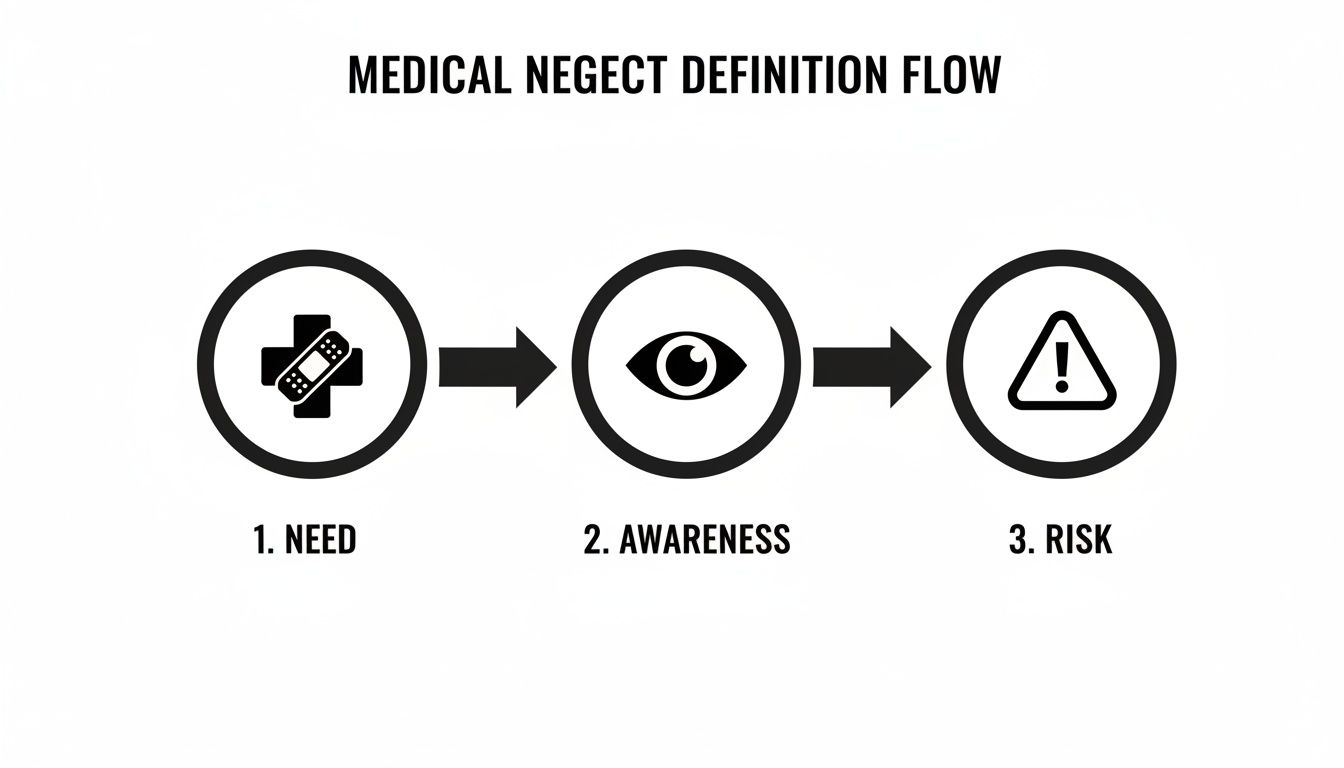
As the flowchart shows, it's a three-legged stool. Take away any one of those legs—Need, Awareness, or Risk—and the entire case becomes unstable.
To find their evidence, you can expect the caseworker to make a few standard requests:
- Interviews: They will want to talk to you, your child's other parent, and your child. Be aware: they have the legal right to interview your child alone at school or daycare without you even being there.
- Home Visit: The investigator will want to see where your child lives to check for general safety and suitability.
- Medical Records: They will ask you to sign release forms, often broad ones, giving them access to your child’s medical history and sometimes even your own.
It's absolutely critical to know you do not have to say yes to everything on the spot. You have the right to consult with an attorney before signing any document or answering detailed questions. To get a broader picture of how these investigations unfold, you can read our detailed breakdown of the Texas CPS investigation process.
A Relatable Scenario: How Your Words Get Twisted
Imagine your child has a complicated medical condition, and you’ve been carefully researching different treatment options. The caseworker asks why you hesitated on a new, aggressive treatment a doctor suggested.
You might reply, "It’s incredibly expensive, and we wanted to explore some holistic options that seemed less harsh first." To you, you're just being a thoughtful, concerned parent. To an investigator trained to spot red flags, your words can be twisted to mean: "Parent admits financial issues are a barrier to care and is using unproven treatments instead of real medicine."
This is exactly how a simple, honest statement becomes a weapon used against you. It highlights the immense risk of speaking to CPS without an attorney to guide you.
Your words are the most powerful evidence CPS can use against you. It is crucial to be cooperative and polite, but you must also be cautious. Politely declining to answer questions until your attorney is present is not an admission of guilt—it is an assertion of your constitutional rights.
During their fact-finding mission, CPS might also push for other assessments. They could request psychological workups or even psychiatric evaluations for you or your child to look for underlying mental health issues. Agreeing to these without legal counsel can open a Pandora's box of new problems.
The whole process is bound by strict deadlines laid out in Texas Family Code Chapter 262. Generally, CPS has 30 days to complete its investigation, although extensions are possible. Knowing these timelines helps you and your lawyer hold the agency accountable and stops your case from lingering in limbo. Having an attorney involved from day one ensures your rights are protected at every single turn.
When Allegations Lead to Child Removal or Criminal Charges
The fear of a Child Protective Services (CPS) investigation is one thing. The sheer terror of having your child taken from you is something else entirely. For any parent, this is the ultimate nightmare, and in a medical neglect case, that fear is amplified. You’re left wondering how the very system meant to protect children could tear your family apart over a disagreement about your child's care.
This is where we have to talk about the most severe risks of a medical neglect CPS Texas case: the emergency removal of your child and the possibility of facing criminal charges. Knowing when and why this happens is the first step in building a defense to protect your family.
The High Standard for Emergency Child Removal
Let's be clear: CPS can't just show up and take your child on a whim. The Texas Family Code sets an incredibly high legal bar. Before a judge can grant an emergency removal order without a hearing, CPS must prove there is an "immediate danger to the physical health or safety" of your child.
This isn't about a vague, potential risk down the road. It’s about a clear and present danger that demands immediate action to prevent serious harm or even death. This is exactly why the agency and the courts look at medical neglect cases so closely. Past tragedies weigh heavily on everyone involved, creating a high-pressure environment where caseworkers may feel pushed to act decisively.
Tragically, data from the Texas Department of Family and Protective Services (DFPS) shows why. In recent years, neglect-related fatalities made up a staggering 57.5% of all child maltreatment deaths. Even more alarmingly, in 56.5% of those cases, the family already had a history with CPS, highlighting a pattern of recurring risk the system is struggling to break. You can explore more in the full DFPS child fatality report.
These numbers create a sense of urgency inside the agency, but it’s crucial to remember that a disagreement over medical treatment is not the same as the life-or-death situations these statistics represent. A skilled attorney knows how to separate your thoughtful parenting choices from the kind of clear-cut neglect that leads to these tragic outcomes. To get a better handle on the process, take some time to review our guide on what happens when a child is removed by Texas CPS.
The Overlooked Threat of Criminal Charges
Here’s something most parents don’t see coming: a CPS investigation can spin off into a completely separate criminal investigation. The exact same set of facts that triggered the medical neglect allegation can also become the foundation for serious criminal charges, most often Injury to a Child by Omission.
This means you could suddenly find yourself fighting a war on two fronts:
- A Family Court Case: The battle to protect your parental rights and keep your child out of foster care.
- A Criminal Court Case: The fight to protect your own freedom and avoid a felony conviction, fines, and potential jail time.
A finding of medical neglect in a CPS case can be used as evidence against you in a criminal prosecution. This is why having a unified legal strategy that addresses both the family and criminal law aspects of your case from the very beginning is not just an option—it is an absolute necessity.
Think of it this way: a single spark can start two different fires. The CPS case is a fire inside your home, threatening your family. The criminal case is a wildfire outside, threatening your entire future. You need a legal team that knows how to fight both fires at the same time, because a misstep in one case can pour gasoline on the other. Ignoring the criminal risk to focus only on the CPS case is a mistake that can have devastating, life-altering consequences.
Actionable Advice: How to Defend Your Rights Against Medical Neglect Claims
When you’re accused of something as serious as medical neglect, it’s easy to feel powerless, like the world is closing in. But that’s not the truth. The Texas Family Code and the U.S. Constitution are not just dusty old documents; they are a shield, giving you powerful rights to protect your family from government overreach.
Knowing those rights and using them is your playbook for taking back control.

An allegation is not a conviction. It’s just the starting whistle for an investigation, and you have every right to build a strong defense from the very first phone call. The secret is to shift from a place of fear to one of empowerment by understanding the tools you have at your disposal.
Know Your Fundamental Rights
Your first line of defense is knowing what you don't have to do. A caseworker might imply that you need to comply with every single request, but the law paints a very different picture.
- You can refuse entry without a warrant: Unless a CPS worker shows up with a court order, you don’t have to let them in your home. You can politely but firmly say, "I'm not comfortable letting you in without a warrant."
- You have the right to an attorney: You can—and should—have a lawyer present for any and all interviews with CPS. All you have to say is, "I will be happy to cooperate once my attorney is present."
- You can remain silent: Your Fifth Amendment right isn't just for crime shows. It protects you from saying something that could accidentally be twisted and used against you. Answering questions without a lawyer can hand CPS the exact "evidence" they need to build their case.
These aren't just suggestions; they are your constitutional protections. Using them doesn't mean you're guilty—it means you're being a smart, responsible advocate for your family.
Building Your Proactive Defense Strategy
Asserting your rights is the first step, but you also need to be on the offense. A strong defense against medical neglect CPS Texas claims is all about proving a consistent pattern of responsible parenting. This takes more than just your word for it; it demands concrete, undeniable evidence.
The strongest defense is a proactive one. Don't wait for CPS to build their case against you. Start building your own case to prove your fitness as a parent from day one.
A skilled family law attorney will help you collect and organize evidence to support a few key defense strategies.
- Documenting a History of Responsible Care: Start gathering records that paint a true picture of you as a caring, engaged parent. Think about your child’s good school attendance records, receipts from routine dental cleanings, or even photos from extracurricular activities.
- Presenting Differing Medical Opinions: Did the whole situation start with a disagreement with one doctor? Getting a second opinion from another qualified physician can be your most powerful tool. It shows you weren't neglecting care—you were carefully weighing all the options for your child.
- Proving Religious Exemption: The Texas Family Code does offer protections for parents who make healthcare decisions based on sincerely held religious beliefs. This is a complex defense and one you absolutely need legal guidance to navigate, but it can be incredibly effective.
Part of showing you’re a responsible parent is proving you maintain a safe home. You can get ahead of any potential claims by making sure your home meets all safety standards. Using an ultimate home safety assessment checklist is a great way to show you’re conscientious about every aspect of your child’s well-being.
Your most powerful action is to gather proof. Start today. Collect appointment logs, pharmacy receipts, emails and text messages with doctors' offices, and anything else that proves you were actively involved in your child’s healthcare. This kind of proactive evidence-gathering can truly make all the difference.
Understanding the Outcomes of a CPS Investigation
The end of a CPS investigation isn’t really an ending. It’s the beginning of the next, often more confusing, chapter. When that caseworker finally tells you their findings, it can bring a wave of relief, a storm of confusion, or a whole new kind of dread. Knowing exactly what each outcome means is absolutely critical for your family’s future.
In Texas, an investigation into medical neglect will land on one of three conclusions:
- Ruled Out: This is the best news you can get. It means the investigator found no credible evidence of neglect. Your case will be closed, and you can start to move on.
- Unable to Determine: This is a murky, middle-of-the-road finding. It means there wasn’t enough evidence to confirm neglect, but the caseworker couldn’t completely rule it out, either. The case gets closed, but a record of the investigation remains.
- Reason to Believe (RTB): This is the most serious finding. It means the investigator believes there’s enough evidence to say medical neglect happened. This one finding opens the door to a whole world of continued CPS intervention.
When CPS Wants to Keep Your Case Open
If the finding is "Reason to Believe," don't be surprised if the agency wants to keep your case open for ongoing monitoring. They often try to do this through a program called Family Based Safety Services (FBSS). CPS will pitch this as a helpful, voluntary way to avoid court, and they’ll hand you a “service plan” to follow.
This plan might look reasonable on the surface, asking for things like counseling, parenting classes, or specific doctor visits. But you need to understand: it is a legal trap.
Signing a CPS service plan without a lawyer's review is one of the most dangerous mistakes a parent can make. These are not informal agreements; they are legal contracts that can be used to build a future case to terminate your parental rights under Texas Family Code Chapter 161.
By agreeing to a service plan, you’re essentially admitting that there's a problem that needs fixing. If CPS later decides you didn’t follow their plan to the letter, they can use that “failure” as the very reason to remove your children.
A Closed Case Does Not Mean It Is Over
Even if your case is closed, you might not be completely out of the woods. Disturbingly, recent policy shifts in Texas have created a new kind of risk for families. Between 2018 and 2023, the Texas Department of Family and Protective Services (DFPS) drastically cut the support services offered to families, even after neglect was confirmed.
In 2023, a shocking 63% of these families received no services or monitoring whatsoever—a 20% jump from previous years. As you can learn from the in-depth reporting on Texas's misleading child safety data, this trend leaves families vulnerable and at a higher risk of being re-reported to CPS down the road.
Our goal isn't just to win the immediate battle. It's to secure your family's long-term peace of mind. We work to get your case closed in a way that minimizes the risk of future allegations and protects your family for good. If you're facing the outcome of a CPS investigation, don't try to navigate this critical stage by yourself. Contact The Law Office of Bryan Fagan for a free consultation to talk about how to protect your rights.
Frequently Asked Questions About Medical Neglect
When you’re facing a CPS investigation for medical neglect, your mind is likely racing with a thousand questions. It’s a frightening and confusing time, and getting clear, straightforward answers is critical. Let's cut through the noise and address some of the most urgent questions Texas parents have when they're in this exact situation.
Can I Refuse to Speak with a CPS Caseworker?
Let’s be crystal clear: Yes. You have the right to remain silent, and you absolutely have the right to an attorney.
Our strong advice is to politely inform the caseworker that you will not be answering any questions or making any statements until your lawyer is present. This is not an admission of guilt. It's a smart, protective measure to prevent your words from being twisted, misinterpreted, or used against you down the road.
Is Disagreeing with My Doctor Considered Medical Neglect?
Absolutely not. Disagreeing with a doctor’s recommendation or wanting to get a second opinion isn't neglect—it's what responsible parents do every single day.
To be considered medical neglect in Texas, there must be a failure to provide necessary care that puts your child at a substantial risk of harm. A simple disagreement over the best treatment plan doesn't come close to meeting that high legal bar.
The heart of your defense often boils down to one thing: proving you were a diligent parent, not a neglectful one. Showing that you were actively researching treatments, consulting other doctors, or exploring all your options is powerful proof that you were engaged and fighting for your child's best interest.
What Should I Do If CPS Wants Me to Sign a Service Plan?
Do not sign a single document from CPS without having it reviewed by an experienced attorney first. This goes for service plans, safety plans, or any other agreement they put in front of you.
These aren't informal suggestions. They are legally binding documents that can have a devastating impact on your parental rights under Texas Family Code Chapter 161. Signing one can be interpreted as an admission that a problem exists, which CPS can—and will—use to build a case to terminate your rights.
Can My Religious Beliefs Be a Defense Against Medical Neglect?
This can be a valid defense in Texas. The Family Code does allow for spiritual treatment through prayer by a recognized religious organization as an alternative to medical care.
However, this is an incredibly complex legal argument that requires a delicate and skillful approach. The court must still be convinced that the child is not at risk of serious harm. Relying on this defense without expert legal guidance is extremely risky and not something you should attempt on your own.
Facing a medical neglect CPS Texas investigation is a lonely and terrifying experience, but it’s not a battle you have to fight by yourself. The dedicated attorneys at The Law Office of Bryan Fagan are here to provide the compassionate, knowledgeable defense you and your family deserve. We understand what’s at stake and will work tirelessly to protect your rights. Contact us today for a free, confidential consultation to discuss your case and learn how we can help.