Skip to content
Receiving any kind of legal notice can send a chill down your spine. One moment, you're going about your day, and the next, you're holding a piece of paper that carries the weight of a criminal charge. It’s completely normal to feel a surge of fear and confusion, your mind racing with questions about what this means for your job, your reputation, and your family's future.
In Texas, when that charge is a "Class C misdemeanor," you might be tempted to breathe a sigh of relief. It's the lowest-level offense, punishable only by a fine of up to $500, with no jail time. But here's the trap far too many people fall into: thinking it's no big deal and just paying the fine to make it go away. Paying that fine is the same as pleading guilty. And that "minor" offense? It becomes a permanent conviction on your criminal record, creating roadblocks you never saw coming, especially when you're trying to protect your family.
What a Class C Misdemeanor Means for Your Family

As a parent, your first instinct is to protect your family. A criminal charge, no matter how small, feels like a direct threat to that stability. Many people get lulled into a false sense of security because a Class C charge doesn't involve jail. But this misunderstanding is dangerous. Simply paying that fine is an admission of guilt, and that conviction will follow you for life, potentially impacting your ability to provide for your loved ones.
The True Stakes of a Minor Charge
It’s so important to understand what a conviction—even for a "minor" offense—really means down the road. That mark on your record can pop up at the worst possible times.
Here’s what’s really at stake for your family:
- Employment Opportunities: So many employers run background checks. A conviction for something like theft or assault, no matter how small, could get you disqualified from a job you really need to support your family.
- Housing Applications: Landlords almost always run background checks. A criminal record might be all it takes for them to deny your rental application, making it that much harder to find a safe home for your children.
- Professional Licenses: If you're a teacher, nurse, or hold any other professional license, a conviction could jeopardize your ability to get or renew it, threatening the career you've worked hard to build.
- Immigration Status: For anyone who isn't a U.S. citizen, any criminal conviction can have devastating consequences, potentially putting your ability to stay in the country with your family at risk.
A Class C Misdemeanor citation is not just a request for money; it's an accusation that, if not handled correctly, becomes a permanent part of your story. The initial fine is small, but the hidden costs can be immense.
Understanding the Legal Landscape
These seemingly small offenses absolutely flood the Texas court system. In fact, Class C misdemeanors are the most common type of criminal charge filed. Judicial reports from major counties like Harris and Dallas show staggering caseloads, with courts often struggling just to keep up with the sheer volume.
But here’s the good news: you have options beyond just paying the fine and accepting a conviction. Because these are the least severe offenses, prosecutors are often more willing to consider alternative solutions that keep your record clean. To get a better sense of where this charge fits in, you can learn more about the classes of misdemeanors in Texas in our detailed guide. An experienced attorney can help you navigate options like deferred disposition or even an outright dismissal, clearing the path to a clean slate.
Before we dive deeper, here is a quick overview of what a Class C misdemeanor entails.
Class C Misdemeanor at a Glance
This table breaks down the essential facts you need to know about this type of charge in Texas.
| Characteristic | Description |
|---|---|
| Maximum Fine | Up to $500 |
| Jail Time | None |
| Court Jurisdiction | Municipal or Justice of the Peace (JP) Courts |
| Common Examples | Simple Assault, Petty Theft, Public Intoxication |
| Impact of Paying Fine | Results in a permanent criminal conviction |
| Record Relief | May be eligible for Expunction or Nondisclosure |
Understanding these basics is the first step, but the real key is knowing how to use this information to protect your future.
How a Normal Day Can Turn Into a Criminal Charge
It’s a scenario that plays out far too often for good, hardworking Texas families. One minute, everything is normal; the next, you’re holding a citation for a criminal offense. You never meant to break the law, but now you're facing a Class C misdemeanor. These situations rarely come from a place of malice. More often than not, they’re the result of a simple mistake, a brief misunderstanding, or a momentary lapse in judgment.
What makes these charges so unsettling is just how easily they can happen. They don’t just happen to "criminals"—they happen to parents, college students, and regular people just trying to live their lives. Understanding how these charges pop up in the real world is the first step toward realizing why you need to take them seriously and build a smart defense.
Common Scenarios That Can Lead to Charges
Let's step away from the legal jargon and look at some situations that could happen to anyone.
Consider this: you're a parent trying to manage a stressful shopping trip with a fussy toddler. Juggling the cart, your child, and your shopping list, you get distracted and accidentally leave the store without paying for a small item at the bottom of the cart. Before you can even get to your car, a store employee stops you, and suddenly you’re being accused of Theft under $100. Your honest mistake has been twisted into a criminal accusation that could impact your future.
Or, think about this: a heated argument with a neighbor over a fence line boils over. Voices get loud, and some choice words are exchanged in the front yard. Even though it feels like a private dispute, it can quickly turn into a Disorderly Conduct charge if a passerby feels alarmed and decides to call the police.
These examples show just how fast a normal day can go sideways. None of these people woke up planning to commit a crime, yet they all ended up with a charge that, if they just pay the ticket, will follow them for the rest of their lives as a permanent criminal record. This is exactly why every Texan needs to understand what a Class C misdemeanor is and what's at stake.
These examples show just how fast a normal day can go sideways. None of these people woke up planning to commit a crime, yet they all ended up with a charge that, if they just pay the ticket, will follow them for the rest of their lives as a permanent criminal record. This is exactly why every Texan needs to understand what a Class C misdemeanor is and what's at stake.
More Everyday Examples of Class C Offenses
The list of Class C misdemeanors is long and covers a surprising number of everyday incidents that can catch good people completely off guard. Each one comes with a potential fine of up to $500, but more importantly, it carries the risk of a lifelong conviction if you simply plead guilty and pay it.
Here are a few more common charges we see all the time:
- Public Intoxication: You have a few drinks with friends and make the responsible choice to walk home. But if an officer decides you appear to be a danger to yourself or others, you could end up with a PI charge.
- Assault by Contact: A tense argument leads to an unwanted touch—maybe a poke to the chest or grabbing someone's arm to make a point. Even if no one gets hurt, that can be considered assault.
- Possession of Drug Paraphernalia: Getting caught with an item that could be associated with drug use, like a pipe or grinder, can lead to this charge, even if there are no actual drugs present.
- Issuance of a Bad Check: Bouncing a small check because of a simple banking error doesn't always stay a civil issue. Sometimes, it can escalate into a criminal charge.
- Certain Traffic Violations: While most traffic tickets are just that, some—like driving without a valid license or having no insurance—are actually Class C misdemeanors that go on your criminal record, not just your driving record.
Every one of these scenarios drives home a critical point: a split-second mistake can put your reputation, your career, and your family's future on the line. It highlights why you can't afford to treat any citation lightly. You have rights and you have options, and the first step is to remember that an accusation is not the same as a conviction.
Navigating the Texas Court System for a Class C Charge
Getting that citation is just the first domino to fall. What happens next can feel like you’ve been dropped into an entirely new world with its own language and rules. The thought of stepping into a courtroom, even for something minor, is enough to make anyone’s stomach churn. You're probably worried about saying the wrong thing, missing a deadline, or making a small mistake that snowballs into a much bigger problem.
Let's pull back the curtain on this whole process. The Texas court system runs on a very specific set of procedures. Once you have a map, the journey becomes a whole lot less intimidating. Our goal is to hand you that map, breaking down each step so you can walk into that courthouse with confidence instead of fear.
Your First Court Appearance: The Arraignment
Your first official, mandatory trip to court is called an arraignment. It's important to know this is not a trial. You won't be arguing your case, calling witnesses, or presenting evidence at this point.
The arraignment is really a formal kickoff. Its main purpose is for the judge to officially read the charge against you and for you to enter a plea.
You’ll have three basic plea options:
- Guilty: You admit that you committed the offense.
- Not Guilty: You deny committing the offense, which kicks off the process for a future hearing or trial.
- Nolo Contendere (No Contest): This is a bit of a middle ground. You aren't admitting guilt, but you're choosing not to fight the charge. When it comes to sentencing, it has the same practical effect as a guilty plea.
Pleading "not guilty" at the start is almost always the smartest move. It doesn't lock you into anything. Instead, it keeps all your options on the table and buys you—and your attorney—valuable time to review the evidence and talk with the prosecutor about a much better outcome, like getting the case dismissed.
Key Players in the Courtroom
It helps to know who’s who. Understanding their roles can make you feel more in control of the situation. There are two main people who will shape what happens with your case:
- The Prosecutor: This is the lawyer representing the State of Texas. Their job is to prove the charge against you. They are also the person your attorney will negotiate with to try and work out a dismissal or a more favorable deal.
- The Judge: Think of the judge as a neutral referee. They're there to make sure everyone follows the law, rule on legal arguments, approve any agreements, and, if it comes to it, decide the outcome of a trial.
It’s crucial to remember that neither the prosecutor nor the judge is on your side. They can't give you legal advice. Their roles are very specific, which is exactly why having your own advocate in your corner is so important.
The flowchart below shows just how easily an everyday situation can end up with a court date.
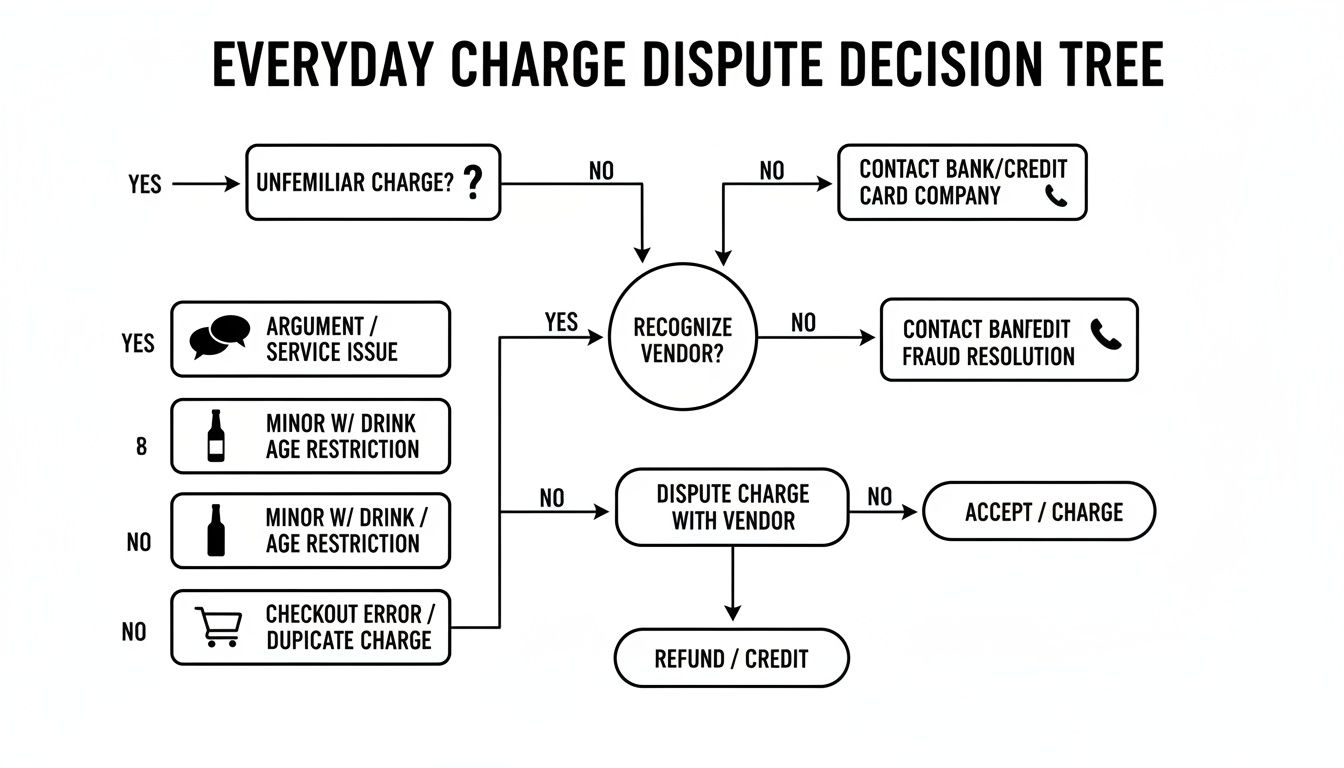
As you can see, something as simple as a heated argument, a mistake a teenager makes, or an error at a checkout line can quickly escalate into a formal criminal charge that requires you to navigate the court system.
What Happens After You Plead Not Guilty
Let's be clear: pleading "not guilty" doesn't mean you're headed for a dramatic courtroom trial you see on TV. Far from it. In reality, it opens the door to a series of pre-trial steps where most of these cases actually get resolved. This is where a good lawyer really earns their keep.
Your attorney will start discussions with the prosecutor, digging into the police report and any other evidence they have. This is the negotiation stage, where they can push for outcomes that protect your record, like a deferred disposition.
Deferred disposition is one of the best possible outcomes you can get. It’s an agreement where you complete a short probationary period—and maybe pay a fee or take a class. If you do everything you're supposed to do, the charge is dismissed completely. Later on, you can even seek an expunction to wipe the slate clean.
These Class C cases make up a massive part of the court’s daily grind. While they only carry fines up to $500, they shape how justice is delivered to millions of Texans. Just look at the numbers: Harris County's misdemeanor filings were projected to hit 176.6% of their baseline by 2025, with Dallas County projected even higher at 237.6%. You can dig into these trends in the TMCEC's annual report.
Those stats show how swamped the courts are, and it underscores why you need a smart strategy to get your case resolved favorably and efficiently. The process is structured, but with the right guidance, it's absolutely manageable.
The Hidden Costs of Simply Paying the Fine
When you're standing at the court clerk's window, citation in hand, the path of least resistance is incredibly tempting. You might even be told that just paying the fine is the easiest way to put this whole mess behind you.
That’s dangerously misleading advice, and it can set you and your family up for a lifetime of unseen consequences.
That simple act of paying the fine isn't just a financial transaction. In the eyes of Texas law, it's a formal plea of "guilty." The moment you pay, that charge becomes a permanent conviction on your criminal record. The short-term convenience of a small fine can carry a devastating and permanent cost.

From a Small Fine to a Lifetime of Barriers
A criminal conviction, even for what seems like a minor offense, creates a ripple effect that can touch every aspect of your family’s well-being. It becomes a red flag that pops up on background checks for years to come, quietly closing doors you never even knew were there.
These "hidden costs" are the real penalty you face, and they can include:
- Employment Struggles: Many companies have strict hiring policies. A conviction for theft, assault, or even disorderly conduct can automatically disqualify you from jobs you're otherwise perfect for. Your ability to provide for your family suddenly becomes much harder.
- Housing Instability: Landlords lean heavily on background checks. A criminal record can lead to an immediate denial of your rental application, making it incredibly difficult to find a safe home.
- Professional Licensing Issues: If you're a nurse, teacher, real estate agent, or hold any other state-issued license, a conviction can trigger a review by your licensing board. Your entire career could be in jeopardy.
- Immigration Complications: For non-U.S. citizens, any criminal conviction can have severe consequences. It can affect your ability to renew a visa, apply for citizenship, or even remain in the country.
Paying the fine feels like an ending, but it's really the beginning of a long-term problem. That conviction becomes a permanent part of your public record—a ghost that follows you everywhere.
A Real-Life Example: The High Cost of Convenience
Picture this: a young mother in her early twenties, just starting her career. While shopping with a fussy toddler, she gets distracted and accidentally leaves the store without paying for a small item in her cart. She's stopped, embarrassed, and given a citation for Theft under $100—a Class C misdemeanor.
Wanting to avoid the hassle of court, she just pays the fine online and tries to forget about it. Fast forward a few years. After finishing her degree, she applies for her dream job as an elementary school teacher. She’s the perfect candidate, but the mandatory background check reveals the theft conviction. The school district's policy is strict, and her application is denied.
That small fine she paid years ago just cost her the future she worked so hard to build. This scenario is heartbreakingly common, and it shows exactly how a "minor" mistake, handled the wrong way, can derail your life. When legal troubles create financial strain, looking into general debt reduction strategies can help manage the pressure while you focus on the legal battle.
Paying the Fine vs. Fighting the Charge
The choice you make right at the beginning determines your future. It's vital to see beyond the immediate inconvenience and understand the long-term impact of your decision.
| Action | Short-Term Outcome | Long-Term Consequence |
|---|---|---|
| Paying the Fine | Quick resolution, avoids court appearances | Permanent criminal conviction, limits future opportunities |
| Fighting the Charge | Requires time, effort, and professional guidance | Opportunity for dismissal, a clean record, and a protected future |
The contrast couldn't be clearer. While fighting the charge takes more effort up front, it's the only path that offers a real chance to preserve your clean record and protect your family's future. An experienced attorney can often negotiate outcomes that simply aren't available to you on your own, like dismissals or deferred dispositions that keep the conviction off your record entirely.
Strategic Defenses to Protect Your Clean Record
Getting a citation can feel like the final word, but it's critical to remember this: a citation is not a conviction. It’s just the start of a legal process, and it's a process where you have rights, options, and a surprising amount of control—if you know what to do next.
The absolute worst thing you can do is lose hope and just pay the fine. The best thing? Start building a smart, strategic defense. The goal is simple: prevent a conviction from ever hitting your record in the first place. For families facing this kind of stress, knowing there are clear paths to a good outcome is a huge relief.
Actionable Advice: Pathways to a Dismissal
Fortunately, the Texas legal system has built-in off-ramps for Class C misdemeanors, specifically designed to give people a second chance. Instead of gearing up for a dramatic courtroom battle, the most effective strategies often involve negotiation and proactive steps that lead to a complete dismissal of the charge.
Two of the most common and powerful solutions are:
- Deferred Disposition: This is often the best-case scenario. Think of it as an agreement with the court. You complete a short probationary period (usually 90-180 days) without getting into any new trouble. You might also have to pay an administrative fee or take a relevant class. If you hold up your end of the bargain, the case is dismissed entirely. No conviction, ever.
- Defensive Driving Course (DDC): For many traffic tickets, taking a state-approved defensive driving course is a fantastic option. Once you turn in your certificate of completion to the court, the ticket gets dismissed. This doesn't just keep points off your driving record; more importantly, it prevents a criminal conviction.
Securing one of these outcomes is a massive win. It means you’ve successfully stopped the charge from becoming a permanent stain on your public record.
Challenging the State's Case
Sometimes, the best defense is a good offense. Your attorney will meticulously review every piece of evidence the prosecutor thinks they have against you. Was the traffic stop even legal? Did the officer follow the correct procedures? Is there really enough evidence to prove you committed the offense beyond a reasonable doubt?
Finding these weaknesses in the state’s case is a powerful negotiating tool. An experienced attorney can often point out these flaws to the prosecutor, which can lead to a surprisingly quick and favorable resolution.
In many situations, a prosecutor may agree to an outright dismissal just to avoid the time and expense of a trial they aren't confident they can win. This is where having a strong advocate in your corner becomes invaluable.
Class C misdemeanors make up the vast majority of criminal cases in Texas, covering everything from traffic violations to public intoxication and minor theft. While they don't involve jail, that $500 maximum fine is a trap that leads straight to a permanent record if you just pay it. With misdemeanor filings surging in major Texas counties—Harris County saw a peak increase of 183.8% in 2023—prosecutors are often open to resolutions that clear cases efficiently while giving deserving individuals a second chance.
Successfully navigating this process and getting a dismissal is the first—and most important—step. It's the key that unlocks the door to the ultimate goal: getting the entire incident erased from your record forever through an expunction. And if you're wondering about the specifics, you can learn more about how to get criminal charges dropped in our detailed guide.
How Expunction Can Erase Your Record for Good
Getting a case dismissed is a massive win, and it brings a wave of relief. But here’s something most people don’t realize: even with a dismissal, the arrest record doesn’t just disappear. That ghost from the past still lingers in public databases unless you take one final, crucial step: expunction.
An expunction is a legal process that results in a court order to destroy every single record of an arrest and charge. It’s like hitting a legal reset button. When a judge grants an expunction, it’s as if the whole thing never happened.

Who Qualifies for This Powerful Remedy
This powerful tool isn't available to everyone, which is why fighting for a dismissal from the very beginning is so incredibly important. In Texas, you're generally eligible for an expunction if your case ended in one of these ways:
- Dismissal: The prosecutor decided to drop the charges. This is the most common outcome we fight for in Class C misdemeanor cases.
- Acquittal: You took your case to trial and were found "not guilty."
- Pardon: You received a formal pardon from the governor.
What if you took a deal for deferred disposition? The good news is you can still typically file for an expunction after a waiting period. This is a critical point—if you just pay the fine, it results in a final conviction, and you lose your right to ever get that record erased.
The Life-Changing Benefits of a Clean Slate
Securing an expunction is about so much more than just peace of mind. It’s about reclaiming your future. It's about making sure one mistake doesn't unfairly define you for years to come.
Once your record is expunged, you can legally deny that the arrest ever occurred on almost any application. This includes job applications, housing forms, and professional licensing paperwork.
Think about what that really means. A background check for that new job? It'll come back clean. Applying for an apartment? No red flags. The power of an expunction is that it tears down the barriers a criminal record creates, allowing you to move forward without constantly looking over your shoulder.
Dismissing the charge is the immediate battle, but winning the expunction is how you win the war. It ensures a single lapse in judgment doesn’t cast a long shadow over your life. If you’re ready to take that final step toward a truly fresh start, our guide on how to expunge a misdemeanor in Texas for a clean slate breaks down the process in more detail.
When you're staring down a criminal charge, even one that seems minor, the questions and worries can feel overwhelming. They can keep you up at night, wondering what this means for your future. You deserve clear, straightforward answers that help you make the best decisions for yourself and your family. Here are some of the most common questions we hear from Texans just like you.
Do I Really Need a Lawyer for a Class C Ticket?
You always have the right to represent yourself, but it's a gamble with your permanent record. An experienced attorney isn’t just a nice-to-have; they are your best shot at protecting your future.
A lawyer can negotiate outcomes that are often off the table for individuals handling their own cases, like a deferred disposition or even an outright dismissal. These options are what stand between you and a lifelong conviction taking root on your record.
How Long Does a Class C Misdemeanor Stay on My Record?
This is a big one. If you are convicted—and that includes simply paying the fine—the offense stays on your public record permanently. It doesn't just fade away after a few years.
The only way to truly erase it is to first get the case dismissed. From there, you can pursue an expunction, which is the legal process to destroy the record for good.
A conviction is forever unless you take specific legal action to clear it. Just paying the fine closes the case but leaves a permanent mark on your background.
Can a Class C Charge Become More Serious?
Yes, it absolutely can, and this is a critical point many people miss. Certain Class C offenses, like Assault by Contact or Theft, can be "enhanced" if you have prior convictions for the same type of crime.
This means a new charge could be filed as a higher-level misdemeanor, suddenly bringing the possibility of jail time and much larger fines into the picture. This risk of enhancement is exactly why it’s so vital to fight the very first charge and do everything possible to avoid a conviction. A clean record today is the best defense for your future.
Facing a criminal charge, no matter how small it seems, can be an isolating and frightening experience. You are not just a case file; you are a person, a parent, and a member of our community who deserves to be treated with dignity. You don’t have to navigate this complex system alone.
At the Law Office of Bryan Fagan, we understand the fear and uncertainty you're feeling. We are here to provide the compassionate guidance and strategic defense you need to protect what matters most: your family and your future. Call us today for a free, confidential consultation to discuss your case and learn how we can help you fight for the best possible outcome. Contact us now at texascpslawyer.net.