Skip to content
Nothing brings on a wave of pure dread like a phone call from Child Protective Services (CPS) followed by a demand for a drug test. In Texas, a CPS drug testing request isn’t a minor suggestion you can brush off. It’s a serious move in an investigation that can completely upend your family and threaten your rights as a parent. The fear, confusion, and sense of injustice can be overwhelming. But the first step to getting back some control is understanding exactly what this means and what you can do about it.
The Unsettling Reality of a CPS Drug Test Request

The second a CPS caseworker brings up a drug test, a thousand questions probably start racing through your head. Why me? Do I have to do this? What if I say no? And what on earth happens if it comes back positive? The weight of it all can feel crushing, leaving you feeling judged and completely alone. Here at the Law Office of Bryan Fagan, we get it. We’ve seen that panic firsthand, and our job is to cut through the fog with clear, straightforward answers.
This is about so much more than just passing or failing a test; it's about keeping your family together. The entire process can feel invasive and deeply unfair, but you aren't powerless. You have rights, and under the Texas Family Code, CPS has a strict legal process they are required to follow.
A Scenario That’s All Too Common
Think about this: a neighbor calls CPS after hearing a loud argument. When the caseworker shows up, they think you look tired and on edge. After a few pointed questions, they drop the bomb: “We’d like you to take a drug test just to rule out any substance use.” Just like that, a simple disagreement has spiraled into a formal investigation that puts your relationship with your children on the line.
This kind of thing happens far more often than you’d think. A single report, even one based on a total misunderstanding, can kick off a full-blown investigation where a drug test suddenly becomes a key piece of evidence.
You have the right to know why they're asking for a test, how they plan to use the results, and what your options are before you agree to anything. In a CPS case, knowledge is your best defense.
This guide is designed to pull back the curtain on the entire CPS drug testing Texas process. We’ll walk you through:
- Why CPS orders drug tests in the first place and the laws that give them that power.
- What actually happens during the sample collection and testing.
- Your fundamental rights when you're asked to provide a sample.
- How the results—positive or negative—can change the direction of your case.
- The immediate actions you should take to start protecting your family.
Facing off with CPS is a tough road, but you don't have to walk it by yourself. With the right legal strategy, you can face this challenge head-on and work toward the best possible outcome for you and your kids. To talk about the details of your case with an experienced Texas CPS defense attorney, call the Law Office of Bryan Fagan today for a free, confidential consultation.
Understanding Why CPS Is Asking for a Drug Test
When a Child Protective Services (CPS) caseworker shows up and asks for a drug test, it’s never a random request. It’s a calculated move based on their legal duty to keep children safe, and it means that somewhere along the line, a red flag went up connecting possible substance use to your child’s well-being.
It’s easy to feel attacked, but it's important to know they aren't just making things up as they go. CPS works within the strict rules of the Texas Family Code, specifically Chapter 262, which dictates how they investigate reports of child abuse or neglect. A drug test is simply one of their tools to gather evidence and figure out if a child is at risk. Their goal isn't to punish you—it's to either confirm a safety threat or rule one out.
Common Triggers for a Drug Test Request
A caseworker doesn't just decide to ask for a drug test on a whim. The decision is almost always sparked by specific information they’ve gathered or something they’ve observed during their investigation. Getting a handle on these triggers can help you see the situation from a procedural standpoint, not just an emotional one.
Some of the most common reasons a CPS drug testing Texas request happens include:
- Reports from Mandated Reporters: Professionals like doctors, teachers, and therapists are legally required to report any suspicion of child abuse or neglect. If their report mentions concerns about parental substance use, erratic behavior, or signs of neglect, a drug test is almost guaranteed.
- Observations During a Home Visit: The caseworker might see something during a visit that they consider a red flag. This could be anything from visible drug paraphernalia or the smell of marijuana to a parent who seems impaired or disoriented.
- Your Own Statements: Admitting to past or present drug use, even in a casual way, can and will be used to justify a test. Caseworkers are trained to document every admission, and they will use it to build their case for testing.
- Known History of Substance Abuse: If you have a prior drug-related criminal conviction or a previous CPS case involving substance use, they are much more likely to request a test to make sure old issues haven't come back.
How a Simple Situation Can Escalate
Let's paint a picture. Imagine you have a DWI from years ago that you've long since moved past. But recently, a neighbor who knows about it calls CPS after hearing you and your spouse have a loud, emotional argument. When the caseworker arrives, they run a background check and see that old charge.
Even if the argument had zero to do with alcohol, the combination of a report and your known history is enough to create suspicion. The caseworker will likely ask for a drug and alcohol test. They aren't calling you a bad parent; they are just following procedure to tie up a loose end. This is how they methodically build a case for testing—by linking one piece of information to a potential risk.
The issue of substance abuse in child welfare is a massive concern in Texas. In fact, between 2016 and 2019, Child Protective Investigations saw a jaw-dropping 43% increase in cases with an active substance abuse issue. This trend has put enormous strain on the system, forcing caseworkers to rely more heavily on testing to assess child safety.
A request for a drug test is not an automatic finding of guilt. It is an investigatory step. How you respond to this request is one of the most critical junctures in your entire CPS case.
Understanding the direct line caseworkers draw between substance use and child welfare is key. Their primary concern is whether a parent's habits, whatever they may be, create an environment of neglect or danger for a child. You can learn more about the connection between substance abuse and child neglect in our detailed article. Knowing what they're looking for helps you understand their perspective and build a much smarter response.
What To Expect During The Drug Testing Process
Getting a drug test request from CPS is a nerve-wracking experience, but knowing what’s coming can take a lot of that anxiety off your shoulders. The process isn't random; it's a highly structured procedure designed to be accurate and legally sound. When you understand each step, from the moment you provide a sample to the final review, you’re in a much better position to handle what comes your way.
Once you either agree to a test or the court orders one, things move fast. Texas CPS has strict protocols in place. A caseworker is required to order a drug test within 48 hours of identifying a child safety threat they believe is linked to substance use. After the sample is collected, they have to check the results no later than two business days later. This quick turnaround ensures that critical information is available to shape the case without delay.
The flowchart below shows how a routine CPS investigation can quickly lead to a drug test request.
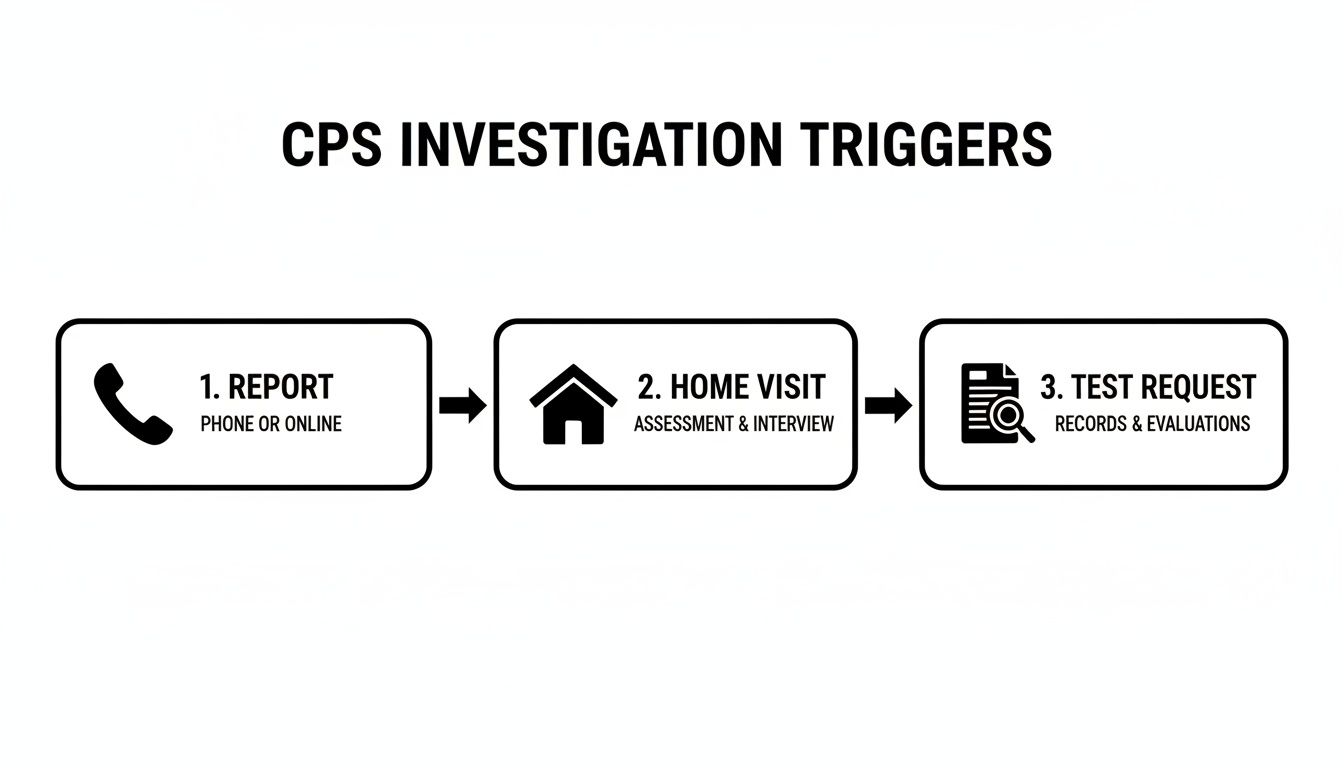
It often starts with a single report, which leads to a home visit, and suddenly you’re being asked to take a test. This simple progression shows just how quickly things can escalate and why it’s so important to be prepared.
Common Drug Testing Methods Used By CPS
CPS has a few different types of tests they can use, and the one they pick depends entirely on what they’re trying to find out. Some tests are for catching very recent drug use, while others can reveal a pattern of substance use stretching back for months.
Here’s a look at the four primary methods you might encounter.
Comparing CPS Drug Test Types and Detection Windows
To give you a clearer picture, this table breaks down the common drug tests used by Texas CPS. It details what each test looks for and, just as importantly, for how long. Understanding these detection windows is key to knowing what a specific test can—and can't—reveal about your history.
| Test Type | Common Substances Detected | General Detection Window | Common Use Case by CPS |
|---|---|---|---|
| Urine Test | Marijuana, Cocaine, Opioids, Amphetamines, Benzodiazepines | 2-7 days for most drugs; up to 30 days for chronic marijuana use | The most common, go-to test for checking recent substance use. |
| Hair Follicle Test | Most illicit drugs and their metabolites | Up to 90 days | Used to establish a long-term pattern of use, especially in cases of suspected chronic abuse. |
| Saliva Test | Marijuana, Cocaine, Opioids, Methamphetamine | 24-48 hours | Quick and non-invasive, used to detect very recent use, like on the day of a home visit. |
| Blood Test | Alcohol, most illicit drugs | A few hours to 1-2 days | The most invasive and least common test; used to determine if someone is actively under the influence at that moment. |
As you can see, the choice of test tells you a lot about the caseworker's concerns. A saliva test might just be a spot check, whereas a hair follicle test suggests they are investigating a much longer history.
Here’s a bit more detail on each:
- Urine Test (Urinalysis): This is the workhorse of CPS drug testing. It's relatively cheap and can detect a wide range of substances someone might have used in the last few days or week.
- Hair Follicle Test: This one provides a much longer look back, typically showing substance use over the past 90 days. CPS often turns to this when they suspect a chronic or long-term drug problem that a urine test might miss.
- Saliva (Oral Fluid) Test: A saliva test is simple to administer and catches very recent use, usually within the last 24-48 hours. Because it’s so easy to do on the spot, caseworkers might use it multiple times a week to monitor compliance. If you're facing this, you might find articles with tips on how to prepare for a mouth swab test helpful.
- Blood Test: This is the most invasive and least common method for CPS cases. It has a very short detection window, so it's really only used to prove someone is actively intoxicated at that exact moment.
Ensuring Test Accuracy: The Chain Of Custody And MRO Review
For a drug test result to mean anything—especially in court—it has to be collected and handled perfectly. To ensure this, testing labs follow a strict chain-of-custody protocol. Think of it as a detailed paper trail that documents every single person who handles your sample, from the second it's collected until the final analysis is complete.
The chain-of-custody process is your safeguard against sample tampering, mislabeling, or contamination. Any break in this chain can be grounds to challenge the validity of the results.
Here’s a simplified breakdown of how it works:
- Sample Collection: A certified collector will observe you providing the sample to ensure its integrity. You will then seal the sample container yourself and sign a form confirming it's yours.
- Secure Transport: The sealed sample goes into a secure, tamper-evident bag and is transported directly to a certified laboratory.
- Lab Analysis: The lab logs the sample’s arrival and runs an an initial screening test. If that test comes back positive, they don’t stop there. They perform a second, more precise confirmation test to verify the result.
- MRO Review: This is a crucial final step. A Medical Review Officer (MRO)—who is a licensed physician—personally reviews all positive results. The MRO will contact you to discuss any prescription medications you're taking that could have triggered a false positive. This step is designed to separate legitimate medical use from illicit drug use.
A positive or negative result isn’t just a simple outcome; it's a piece of evidence that has to be collected, handled, and verified according to strict legal and medical standards. If you have any reason to believe a mistake was made at any point in this process, you have every right to question it.
Know Your Rights When Facing a Drug Test
This is a moment where everything can feel like it's spinning out of control. When a CPS caseworker asks you to take a drug test, your mind is probably racing, but one question stands out: Do I have to say yes?
The answer isn't a simple yes or no. How you respond in this single moment can set the tone for the entire investigation. It's a critical crossroads, and understanding your rights is the only map you have.
Legally speaking, you do not have to agree to a CPS drug test without a court order. But this is a very delicate situation. A flat-out "no" can be twisted and used against you in ways you might not expect. We need to break down the difference between giving voluntary consent, refusing outright, and being forced to test by a judge.
Voluntary Consent Versus Refusal
When a caseworker first asks you to test, they are asking for your voluntary consent. You have the absolute right to say no. But before you make that call, you have to understand what happens next.
If you refuse, the caseworker can't hold you down and force you to provide a sample. That's not how it works. What they can do—and what they almost always will do—is note your refusal in their official report.
From there, they will likely go to a judge and argue that your refusal is proof you have something to hide. A judge might see that refusal as an "inference of guilt" and use it as the main reason to sign a court order that compels you to take the test. This puts you on the defensive from day one and makes you look uncooperative, which is never a good look in a CPS case.
A Common Scenario: The Consequences of Refusal
Let’s play this out. A caseworker shows up and asks for a drug test. You feel cornered, defensive, and like your privacy is being invaded, so you refuse. The caseworker leaves, and for a second, you feel a sense of relief.
But a few days later, you're served with legal papers.
CPS has filed a motion with the court. Their petition says they have reason to believe your child is at risk because of substance abuse, and your refusal to cooperate has only made them more concerned. A judge, looking at the initial report plus your refusal, signs the order. Now you are legally required to test, and you've already made a bad first impression on the court.
Under the Texas Family Code, your actions during an investigation matter. An outright refusal can be framed as an obstruction of the investigation, which can be used as grounds for further court intervention, including a potential removal of your child under Chapter 262.
This is why your response has to be strategic. Instead of a hard "no," the best first move is to state that you need to speak with your attorney before making any decisions. This move asserts your rights without making you look guilty or confrontational.
Challenging the Test and Its Results
Even if you agree to a test or are ordered by a court to take one, your rights don't just vanish. You have the right to make sure the entire process is fair and that the results are accurate. This includes several key protections:
Questioning the Chain of Custody: As we've covered, the chain-of-custody protocol is a strict, non-negotiable requirement. If you notice any mistakes in how your sample is handled—like an unsealed container, a mislabeled form, or improper documentation—your attorney can use these errors to challenge the validity of the results.
Disclosing Prescription Medications: So many common prescription drugs, and even some over-the-counter medications, can trigger a false positive. You have the right—and you absolutely should—inform the testing lab and the Medical Review Officer (MRO) about any and all medications you are taking. This can prevent a devastating misinterpretation.
Requesting an Independent Retest: If a test comes back positive and you are certain it's a mistake, you have the right to demand that the original sample be sent to an independent, third-party lab for retesting. A sharp attorney can help you file the necessary motions to make this happen.
Asserting these rights isn't about being difficult; it's about making sure the process is fair from start to finish. An experienced CPS defense lawyer can help you walk this tightrope, protecting your rights without putting your case in jeopardy. To dive deeper into this topic, you can find more legal insights on CPS drug tests and your rights in Texas in our related article.
How Test Results Can Shape Your Case and Custody
That single piece of paper with your drug test results can feel like it holds your entire future. In many ways, it does. The outcome of a CPS drug test will steer your case in one of two very different directions—either toward a swift resolution or down a much more complicated legal path.
A negative test result is often the best news you can get. For many families, a clean screen is the final piece of the puzzle the caseworker needs. It backs up what you’ve been saying, resolves their biggest fears, and allows them to close the investigation. It can be the key to getting your life back to normal and putting this nightmare behind you.
When a Drug Test Comes Back Positive
Getting a positive drug test result is a serious blow, there’s no sugarcoating it. But it's absolutely crucial to understand this: it is not the end of the road. It is, however, the start of a much more involved and challenging journey with CPS. Your immediate focus must shift to what comes next, because the agency will move quickly based on the Texas Family Code.
Once CPS has a positive test in hand, they see it as a confirmed safety threat. Their response will be swift and decisive. You can generally expect them to take one or more of the following actions:
- Implementing a Safety Plan: This is almost always the first move. The caseworker will ask you to sign a "Safety Plan," which is a formal contract laying out rules you must follow to keep your children in the home. This might mean having another adult supervise you at all times with your kids or agreeing to follow-up random drug tests.
- Mandatory Assessments and Services: You will almost certainly be ordered to complete a substance abuse assessment. From there, you’ll be required to follow its recommendations, which could include counseling, attending support groups like AA or NA, or even an intensive outpatient program.
- Removal of Your Children: This is the most severe action. If CPS believes the drug use presents an immediate and serious danger, they can legally remove your children from your care under Texas Family Code Chapter 262. This step immediately triggers a formal court case to decide your family’s future.
A positive drug test isn’t just a strike against you—it becomes a central exhibit in the state's case. A pattern of positive tests can eventually be used in a lawsuit to terminate your parental rights under Texas Family Code Chapter 161.
A Positive Test Is a Turning Point, Not a Final Verdict
Let’s think about a real-world example. Imagine a single mom, Maria, who occasionally uses marijuana on weekends to cope with stress, but never when her son is around. When a CPS drug test comes back positive, they immediately put a strict safety plan in place. Her mother has to move in to supervise every interaction she has with her child. Maria feels overwhelmed, judged, and like she's already lost.
This is where the story can change. Instead of giving up, Maria calls an attorney. She immediately enrolls in a parenting class and starts counseling to find better ways to manage her stress. By getting ahead of the problem and showing a real commitment to change, she starts to build a new narrative for the judge—one that shows she’s a dedicated parent who puts her son first. Her actions begin to speak louder than the test result.
If a positive drug test leads to required services, understanding the legal implications of court-mandated treatment is critical. Being proactive and compliant, paired with solid legal advice, is the strongest strategy for getting your family back on track. A positive test demands a serious response, but it doesn’t have to define your family’s future.
Your Action Plan After a CPS Drug Test Request
When a CPS caseworker looks you in the eye and asks you to take a drug test, time seems to stop. It’s a moment packed with fear and a hundred questions racing through your mind. But this is exactly when you need to push the panic aside and get strategic. What you do next can define the entire course of your case.
This isn’t about arguing or getting emotional. It's about taking a breath and following a clear, purposeful plan. By controlling your response right from the start, you begin protecting your rights and your family immediately. Here are the actionable steps you should take in the critical moments after a CPS drug testing Texas request is made.
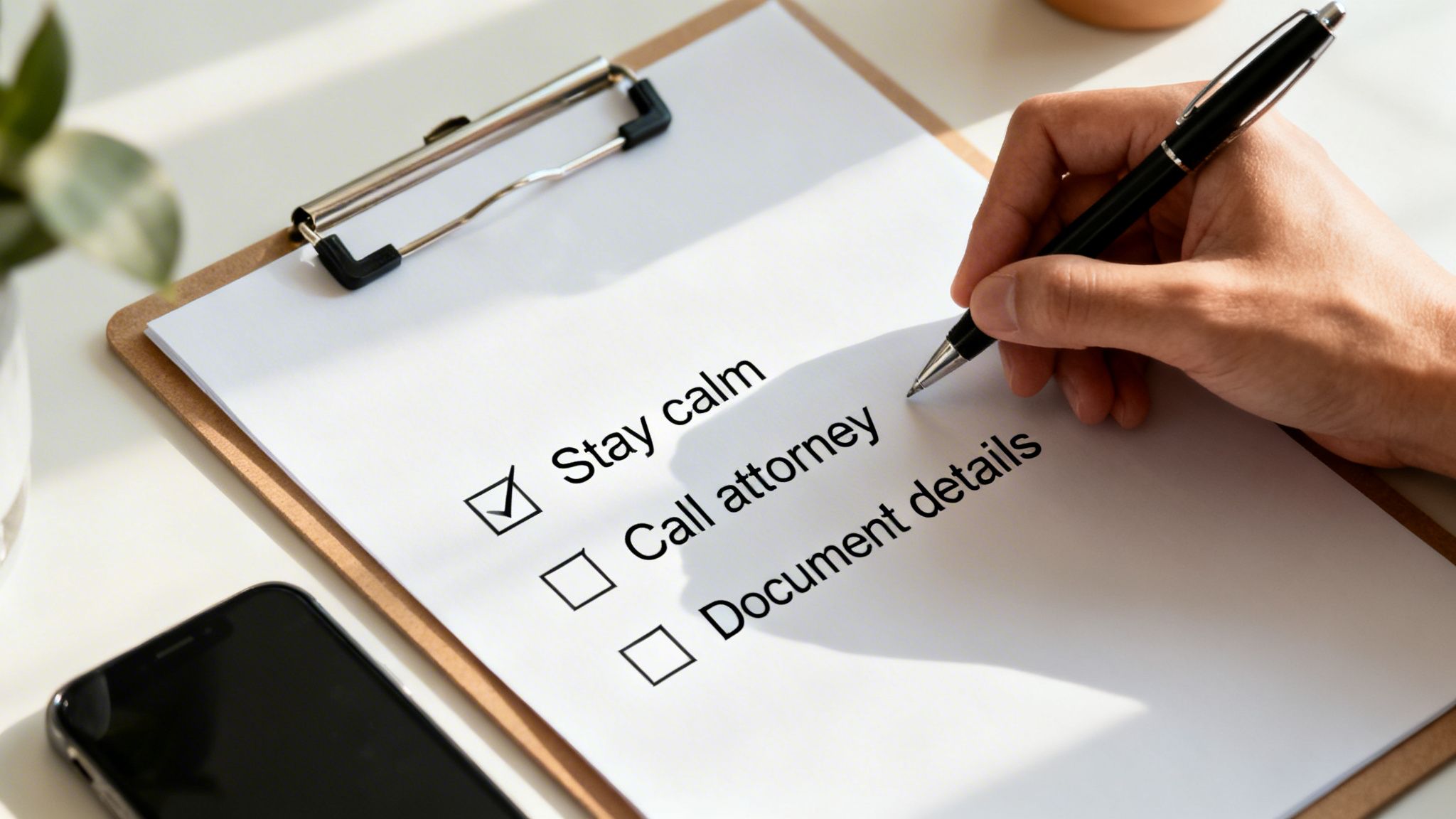
Your Immediate Checklist
Think of this as your emergency game plan for a CPS investigation. Every step is designed to secure your legal footing while showing you’re a responsible parent who is taking this with the seriousness it deserves.
Stay Calm, Be Polite, Say Almost Nothing: Your gut reaction might be to start defending yourself or explaining everything. Don’t. This can backfire badly. Stay calm and respectful with the caseworker, but avoid admitting to anything or launching into a long story. A simple, firm statement is all you need: “I need to speak with my attorney before I make any decisions or answer further questions.” This response is polite, legally smart, and doesn't obstruct their investigation.
Call a CPS Defense Attorney—Right Now: This is the single most important step you can take. An attorney who lives and breathes Texas CPS cases knows the system, the local courts, and the caseworkers. They will give you immediate advice on whether to consent to the test, how to handle all communication with CPS, and what’s coming next. This is how you protect your rights from day one.
Document Everything: Get a notebook and start writing. Log the caseworker's name, the date and time of the interaction, and exactly what they said and what you said. Keeping a detailed, real-time record of every conversation and request creates a powerful tool your attorney can use to defend you and ensure CPS follows its own rules.
Follow Your Attorney's Advice: Whether the advice is to consent to the test or to require CPS to get a court order, follow it perfectly. If you do test, show up on time, bring your photo ID, and be cooperative during the collection. This kind of compliance sends a strong message to the court that you are taking this seriously. And always, always request a copy of the results for your own records.
These first few moves aren’t just about damage control; they are about taking back a measure of power in a situation that feels powerless. A calm, documented, and legally-advised response is your best line of defense.
Trying to fight a CPS investigation on your own is an uphill battle, and the stakes—your family’s future—are incredibly high. As you can see from this checklist, there are critical decisions to be made from the very first minute. You can get a broader view of this initial phase by reading our guide covering the top steps to take after a Texas CPS investigation.
Frequently Asked Questions About Texas CPS Drug Tests
When you’re suddenly staring down the possibility of a CPS drug test, your mind can race with a million questions. The situation feels overwhelming, and you need straight answers, fast. Let's walk through some of the most pressing concerns Texas parents have when they find themselves in this exact spot.
Can CPS Force Me to Take a Drug Test in Texas?
No, a CPS caseworker cannot physically strap you down and force you to provide a sample. They need a court order for that. But here's the reality: refusing to test can look incredibly bad. The caseworker will almost certainly see your refusal as a red flag—basically, an admission that you have something to hide. They'll use that refusal to argue to a judge that you must be compelled to test, and it can seriously hurt your credibility from the get-go.
What Happens If I Test Positive for Marijuana?
Even with marijuana laws changing across the country, Texas is not one of those places. CPS still takes a positive THC test very seriously and views it as a potential risk to your child's safety. A positive result will likely trigger a mandatory safety plan, force you into services like substance abuse counseling, and lead to more drug testing down the road. It is absolutely not treated any more lightly than other substances.
A positive drug test, for any substance, gives CPS a powerful tool to dig deeper into your family’s life. The agency isn’t just focused on the drug itself, but on how using it might get in the way of your ability to be a safe and effective parent.
Can Prescription Drugs Cause a False Positive?
Yes, this happens more often than you might think. A lot of common prescription medications, and even some over-the-counter ones, can show up as a false positive on an initial drug screen. This is why it is critically important to give a full, honest list of every single medication you're taking to the testing facility before you give a sample. You should also provide this list to your attorney immediately to head off a simple misunderstanding that could blow up your case.
How Long Will CPS Make Me Drug Test?
There's no single answer to this; it completely depends on your specific case. It could be a one-and-done test just to close out an investigation where the initial concerns were minor. On the other hand, if your case goes to court, a judge could order you to submit to random, ongoing drug tests for months or even more than a year as part of a family service plan under the Texas Family Code.
The fear and uncertainty that come with a CPS drug test can be paralyzing, but you should not have to go through this alone. At the Law Office of Bryan Fagan, PLLC, our compassionate and experienced attorneys are here to protect your parental rights and guide you through every single step. We will defend your rights, fight for your family, and guide you through every part of this overwhelming journey. For a free, confidential consultation to talk about your case and start building a plan to protect what matters most, contact us today.