Skip to content
When you hear that unexpected knock on the door and see a Child Protective Services (CPS) caseworker standing on your porch, your world can feel like it’s grinding to a halt. It’s a moment that floods parents with a stomach-churning mix of fear, confusion, and defensiveness. For many, this is the very first time they learn that someone—often anonymously—has made a report against their family.
This isn’t just a casual check-in; it’s the start of a formal investigation, and how you handle these first few moments can set the tone for everything that follows. We understand the panic and the feeling of being judged. Here at The Law Office of Bryan Fagan, we've stood beside countless Texas families as they’ve navigated this exact experience. Our goal is to arm you with knowledge and practical, reassuring guidance so you can face this challenge with a clear head, not just anxiety.
The Knock at the Door: What a Texas CPS Home Visit Really Means

A home visit from CPS isn't random. It’s a mandatory response triggered by a report alleging child abuse or neglect. Under the Texas Family Code, once a credible report is made, CPS is legally obligated to initiate an investigation. The caseworker showing up at your home has one primary objective: to assess the immediate safety of the children inside.
This guide is designed to be your first line of defense. We'll walk you through what’s happening, why it’s happening, and what you can do to protect your family and your rights.
Understanding the Purpose of the Visit
To determine if your children are safe, the caseworker is there to gather facts. They’re not there to pass judgment, but to investigate the specific allegations that were reported.
They'll want to do a few key things:
- Visually inspect your home: This involves checking for basic cleanliness, ensuring you have adequate food, and confirming utilities like water and electricity are working. They're looking for obvious safety hazards.
- Interview you and your children: The caseworker will want to speak with everyone in the home, often separately. These conversations are aimed at understanding your family's situation and getting to the bottom of the report.
- Observe family interactions: How you speak to your kids, and how they behave around you, gives the caseworker important clues about your family dynamics.
Imagine a single mom, let's call her Maria, who finds a caseworker on her doorstep because her son told a school counselor he was "always hungry." The caseworker's job is to figure out if this is a genuine sign of neglect or just a typical kid's exaggeration. Maria’s ability to stay calm and cooperative—while still understanding her rights—can dramatically influence the direction of the investigation. You can get a deeper look at the entire process by reading our guide on the CPS investigation process in Texas.
To give you a quick reference, here’s a breakdown of what the caseworker is looking for and what it means for you.
CPS Home Visit At a Glance
| Element of Visit | What It Means for You |
|---|---|
| Initial Contact | The first time you learn about an allegation. Your calm and cooperative demeanor is crucial. |
| Home Inspection | The caseworker will look for food, running water, and a safe, clean living space. |
| Parent Interview | You will be asked questions about the allegations. You have the right to not answer and to have an attorney present. |
| Child Interview | The caseworker will want to speak to your children, possibly alone. Know your rights regarding this. |
| Observing Interactions | How your family behaves provides context. Try to remain as normal and calm as possible. |
This initial visit is all about fact-finding. Staying composed and being prepared are your most powerful tools during this stressful first encounter. This guide will continue to demystify the process, explain what caseworkers can and cannot do, and detail your legal rights under the Texas Family Code so you can take the right steps to protect what matters most.
Why Is CPS at My House? Understanding the Triggers for an Investigation
It’s a moment no parent ever wants to experience: a knock on the door and a Child Protective Services (CPS) caseworker standing on your porch. The first thought that races through your mind is almost always, "Why? Why is this happening to my family?" It can feel like a direct judgment, an accusation out of the blue.
But it's important to take a deep breath and understand the process that brought them there. A CPS investigation almost never starts on its own. It begins with a single, specific action: a report made to the state hotline.
Under Texas law, CPS is legally bound to investigate every credible report of child abuse or neglect they receive. This system is built to cast a wide net to protect children, but it means an investigation can be sparked by countless sources. The caseworker's visit isn't proof you've done anything wrong; it's simply the first step to see if the claims have any truth to them.
Who Can Make a CPS Report?
The reality is, the call to the CPS hotline can come from just about anyone. These reports generally fall into two main categories.
- Mandated Reporters: This group is made up of professionals who are legally required to report any suspicion of child abuse or neglect. Think teachers, doctors, daycare staff, therapists, and nurses. Because of their roles and frequent contact with children, reports from these professionals often carry significant weight.
- Anonymous or General Public Reporters: This includes literally anyone else—a neighbor who overheard an argument, a concerned relative, a disgruntled ex-partner, or even a stranger who misinterpreted something they saw in public. While many of these reports come from a place of genuine concern, some are unfortunately driven by personal vendettas or simple misunderstandings.
No matter who made the call, CPS has to follow up. Their arrival at your home is a required procedural step, not an immediate confirmation of guilt.
The Most Common Trigger: Neglect
While investigations can cover everything from physical abuse to emotional harm, the single most common reason for CPS involvement in Texas is neglect. This word trips up a lot of parents because it can mean so many different things.
Under the Texas Family Code, neglect can include failing to provide a child with adequate food, clothing, shelter, or medical care, or placing a child in an environment that poses a substantial risk of harm.
This definition is incredibly broad. It means situations that feel minor or are just the result of a tough financial spot can sometimes be flagged as neglect. The issue is massive; Texas Child Protective Services completed hundreds of thousands of investigations in recent years, with neglect being the top reason for confirmed maltreatment. A huge percentage of these confirmed victims are very young children, which is why CPS considers a home visit absolutely essential for checking on a child's immediate environment. You can dig into the data on this issue and see how it affects Texas families by reviewing the official findings on child welfare.
How a Misunderstanding Can Start an Investigation
Let’s walk through a common scenario. Imagine a single mom, Sarah, who is working two jobs just to keep the lights on. Her seven-year-old son, Leo, casually tells his teacher, "Mommy is always tired and sometimes we just have cereal for dinner." Leo isn’t complaining; to him, it's just a simple fact.
The teacher, however, is a mandated reporter. Her mind connects "always tired" and "cereal for dinner" to potential neglect, and she feels legally obligated to make a report. A few days later, a caseworker shows up for a cps home visit texas. Sarah is completely blindsided, embarrassed, and terrified she’s about to lose her son over a box of Cheerios.
This is a perfect example of how an innocent comment or a difficult life circumstance can ignite a full-blown investigation. For Sarah, the caseworker’s job isn't to punish her for being exhausted. It's to make sure Leo has enough to eat, a safe place to live, and is generally being cared for. Understanding this purpose is the first step toward handling the situation with a calm, clear head instead of fear. The caseworker is there to investigate a specific report, and your informed, cooperative attitude can go a long way in showing them it was all just a misunderstanding.
Your Constitutional Rights During a CPS Investigation
This is the point where raw fear needs to start turning into calm preparedness. When a CPS caseworker shows up at your door, it’s easy to feel completely powerless. But that simply isn't true. Both the U.S. and Texas Constitutions grant you fundamental rights, and understanding how to use them respectfully during a cps home visit texas is absolutely critical.
Knowing your rights isn't about being difficult or uncooperative. It’s about being an informed and prepared parent. This knowledge is your first line of defense, preventing a simple misunderstanding from spiraling into a full-blown legal nightmare for your family.
Can CPS Come Into My Home Without My Permission?
This is the number one question on every parent's mind: "Do I have to let them in?" The answer is straightforward: No, you do not have to let a CPS investigator into your home without a court order or a warrant. Your home is your castle, protected by the Fourth Amendment against unreasonable searches.
A caseworker can't just barge in because they flash a badge from CPS. To enter your home without your permission, they need one of two things:
- A Court Order or Warrant: This means a judge has already reviewed some evidence and has given CPS specific permission to enter your home. This order might be to search for evidence or, in serious cases, to remove a child.
- "Exigent Circumstances": This is a legal term that means a true, bona fide emergency is happening right now. The caseworker must have a credible, immediate reason to believe your child is in imminent danger of serious injury or death.
The bar for an emergency is incredibly high. It doesn't mean your house is a bit messy or your child said something odd to a teacher. It means something like hearing blood-curdling screams from inside or seeing a child in a visibly life-threatening situation through a window. If those conditions aren't met, you have the right to say no.
The Right to Remain Silent
It might sound like something from a TV crime drama, but it applies here, too. You have the right to remain silent, just as you would in a police investigation. You are not required to answer the caseworker's questions, especially those about the specific allegations against you. Remember, anything you say can and will be documented and possibly used against you.
When they’re nervous, many parents try to be helpful and end up over-explaining. This is a natural reaction, but it often backfires spectacularly. It’s far too easy to say something that gets twisted or taken completely out of context. Instead of getting drawn into an on-the-spot interrogation, you can be polite but firm.
"I want to cooperate fully with your investigation, but I am not comfortable answering questions or making any decisions until I have spoken with my attorney."
This one sentence is your shield. It clearly shows you intend to comply but that you are also protecting your legal rights. It signals to the caseworker that you're taking this seriously and won't be pushed around. Be aware that an unauthorized search by any government official can have serious legal consequences. You can learn more about what constitutes an illegal search and seizure in Texas and how that might apply to your case.
The Right to an Attorney and to Not Sign Documents
You have the absolute right to have an attorney represent you at every single stage of a CPS investigation. Honestly, this is probably the most important right you can exercise. An experienced family law attorney who knows the ins and outs of CPS procedures can step in and manage all communication, stopping you from making unforced errors under pressure.
Caseworkers might try to get you to sign documents on your doorstep, like a "Parental Child Safety Placement" form or a "Safety Plan." Never sign anything without your lawyer reviewing it first. These are legally binding documents that can have devastating consequences, including you temporarily signing away your right to have your own children live with you.
Scenario: A Father Stands His Ground
Think about Mark, a dad whose ex-wife filed a false report right after a heated custody battle. When the caseworker arrived, she was insistent, saying she needed to "just look around" inside.
Instead of caving to the pressure, Mark stayed calm and stood on his porch. He told her, "I understand you have a job to do, and I will cooperate. However, I will not let you in my home or answer questions without my attorney present." The caseworker wasn't happy, but there was nothing she could legally do to force her way in. Mark called our office immediately. We took over all communication, and we were able to quickly show that the report was purely retaliatory and had no merit. The case was closed without Mark ever having to let an investigator disrupt his home or interrogate his kids. His calm assertion of his rights made all the difference.
What to Expect During the Home Visit
The knock on the door from a Child Protective Services (CPS) caseworker is a moment that can send a wave of panic through any parent. But knowing what to expect, step-by-step, can help you dial down the anxiety and regain a sense of control.
At its core, the visit is a fact-finding mission. The caseworker is there to investigate the specific allegations made in the report they received, and they have a mental checklist of things to assess to make sure your child is safe. This boils down to three main parts: looking at your home, talking to your family, and watching how you all interact.
The Home Inspection
First things first, the caseworker is going to want to walk through your home. Let's be clear: they are not looking for a house that looks like it belongs in a magazine. What they are looking for are basic standards of health and safety.
Their eyes will be peeled for a few key things:
- Safety Hazards: This is the big one. They're scanning for obvious dangers like exposed electrical wiring, firearms that aren't secured, or any drug paraphernalia left out in the open.
- Adequate Food: Don't be surprised if they ask to look in your refrigerator and pantry. They just need to see that there’s enough food in the house for the kids.
- Working Utilities: They’ll check to make sure you have the essentials: running water, electricity, and a working heater or air conditioner, depending on the season.
- General Cleanliness: While a little bit of everyday clutter isn't a red flag, extreme filth or hoarding situations can be viewed as a health hazard.
Your home doesn't have to be perfect; it just has to be safe. Try to see it from a child's point of view—is there anything here that could cause immediate harm?
This chart below gives you a quick visual guide for those first critical moments when a caseworker arrives, helping you think clearly about your rights right at the doorway.
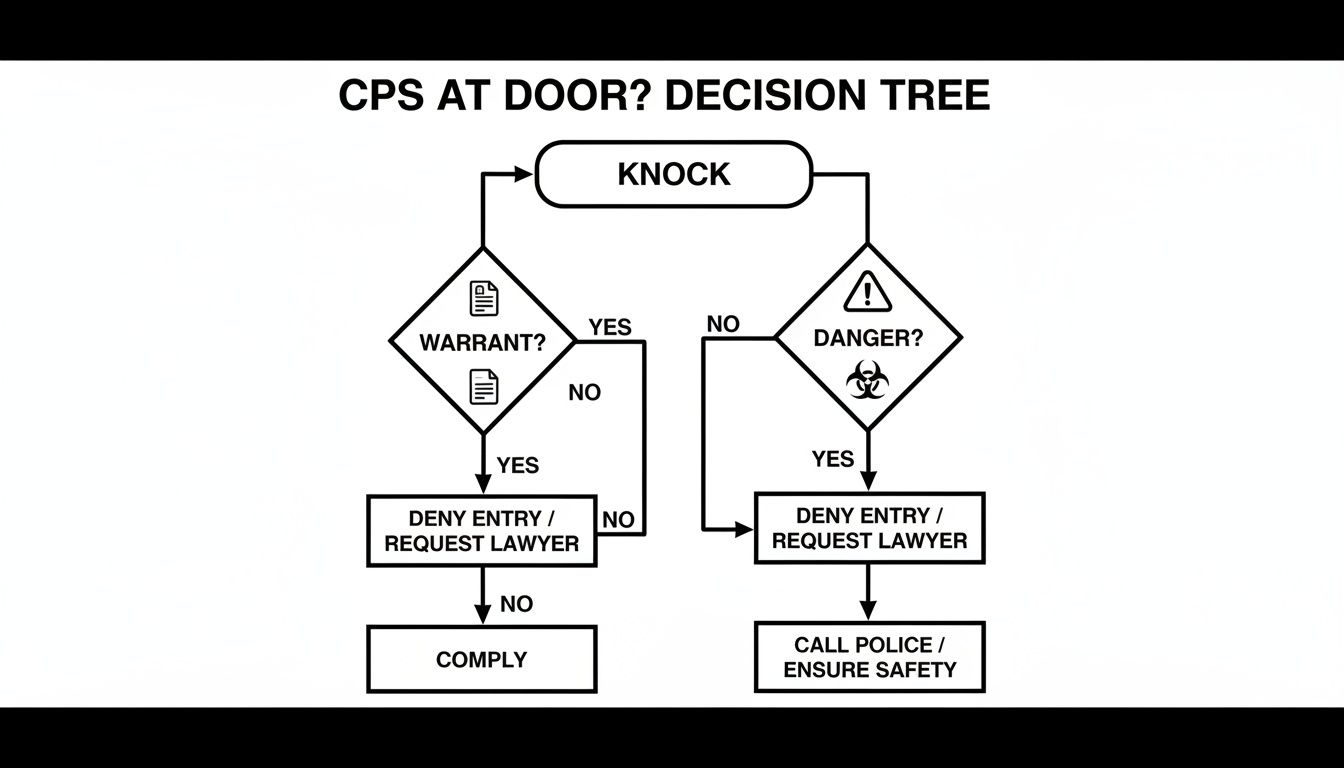
The most important thing to remember is to first figure out if they have a legal right to come inside (like a warrant) or if a genuine, life-threatening emergency is happening. That's your first decision point.
The Interview Process
The interviews are a huge part of any cps home visit texas. The caseworker will need to speak with you, your partner or any other adults living there, and your children. Here’s a point that catches many parents off guard: the caseworker has the legal authority to interview your children separately and without you in the room.
The idea behind separate interviews is to create a space where a child might feel safe to talk openly, away from any potential pressure from a parent. The questions will be tailored to the child's age, and they'll usually revolve around daily life, how safe they feel, and the specific claims made in the report. Being prepared is your best defense, and you can get some great strategies on how to answer Texas CPS questions in an interview so you don't accidentally make things worse.
When it’s your turn to be interviewed, remember that every single thing you say is being noted. Stay calm and be polite, but choose your words carefully. You don't have to answer questions that might incriminate you, and it is always your right to say, "I would like to speak with my attorney before answering further questions.”
Observing Family Dynamics
From the moment the caseworker steps through the door to the moment they leave, they are watching. They are paying close attention to the vibe in your home—how you and your children interact. They notice your tone of voice, your body language, and how your kids react to you.
Do you seem loving and connected, or is the air thick with tension and anger? Do your kids appear relaxed and happy, or are they withdrawn and fearful? These unspoken cues are incredibly powerful.
Think about it: their entire job is to assess the home environment and parental conduct to determine a child's safety. A family that remains calm, is cooperative (but firm on their rights), and interacts with their children in a normal, loving way is already painting a much more positive picture for the caseworker. This behavior alone can go a long way in showing that the allegations just don't match the reality of your family life.
After the Visit: Possible Outcomes and Next Steps
The silence after the caseworker’s car drives away can be deafening. The immediate crisis of the CPS home visit might be over, but a new wave of anxiety and uncertainty is just setting in. You're left replaying every word, every look, wondering, what happens now? This waiting game is incredibly stressful, but knowing the potential paths your case can take helps you get ready for what's coming.
In Texas, an investigation usually wraps up in about 30 to 45 days. During this period, the caseworker is finalizing their report, which will lead to one of three official findings. Your family’s entire future hinges on this outcome, so understanding what each one means is absolutely critical.
Understanding the Three Possible Findings
Once the investigation is complete, CPS will mail you a disposition letter that spells out their conclusion. Each finding carries vastly different weight and consequences for your family.
- Ruled Out: This is the best news you can get. It means the caseworker looked at the evidence and determined the alleged abuse or neglect did not happen. Your case will be closed, and CPS will step out of your life.
- Unable to Determine (UTD): This is a gray area. It means the caseworker couldn’t find enough credible evidence to prove or disprove the allegations. The case is typically closed, but it can be reopened if someone makes another report down the road.
- Reason to Believe (RTB): This is the most serious finding. It means the caseworker believes there is enough evidence to conclude that child abuse or neglect occurred. An RTB finding isn’t the end of the road; it’s the beginning of the next, more serious stage.
The finding in your case is the critical fork in the road. A "Reason to Believe" determination triggers further CPS action and significantly raises the stakes. This is the point where having an experienced attorney is no longer a good idea—it's an absolute necessity.
What Happens After the Finding
The caseworker’s finding is the domino that sets the next steps in motion. The path forward could be as simple as a closed file or as life-altering as a lawsuit to remove your children from your home.
Here’s a breakdown of the most common scenarios:
- Case Closure: If the finding is "Ruled Out" or "Unable to Determine," CPS will almost always close the case. You’ll get a letter in the mail confirming this, and your direct involvement with the agency should be over.
- Family-Based Safety Services (FBSS): With an RTB finding, if CPS believes your children can stay safely in the home with some help, they might offer you a Family-Based Safety Services (FBSS) plan. This is a voluntary agreement where you agree to follow certain rules and participate in services like counseling, parenting classes, or drug testing.
- Lawsuit and Potential Removal: In the most severe cases, where CPS believes a child is in immediate danger, they will file a lawsuit under the Texas Family Code. This legal action can lead to a court ordering the removal of your children from your home, a terrifying prospect governed by strict legal timelines under Chapter 262 and Chapter 263 of the Texas Family Code.
A Critical Warning About Service Plans
Picture this: you're exhausted and scared after weeks of investigation. The caseworker sits across from you, offers you a service plan, and says that if you just sign it, they won't have to take you to court. It sounds like a lifeline.
Do not sign it without getting legal advice. An FBSS plan or any other "safety plan" is a binding document. When you sign it, you are often admitting to the very allegations made against you and agreeing to a set of conditions that can be incredibly difficult to meet perfectly. If you fail to comply with even one small part of that plan, CPS can and will use that failure against you in court as grounds to remove your children.
If a caseworker puts any document in front of you, especially a service plan, or if they even mention the possibility of removal, the time for waiting is over. You need an advocate in your corner immediately—someone who can protect you from signing away your rights and fight to keep your family together.
How a Family Law Attorney Protects Your Rights

Going through a CPS investigation, especially after a nerve-wracking cps home visit in Texas, can feel like you’re trying to navigate a minefield blindfolded. You're exhausted, scared, and every single move you make feels like it could have monumental consequences. This isn't a path you should ever have to walk alone.
Hiring an experienced family law attorney isn’t about admitting you did something wrong. Far from it. It's a smart, strategic move to safeguard your family and everything you’ve built.
Think of your attorney as your personal shield. They plant themselves firmly between your family and the massive power of the state, making sure your rights are honored every step of the way. From the moment you bring us on board, we manage the pressure, building a protective wall so you can focus on what matters most: your children.
Your Advocate and Your Voice
One of the most immediate reliefs you'll feel is that all communication from CPS can start going through our office. No more worrying about what to say when a caseworker calls you out of the blue. No more feeling cornered into an interview you aren’t prepared for.
An attorney brings order and a clear plan to what feels like a completely chaotic situation. Here’s what we do as your actionable advice:
- Manage All Communication: We become the single point of contact for the caseworker. This stops you from making panicked statements or accidental missteps under pressure.
- Be Present During Interviews: We will stand by your side during any questioning. We ensure the caseworker’s questions are fair and that your words aren't twisted or taken out of context.
- Analyze the Allegations: We dive deep into the specific claims made against you, looking for weaknesses and gathering evidence to push back against false or overblown accusations.
Having an attorney on your side sends a clear message: you are taking this investigation seriously and are fully prepared to defend your family. It instantly shifts the dynamic from you against the system to a level playing field between legal professionals.
Real-World Protection for Your Family
Here’s a situation we see all too often: A father gets a blindsiding call from a caseworker. Based on nothing more than an anonymous tip, they want him to agree to a drug test, right then and there. Feeling trapped and wanting to look cooperative, he might just say yes on the spot.
An attorney would immediately advise him to politely decline until that request can be put in writing and formally reviewed.
That simple act of pausing is a critical form of protection. It gives your lawyer the breathing room to question the legal grounds for the request. It prevents you from handing over evidence that could easily be misinterpreted without the proper context.
On top of that, an attorney's deep familiarity with the Texas Family Code is a massive advantage. We know the ins and outs of crucial laws like Chapter 262 (which covers procedures in CPS suits), Chapter 263 (governing timelines in CPS cases), and Chapter 161 (which deals with the termination of parental rights). We make absolutely sure that CPS follows every single rule. If they overstep their authority, we are ready and willing to hold them accountable in court.
Having an expert in your corner is about more than just legal defense; it's about giving you peace of mind. You’ll have a compassionate guide who truly gets the fear you're experiencing and a fierce advocate who is dedicated to one thing: getting the best possible outcome and keeping your family together.
Frequently Asked Questions About Texas CPS Visits
When a CPS investigator is at your door, your mind is likely racing with a thousand questions. Getting clear, straightforward answers is the first step in taking back control. Here are the most urgent questions we hear from Texas parents and the practical answers you need right now.
Can I Refuse to Let CPS In My House in Texas?
Yes. You absolutely have the right to refuse entry, and in many situations, you should. Your home is protected by the Fourth Amendment, which guards against unreasonable searches. Without a warrant or a specific court order, a caseworker cannot force their way inside.
You can be polite but firm. Something as simple as, "I want to cooperate, but I do not consent to a search of my home without a warrant. I need to speak with my attorney first," is enough. Letting them in voluntarily means you are waiving your rights, and everything in your home—from a messy kitchen to a prescription bottle on the counter—can be used to build a case against you.
Does CPS Have to Let Me Be Present When They Interview My Child?
Unfortunately, no. Texas law allows caseworkers to interview your children without you present and even without your consent. They often do this at the child’s school to get what they consider an "unfiltered" statement, away from any potential parental influence.
While you can’t physically stop this from happening, your attorney can act immediately. They can contact CPS to set firm boundaries for the interview, ensuring it's conducted properly and that your child's rights and emotional well-being are protected every step of the way.
Important Takeaway: Never physically interfere with an investigator trying to interview your child. This will only escalate the situation and can be used against you. The right move is to call your lawyer immediately and let them handle it legally.
Do I Have to Take a Drug Test if CPS Asks?
No, you are not legally required to take a drug test just because a caseworker asks you to. While it’s true that refusing might make the investigator suspicious, agreeing to it without legal advice can have disastrous consequences. A positive test—even a false positive—can be used as grounds to remove your children.
The safest play is to tell the caseworker you will discuss all their requests with your attorney before you agree to anything. This isn't an admission of guilt; it's you exercising your right to counsel. It buys you precious time for your lawyer to find out why they're asking for the test and to challenge it if there's no solid legal reason.
The fear and confusion of a CPS investigation are immense, but you don't have to navigate this storm by yourself. The Law Office of Bryan Fagan is here to be your shield and your guide. We will stand between you and the state, defending your rights and fighting to keep what matters most: your family. For a free, confidential consultation to discuss your case, contact us today.