Skip to content
The phone call every parent fears arrives, bringing news of an arrest for drunk driving. Instantly, your world tilts. The immediate worry about legal trouble is quickly overshadowed by a deeper, more terrifying thought: "Will Child Protective Services (CPS) get involved? Could this mistake cost me my children?" This wave of fear and confusion is overwhelming, and legal jargon like DWI vs DUI only adds to the chaos.
At The Law Office of Bryan Fagan, we understand that for a parent in Texas, a DWI or DUI charge isn't just a legal problem—it's a potential family crisis. We have stood beside countless families navigating the terrifying intersection of criminal charges and CPS investigations. Our mission is to bring clarity and compassionate guidance when you feel most lost, empowering you with the knowledge to protect not just your rights, but your family's future.
What is the Difference Between DWI and DUI in Texas?
While many use the terms interchangeably, Texas law creates a sharp distinction. Understanding this difference is critical because it determines the specific charge, the potential penalties, and how CPS might view the situation.
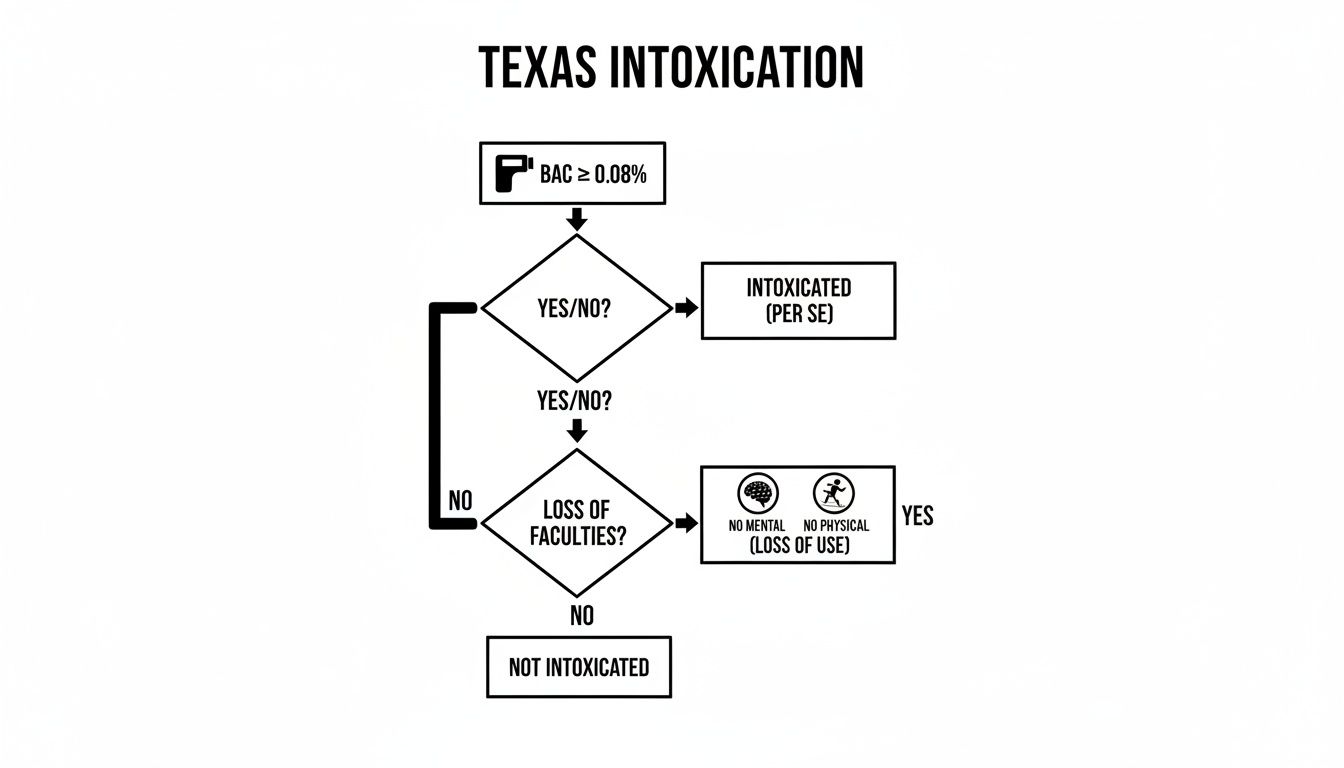
- Driving While Intoxicated (DWI): This is the charge for adults aged 21 and over. A DWI means operating a motor vehicle in a public place while legally intoxicated. This can be proven by a Blood Alcohol Concentration (BAC) of 0.08% or higher, or by showing a loss of normal mental or physical faculties due to alcohol or drugs.
- Driving Under the Influence (DUI): This charge is exclusively for minors under 21. Under Texas's zero-tolerance policy, a minor can be charged with DUI for having any detectable amount of alcohol in their system.
This table highlights the fundamental legal differences:
| Feature | Driving While Intoxicated (DWI) | Driving Under the Influence (DUI) |
|---|---|---|
| Applicable Age | Adults 21 and over | Minors under 21 years old |
| Legal Standard | Intoxication (BAC ≥ 0.08% OR loss of normal faculties) | Any detectable amount of alcohol |
| Typical Charge | Class B Misdemeanor (for a first offense) | Class C Misdemeanor (for a first offense) |
For a parent, the consequences of a DWI in Texas extend far beyond the courtroom, potentially triggering a CPS investigation that could jeopardize your parental rights.
How a DWI or DUI Arrest Can Trigger a CPS Investigation
For parents in Texas, an arrest for DWI or DUI can be the single event that brings CPS to your door. Under the Texas Family Code, any report of abuse or neglect must be investigated, and a DWI arrest—especially with a child in the car—is often interpreted as a direct threat to a child's safety.
The CPS Investigation Process: What to Expect
If CPS receives a report related to your arrest, they will likely open an investigation to assess whether your child is safe in your care. This process is governed by strict legal timelines and procedures outlined in the Texas Family Code.
- Initial Contact and Investigation (Chapter 262): A CPS caseworker will be assigned to your case and will likely visit your home, often unannounced, within 24-72 hours of the report. They will want to interview you, your children (separately), and anyone else living in the home. They will be looking for signs of substance abuse, neglect, or an unsafe home environment.
- Safety Plan and Potential Removal: If the caseworker determines there is an immediate risk to your child, they may ask you to agree to a "Safety Plan," which could involve you leaving the home or placing your children with a relative. In more severe cases, CPS can seek an emergency court order for removal under Texas Family Code Chapter 262, taking your children into state custody.
- Adversary Hearing: If your children are removed, the court must hold an Adversary Hearing within 14 days. This is your first opportunity to formally challenge the removal in court. At this hearing, CPS must present evidence showing there was an urgent need to remove the children and that it is not safe for them to return home.
A Real-Life Scenario: From Traffic Stop to Family Crisis
Consider Maria, a single mother of two. After a stressful week, she had a couple of glasses of wine at a friend's house before driving home. She was pulled over for a broken taillight, and the officer, smelling alcohol, administered a field sobriety test. Maria was arrested for DWI. Because her children were with a babysitter, she assumed this was just a legal issue.
The next day, a CPS caseworker was at her door. An anonymous caller had reported the DWI arrest, and CPS was now investigating her for "neglectful supervision" due to potential substance abuse. The caseworker demanded to inspect her home, questioned her about her drinking habits, and insisted on interviewing her children at their school. Maria felt like her life was spinning out of control. Her one mistake had now put her entire family at risk, and she had to fight a two-front war: a criminal charge and a CPS investigation. This is the reality for many Texas parents.
Protecting Your Parental Rights During a DWI-Related CPS Case
Facing both a criminal charge and a CPS investigation is daunting, but you are not powerless. The actions you take can significantly impact the outcome of both cases. Your primary goal is to demonstrate to the court and CPS that you are a responsible parent and your children are safe in your care.

Actionable Advice for Parents
- Hire an Attorney Immediately: You need an attorney experienced in both criminal defense and CPS defense. These are two distinct areas of law, and the strategies in one can impact the other. Do not speak to a CPS caseworker without legal counsel.
- Be Proactive with Services: Don't wait for a judge to order you to take action. Voluntarily enroll in an alcohol assessment, attend counseling, or take parenting classes. This shows CPS and the court that you recognize the seriousness of the situation and are committed to ensuring your children's well-being.
- Understand Your Service Plan: If a judge orders a Family Service Plan under Texas Family Code Chapter 263, this is your roadmap to getting your children back. It will list tasks you must complete, such as substance abuse treatment, therapy, and stable housing. Complete every task fully and on time.
- Document Everything: Keep a detailed log of all interactions with CPS. Save emails, text messages, and notes from phone calls. Document your attendance at all services and keep copies of completion certificates. This evidence is crucial for court hearings.
The legal standard for the termination of parental rights, outlined in Texas Family Code Chapter 161, requires CPS to prove that you engaged in endangering conduct and that termination is in the child's best interest. By proactively addressing the issues related to the DWI, you can build a strong case that your conduct does not warrant the permanent loss of your children.
Key Differences in DWI and DUI Penalties
While the CPS response may be similar, the criminal penalties for DWI and DUI are vastly different. Understanding these can help you prepare for the legal battle ahead.
First Offense DWI Consequences (Adults 21+)
A first-time DWI is typically a Class B Misdemeanor with serious penalties:
- Jail Time: Up to 180 days in county jail.
- Fines: Up to $2,000, plus court costs.
- License Suspension: 90 days to one year.
- Aggravating Factors: A BAC of 0.15% or higher elevates the charge to a Class A Misdemeanor. Driving with a child passenger under 15 is a State Jail Felony.
First Offense DUI Penalties (Minors <21)
A first-offense DUI is a Class C Misdemeanor, which is less severe but still has consequences that can impact a young person's future. More details can be found in our guide to Texas DUI penalties.
- Fines: Up to $500.
- License Suspension: 60 days.
- Community Service: 20 to 40 hours.
- Alcohol Awareness Course: Mandatory completion.
Crucially, if a minor has a BAC of 0.08% or higher, they can be charged with the more serious offense of DWI, facing the same penalties as an adult.
Your First Steps After a DWI or DUI Arrest to Protect Your Family
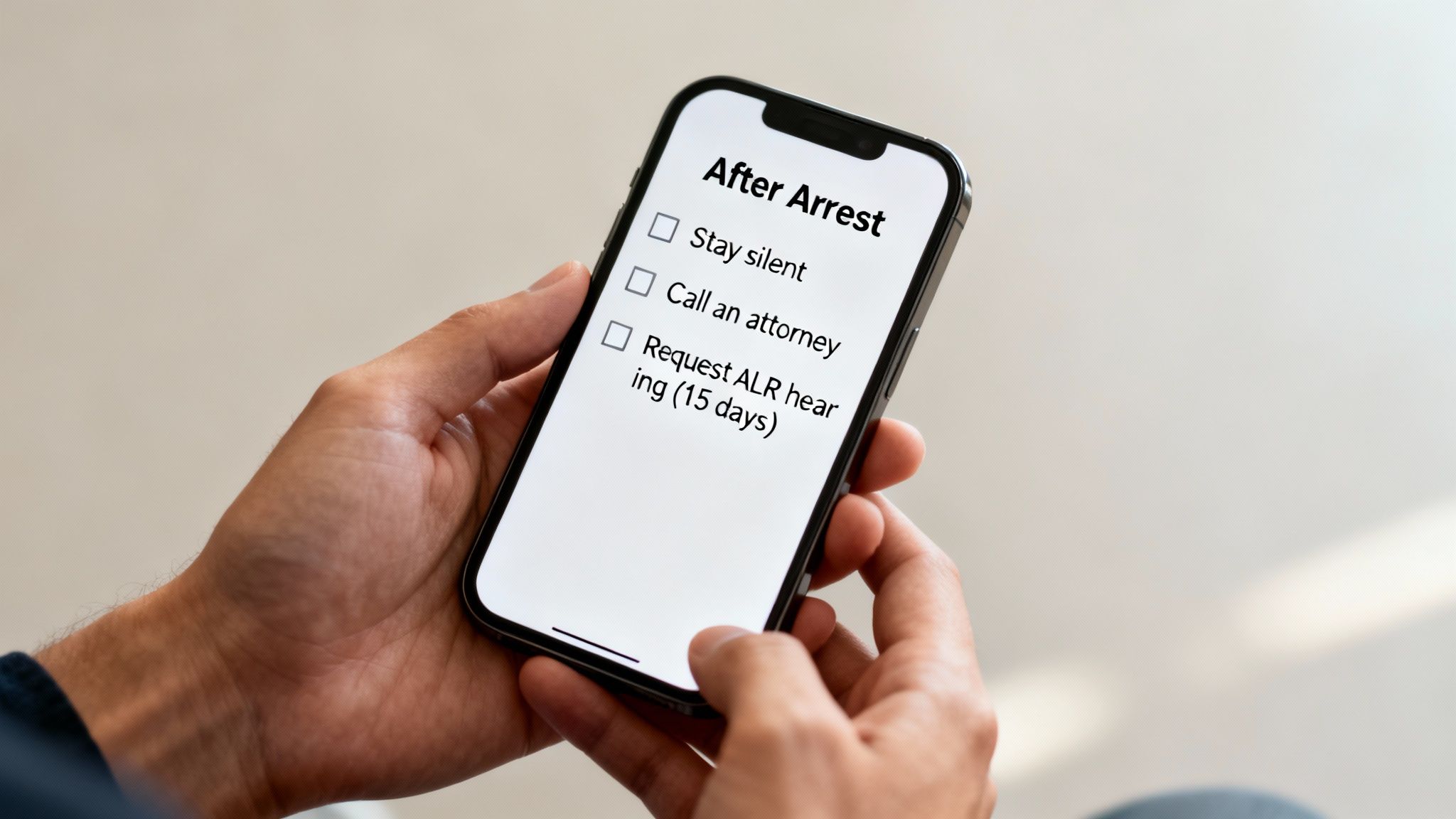
In the chaotic hours after an arrest, focus on these critical actions. What you do now can set the stage for both your criminal defense and your CPS case.
The Critical 15-Day Deadline for Your License
You have exactly 15 days from the date of your arrest to request an Administrative License Revocation (ALR) hearing. If you miss this deadline, your license will be automatically suspended. This hearing is a vital first step in your defense, as it gives your attorney a chance to question the arresting officer under oath and gather evidence that can be used to fight the criminal charge.
How We Defend Your Family on Both Fronts
An arrest is not a conviction, and a CPS investigation is not a finding of abuse. At The Law Office of Bryan Fagan, we build a comprehensive defense strategy designed to protect you in both the criminal court and the family court.
Our approach includes:
- Challenging the Criminal Charge: We scrutinize every detail, from the legality of the traffic stop to the accuracy of the breathalyzer test. A victory in criminal court significantly weakens any case CPS may try to build against you.
- Navigating the CPS Investigation: We represent you in all dealings with CPS, ensuring your rights are protected and you are not coerced into making statements or agreements that are not in your family's best interest.
- Fighting for Reunification: If your children have been removed, we fight tirelessly to help you complete your service plan and present the strongest possible case for reunification to the judge.
Knowing how to fight a DWI in Texas is essential, but when your family is at stake, you need a team that understands the full picture. For parents struggling with substance abuse issues, taking proactive steps toward recovery through evidence-based addiction treatment can be a powerful way to show the court your commitment to your children. And if the financial strain of fines and legal fees becomes overwhelming, understanding your options to stop wage garnishment in Texas can provide crucial relief.
Understanding the difference between dwi vs dui in texas is only the beginning when your family is on the line. Facing the dual threat of criminal charges and a CPS investigation requires immediate, experienced legal guidance from a team that is compassionate to your family's needs. At The Law Office of Bryan Fagan PLLC, we are dedicated to protecting your rights, your freedom, and your family. You do not have to face this crisis alone. Contact us today for a free, confidential consultation to discuss your case and learn how we can help.