Skip to content
When Child Protective Services (CPS) contacts you, the world can feel like it stops. Fear, confusion, and a desperate need for answers take over. The first question that likely floods your mind is, "How long is this going to last?" It’s a terrifying question, but understanding the legally defined timeline is the first step toward regaining a sense of control.
In Texas, the standard CPS investigation is designed to be completed within 30 days of receiving the initial report. This first month is absolutely critical. Knowing what happens during this period, and what your rights are, is essential for navigating the path ahead and protecting your family.
Understanding the Initial CPS Investigation Timeline
The moment a CPS caseworker calls or shows up at your door is gut-wrenching. It can feel like your entire life as a parent is being put under a microscope. That mix of fear, confusion, and defensiveness is a completely normal reaction for any parent who loves their children.
The key thing to hold onto is that this isn't a random process. The investigation must follow a legally defined path with specific deadlines, outlined in the Texas Family Code. The urgency of their first contact with you and your child hinges entirely on the severity of the allegations.
Priority Levels and Initial Contact
CPS sorts cases into two main priority levels, and each one has a different clock ticking for that first face-to-face meeting.
- Priority 1 (P1): These are the most severe allegations, suggesting a child is in immediate danger of physical or sexual abuse. For P1 cases, CPS must attempt to see the child within 24 hours.
- Priority 2 (P2): These cases typically involve allegations like neglect, where the risk isn't considered immediate. In P2 cases, CPS has up to 72 hours to make initial contact.
This first visit is a monumental event in the CPS investigation process in Texas, as it sets the tone for everything that follows.
For example, a report from a school nurse about unexplained bruises would almost certainly be a P1 case, triggering a very fast response. On the other hand, a report from a neighbor about a child having consistently poor hygiene might be categorized as a P2, giving the caseworker a slightly wider window to make their first visit.
Once initial contact is made, the 30-day countdown for the full investigation officially begins. This is the period when the caseworker digs in, gathers information, and works to determine if there's any truth to the allegations.
Key Texas CPS Investigation Deadlines
| Case Priority Level | Required Initial Contact Timeframe | Standard Investigation Completion Deadline |
|---|---|---|
| Priority 1 (P1) | Within 24 hours of the report | 30 days from the report date |
| Priority 2 (P2) | Within 72 hours of the report | 30 days from the report date |
Understanding these timelines is your first line of defense. It helps you know what to expect and when, turning a chaotic and frightening process into a series of predictable steps.
So, What Really Happens During That 30-Day Investigation?

That 30-day investigation window is not a time to sit and wait. It’s an intense, active fact-finding mission that will directly shape your family's future. For parents, understanding what the caseworker is actually doing can pull back the curtain on the process and help ease some of that overwhelming anxiety.
The core of any investigation comes down to interviews and information gathering. The caseworker has a legal mandate to speak with your children, with you, and with others who might have relevant information.
The Interview and Information Gathering Phase
The caseworker will conduct interviews that can feel incredibly invasive, but they are standard procedure. Their job is to build a complete, 360-degree view of your child's life and home environment.
- Interviewing Your Children: Caseworkers are trained to talk with kids, often doing so at school. The intent is to provide a neutral space where a child can speak freely without feeling parental influence.
- Speaking with Parents: You’ll be interviewed about the specific allegations, your family's daily life, and your parenting approach. It is absolutely crucial to remain as calm and cooperative as possible, while still being mindful of your rights.
- Collateral Contacts: Don't be surprised when they contact teachers, doctors, therapists, or even neighbors. They're trying to get a broader perspective on your family's situation.
In addition to conversations, the caseworker will make home visits to observe the physical living conditions. They'll look for basics like adequate food, safe sleeping arrangements, and general cleanliness. They may also request documents like school attendance records or medical charts to verify your child is receiving proper care.
Let’s look at a real-life scenario: Imagine a report is made alleging neglect because your child, who has severe asthma, missed a week of school. During the investigation, the caseworker interviews you and your child's pediatrician. You provide the medical records showing the recent asthma attack, the doctor’s note excusing the absences, and the prescription for a new inhaler. This simple act of cooperating and providing clear evidence can shut down the misunderstanding and lead to the case being closed quickly and favorably.
This entire process is designed to determine if the initial report is valid. How you engage with it—calmly, constructively, and guided by legal counsel—can make all the difference in demonstrating that your home is a safe and loving place for your child.
When you hear the 30-day investigation timeline needs an extension, it can feel like a punch to the gut. It’s natural to immediately assume the worst—that CPS has found something concerning and the case is getting more serious.
But an extension isn’t automatically a bad sign. More often, it simply means the caseworker needs more time to complete their investigation thoroughly. An investigation might be delayed because the caseworker is waiting on medical records, trying to contact a hard-to-reach witness, or following up on new information that emerged late in the initial 30-day period.
Your Rights When an Investigation Is Extended
When this happens, you aren’t just left in the dark to worry. Under the Texas Family Code, you have the right to be officially notified about the extension and the reasons for it. This information is your power.
An extension can feel like the process is grinding to a halt, but the law ensures you’re kept in the loop. Understanding why the caseworker needs more time helps you stay proactive instead of feeling powerless.
If you receive a notification of extension, it’s a signal to take these key steps:
- Communicate and Follow Up: This is not the time to be passive. Don't hesitate to reach out to the caseworker’s supervisor for an update. A polite inquiry about the progress can keep your case from falling through the cracks.
- Talk to Your Attorney Immediately: This is a critical moment to lean on your lawyer. A skilled attorney can analyze the reasons for the extension, ensure the investigation is proceeding fairly, and protect your parental rights during this prolonged process.
Knowing how long CPS has to investigate in Texas and what it means when that timeline shifts is key. It empowers you to handle the situation with a clear head and the confidence that you’re doing everything you can.
Navigating Court Timelines If a Child Is Removed
When CPS makes the agonizing decision to remove a child from your home, the ground gives way beneath your feet. Suddenly, you're not just dealing with an investigation; you are thrust into the Texas court system, a world with its own urgent and unyielding set of deadlines.
This is the point where the question of how long CPS has to investigate in Texas evolves into a map of your legal battle. The Texas Family Code, particularly Chapters 262 and 263, sets a rapid pace for these court proceedings to ensure a child’s case doesn’t get lost in legal limbo. Every single court date is a critical opportunity for your voice to be heard by a judge.
The Court's Strict Calendar
Once a child is removed, a series of hearings are scheduled, each with a specific purpose and a non-negotiable deadline. After an emergency removal, Texas law requires an emergency hearing to be held within three business days.
It doesn't slow down from there. By the 14th day, an adversary hearing is scheduled to determine temporary orders. The law then outlines what comes next: a status hearing by Day 60 to check on progress and an initial permanency hearing by Day 180, with a final trial often set within one year.
This court process can feel overwhelming, but knowing the roadmap is absolutely essential. The timeline below helps visualize the general flow from that initial investigation to a potential resolution, which often involves the court system.
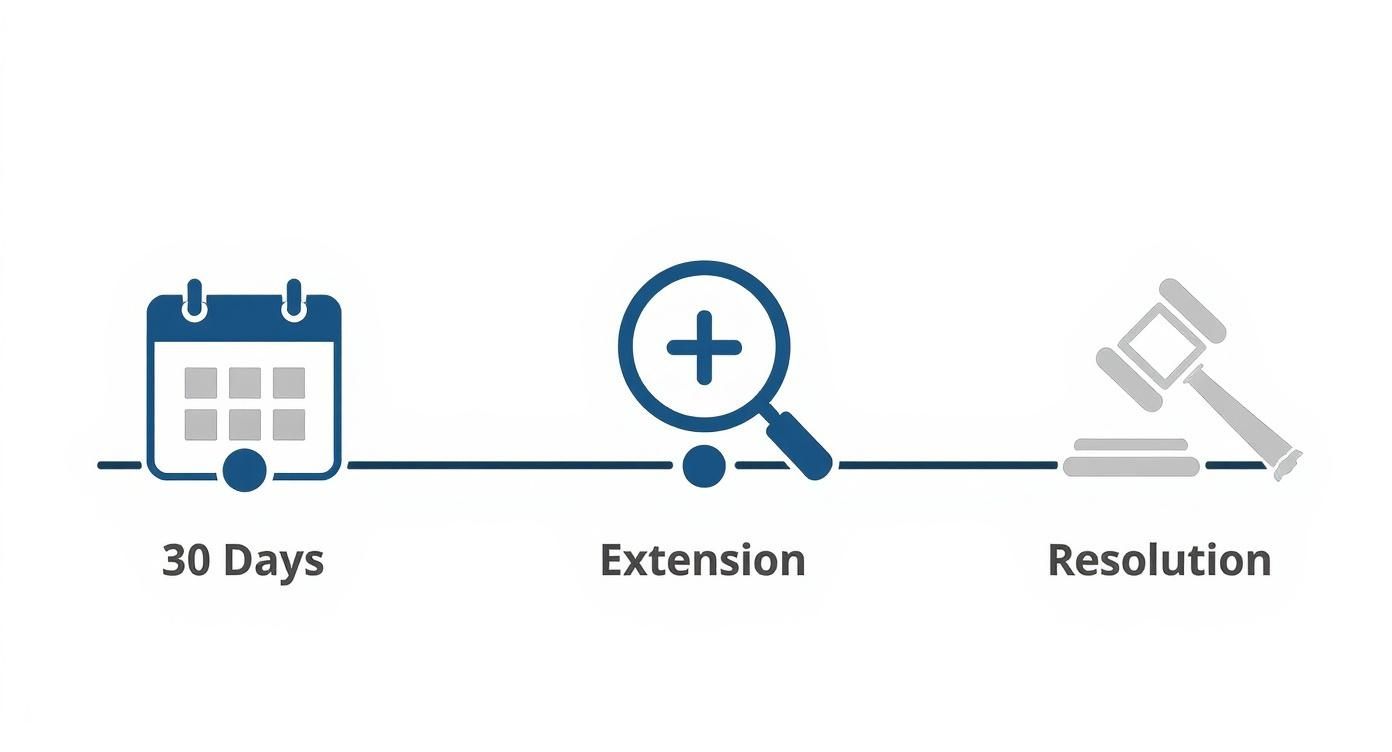
As you can see, while a standard investigation has a clear endpoint, the process can become much more complex, especially when the courts get involved.
It's crucial to see these hearings not as obstacles, but as your primary opportunities. With your attorney, you can present evidence, challenge the reasons for removal, and show the judge the concrete steps you are taking to bring your child home safely.
For a deeper dive into what to expect at each stage, our essential guide for parents on Texas CPS court hearings and timelines provides invaluable details. These court dates are your chance to fight for your family, and being prepared is your greatest strength.
When a CPS caseworker starts looking into your life, feeling powerless is a completely normal, human reaction. But it's so important to remember you are not just a bystander in this process. You can—and absolutely should—be an active participant and advocate for your family. Taking a few concrete, proactive steps can completely change the dynamic and help you protect your parental rights.
The single most important action you can take is to document everything. Start a dedicated notebook or a digital file and log every single interaction you have with CPS. Write down the date, time, and a summary of every phone call, home visit, and conversation.

Taking Control: Actionable Advice for Parents
Being cooperative is important, but it doesn't mean you have to give up your rights. You can remain calm and polite while also setting firm, respectful boundaries. It is perfectly acceptable—and wise—to say, "I want to cooperate, but I would like to speak with my attorney before answering any more questions." This is not an admission of guilt; it's you being a responsible parent ensuring your rights are protected.
Beyond documenting interactions, start gathering your own positive evidence to build a strong counter-narrative to the allegations. Compile a file with items like:
- Photos and videos showing your home is clean, safe, and a happy environment for your children.
- Letters of support from people who know your family well—teachers, neighbors, coaches, or church leaders who can vouch for your parenting.
- Records showing your child is thriving, such as proof of regular doctor visits, school report cards, and good attendance records.
The Importance of a Proactive Defense
Every year, CPS handles tens of thousands of investigations in Texas. According to Texas child protection case statistics, while many cases of abuse or neglect are confirmed, a much smaller percentage result in the legal removal of a child. This statistic highlights that the vast majority of investigations do not end in removal, especially when parents are proactive.
By building your own case file, you're doing more than just defending against allegations—you are actively proving your commitment to your child's well-being. This collection of evidence becomes an invaluable tool for your attorney to use when communicating with CPS and, if necessary, in court.
How an Experienced Attorney Can Protect Your Family
Facing the rigid timelines and complex demands of a CPS case alone is an overwhelming challenge. An experienced family law attorney becomes your most critical ally, ensuring CPS adheres to every legal deadline and respects your rights. More importantly, they protect you from making statements that could be misinterpreted or used against you.
A lawyer from The Law Office of Bryan Fagan will prepare you for every interview and court hearing. We are here to challenge unsubstantiated claims, gather evidence that tells your side of the story, and negotiate for fair service plans focused on family reunification. We understand how these investigations intersect with broader family law matters and your fundamental parental rights under the Texas Family Code, including the termination of rights outlined in Chapter 161.
We understand the fear you're facing, and our purpose is to provide the legal strength and compassionate guidance you need right now. Having a dedicated juvenile dependency lawyer on your side can make all the difference.
We firmly believe every parent deserves a strong advocate who will fight for their family. We warmly invite you to contact The Law Office of Bryan Fagan for a free, completely confidential consultation to discuss your situation and find a path forward. Your family's future is our priority.
Your Top Questions About the Texas CPS Timeline
When CPS gets involved, a million questions start racing through your mind. Let's tackle some of the most common ones Texas parents ask.
Can I Actually Tell a CPS Investigator They Can't Come in My House?
Yes, you have the constitutional right to refuse entry if the caseworker does not have a court order. However, it's crucial to understand the potential consequences. If they believe your child is in immediate danger, they can seek an emergency order from a judge and return, often with law enforcement.
While it might feel like cooperation is the easiest path, this is a critical moment. It is wise to contact an attorney immediately to understand your rights and the potential outcomes of refusal in your specific situation.
What Happens After the 30-Day Investigation Is Over?
Once the initial investigation concludes, CPS will issue a formal "disposition" or finding. There are a few possibilities:
- Reason to Believe (RTB): This means investigators concluded there was enough evidence to confirm that abuse or neglect occurred.
- Ruled Out: This is the best-case scenario. It means they found no credible evidence to support the allegations.
- Unable to Determine: This is a gray area, meaning there wasn't enough evidence to either confirm or rule out the allegations.
The disposition determines what happens next. The case could be closed, your family might be offered voluntary services, or it could lead to a formal court case.
Does CPS Have to Tell Me Who Reported Me?
The short answer is no. Under Texas law, the identity of the person who made the report is kept strictly confidential. This is to protect reporters from potential retaliation and encourage people to speak up if they genuinely suspect a child is being harmed.
Navigating these questions and the entire CPS timeline can feel like you're trying to find your way in the dark. But you don't have to do it alone. The dedicated attorneys at The Law Office of Bryan Fagan are here to protect your rights and fight for your family’s future. Contact us today for a free, confidential consultation to get the guidance and support you need. Learn more at https://texascpslawyer.net.