Skip to content
When CPS calls about a child you love, your world stops. The fear and confusion are overwhelming, but your first instinct is to protect that child. If you're a grandparent, aunt, uncle, or other relative facing this nightmare, you are not powerless. Securing kinship custody in Texas means stepping up to provide a safe, stable home when a Child Protective Services case threatens to tear your family apart. The system is designed to prioritize family, and this guide will show you how to navigate it.
The Call That Changes Your Family's Future
It almost always starts with a phone call you never expected, from a CPS caseworker you've never met. In that single moment, your world shifts on its axis. The fear and confusion can be overwhelming, but your first instinct is to protect the child at the center of it all. This guide is for you—the grandparents, aunts, uncles, and other relatives ready to step into that protective role.
The initial call that changes your family's future often comes with sudden, sometimes traumatic, circumstances, underscoring the importance of knowing how to seek timely support after trauma.

Here, we'll walk you through the complex—but manageable—process of securing kinship custody in Texas. You'll get a clear, practical understanding of what CPS requires, what happens in court, and how to become the safe, loving caregiver your relative’s child desperately needs right now.
Understanding Your Role as a Kinship Caregiver
Before you start wrestling with legal paperwork, it’s important to wrap your head around what being a kinship caregiver in Texas truly means. This isn’t the same as traditional foster care. Kinship placement is about keeping children with family, which is absolutely vital for their emotional stability and sense of identity.
Imagine you get a gut-wrenching call that your grandkids have been removed from their home. Your first thought is, "What can I do to help?" The good news is that the law is on your side. Under the Texas Family Code, CPS is legally required to search for and prioritize placing children with relatives. They must try to keep families together. This isn't just a suggestion; it's a legal mandate to prevent children from entering the unknown world of foster care if a safe family option exists.
After that first phone call, things move quickly. You should expect CPS to ask for background checks and schedule a home study. We can help you get a better handle on understanding kinship care and how it benefits children, so you can confidently show CPS that your home is the safe, loving place these kids need to land.
Navigating the First Critical Court Hearings
Walking into a courtroom can feel intimidating, especially when a child’s future hangs in the balance. The first major legal hurdle you'll face is the Adversary Hearing, which under Texas Family Code Chapter 262, must happen within 14 days of CPS removing a child from their home.
Think of this hearing as a critical checkpoint, not a full trial. The judge’s only goal is to determine if an immediate danger existed that justified removing the child. They will hear from the CPS caseworker, the parents' attorneys, and the child's attorney.
This is your first official opportunity to present yourself as a safe, stable, and loving placement for the child. It is your chance to stand up and show the court why placing the child with you is in their best interest. As a relative, you have a powerful voice, but you need to know how and when to use it.
Getting ready for this moment—and the subsequent hearings—is absolutely crucial. You can get a head start by learning more about how to prepare for a Texas CPS status hearing to get a clearer picture of the road ahead.

The Journey from Temporary to Permanent Custody
Having the child placed with you is a massive relief, but it’s the starting line, not the finish. The ultimate goal is to move from being a temporary safe haven to becoming a permanent, stable home, and that process is guided by the Texas Family Code.
Initially, you will likely be named the Temporary Managing Conservator. This legal status gives you the authority to make decisions for the child's well-being while the CPS case proceeds. Over the next several months, the court will hold a series of status and permanency hearings to monitor the parents' progress on their court-ordered services.
These hearings are not just bureaucratic check-ins. Under Chapter 263 of the Texas Family Code, these are critical decision points where the judge evaluates whether reuniting the child with their parents is safe and possible. If parents are not making progress, the court will move toward an alternative permanent plan—which could mean permanent custody for you.
Your role during this time is essential. Your actionable advice is to work closely with the CPS caseworker and become an expert at documentation. Keep a detailed log of everything: doctor’s visits, school report cards, conversations with teachers, and even happy milestones. Every piece of evidence helps build a powerful case that you provide the stable, loving home this child needs to thrive for good.
Accessing Financial Support for Your Family
Stepping up to care for a child is an incredible act of love, but it also comes with real financial pressures. Many relatives worry about how they will afford everything from food and clothing to medical care. You are not in this alone. Help is available.
Texas offers several programs designed to ease the financial strain on kinship caregivers so you can focus on what matters most: the child. These programs can include Temporary Assistance for Needy Families (TANF) for monthly cash assistance, Medicaid for health coverage, and sometimes, financial stipends directly from CPS. To get a handle on all the options out there, it's a good idea to first understand what grants for individuals are and how they might fit into your situation.
The journey from a temporary placement to creating a permanent, stable home is a process, as you can see below.
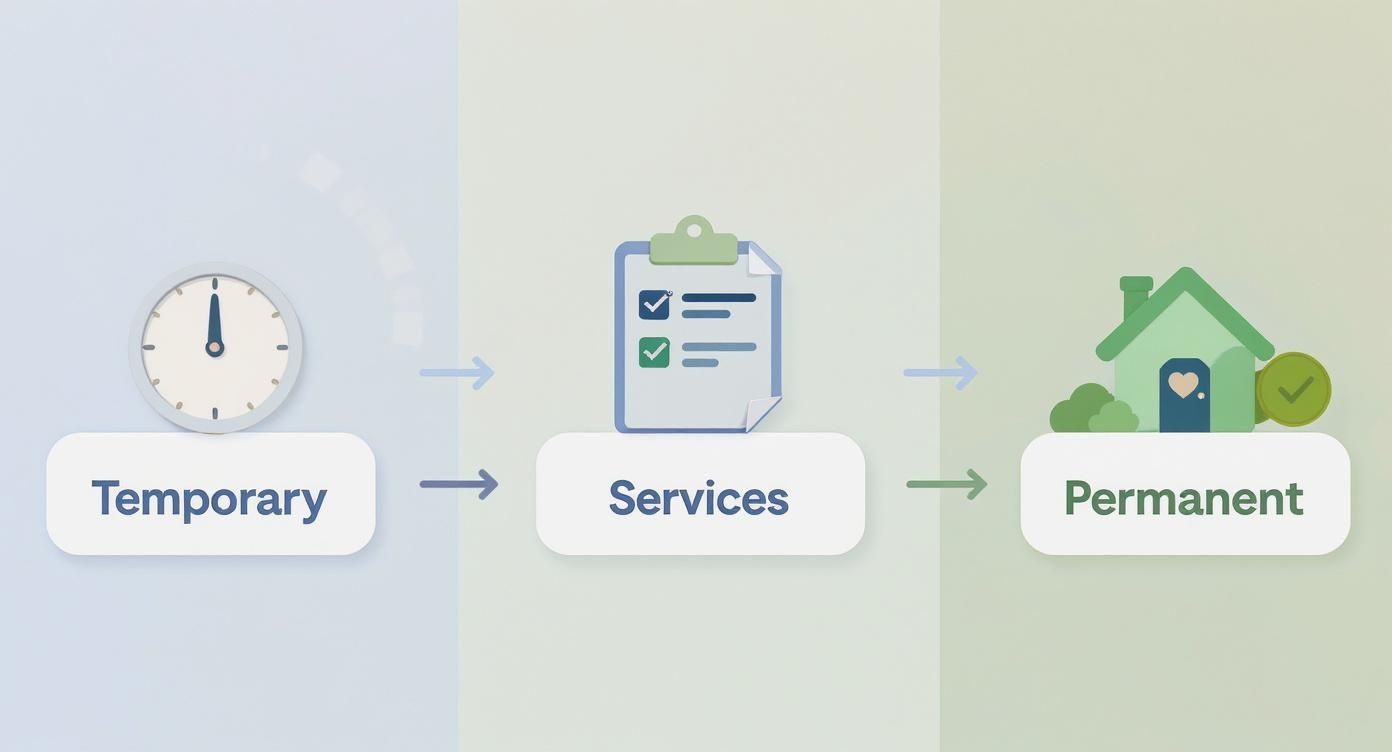
This path involves critical stages, starting with initial court orders and moving through various services that ultimately lead to permanent conservatorship. The financial contribution that kinship caregivers like you make is massive, which is exactly why this support exists.
To get a clearer picture of your options, I highly recommend learning more about the role of CPS kinship care in supporting families. It will help you fully grasp what you're entitled to.
Common Questions About Kinship Custody in Texas
When you're suddenly thrown into the world of CPS, your head is probably swimming with a million questions. It’s completely normal. Let's tackle some of the most common concerns we hear from Texas families stepping up to get kinship custody for the first time.
Can I Get Kinship Custody With a Criminal Record?
This is a major concern, and the answer depends on the specifics. A minor, old offense does not automatically disqualify you.
CPS conducts a thorough background check and evaluates the nature of the offense, when it occurred, and whether it poses any risk to a child. A non-violent misdemeanor from ten years ago is viewed very differently from a recent felony, especially one involving violence or child endangerment. The most important advice is to be completely honest and upfront with CPS from the start. Hiding your history is the fastest way to lose credibility and trust.
What if the Parents Object to My Custody?
This is a heartbreaking but common scenario. When CPS is involved, the court’s one and only priority is the child's best interest—not what the parents want.
The Texas Family Code is very clear on this. The law requires the court to prioritize placing a child with a willing and appropriate relative over sending them to a stranger's foster home. So, even if the parents object, your willingness to step up gives you a significant advantage in the eyes of the judge. Your commitment to the child's safety and stability will be the most compelling factor.
Do I Really Need a Lawyer?
Technically, you can try to navigate this on your own. But frankly, it's a profound mistake.
CPS has its own attorneys, and the parents will have their own court-appointed lawyers. Walking into that courtroom without your own legal advocate is like entering a legal battle unarmed.
Hiring an experienced family law attorney does more than level the playing field. It makes you a formal party to the case, giving you a legal right to be heard. Your lawyer will file the necessary motions, speak for you in hearings, and strategically build the strongest case for why that child belongs with you. Without one, you risk being a bystander in decisions that will shape your family's entire future.
Ready to Protect Your Family? It's Time for the Next Step.
Navigating a CPS case is one of the most frightening experiences a family can endure. But you do not have to face it alone. The fear of the unknown, the complexity of the legal system, and the high emotional stakes can feel crushing.
The decisions made in the coming weeks will change your family forever. Having a compassionate, experienced legal guide in your corner can make all the difference.
At The Law Office of Bryan Fagan, we don’t just quote the Texas Family Code—we understand the human story behind every case. We are here to provide clear answers, protect your rights as a relative, and fight relentlessly for the best interest of the child you love. If you are ready to provide that safe, stable, and loving home, it's time to act. Contact us today for a free consultation to discuss your situation and get the guidance you need.
At The Law Office of Bryan Fagan, PLLC, we are committed to protecting your family's future. Contact us for a free, confidential consultation.