Skip to content
The knock on the door usually comes without warning. You open it, see a CPS investigator, and your body goes into panic mode. You want to sound cooperative. You want to protect your child. You also don't want to say the wrong thing and make a bad situation worse.
That fear is real, and in Texas, the timing matters. Texas guidance explains that CPS investigators may contact families quickly, including unannounced home visits, and they may interview your child, other children in the home, and other people they believe can verify what happened. Texas also says those investigations are confidential from the public, but information may still be shared with law enforcement, courts, prosecutors, and other key parties, which raises the stakes of every early statement you make (Texas DFPS guidance for parents; Texas CPS investigation overview).
This guide is for Texas parents who need practical help right now. It focuses on what to say, what not to say, and how to protect your rights under the Texas Family Code while keeping the conversation calm and controlled. Chapters 262, 263, and 161 matter because CPS cases can move from an investigation to temporary orders, court review, and in severe cases even termination litigation. Your first words can affect everything that follows.
1. Exercise Your Right to Remain Silent and Request Legal Representation Immediately
If CPS contacts you, your safest opening line is short and direct.
Practical rule: “I want to cooperate through my attorney. I invoke my right to remain silent and request legal counsel before answering questions.”
That script works because parents often hurt their own case in the first few minutes. They start explaining, defending, guessing, apologizing, or trying to sound helpful. Once those statements are written down, they can reappear later in a Chapter 262 emergency hearing, during a Chapter 263 status or permanency phase, or in more serious litigation involving parental rights under Chapter 161.
What to say instead
Keep it simple and repeat yourself if needed:
- Ask for counsel: “I won't answer questions without my attorney.”
- Set a boundary: “Please give me your name, contact information, and case number.”
- Redirect communication: “My lawyer will contact you to arrange communication.”
A common scenario looks like this. A parent opens the door, hears there's an allegation of neglect, and immediately starts saying, “This is crazy, my ex lies all the time, I only left them alone for a minute.” That parent has now supplied facts, emotion, and a possible admission. A better response is calm: “I understand you're investigating. I want my attorney present before I answer questions.”

Texas parents should also understand that DFPS advises parents to know the allegations, get legal counsel, and that parents may refuse home entry or child interviews without a court order in some situations. The practical rights discussion is explained in this guide on your rights during a CPS investigation in Texas.
If you're worried about privacy while working with counsel, secure communication matters too. Basic digital hygiene helps when you're securing client information digitally.
2. Do NOT Admit to Allegations or Speculate About What Might Have Happened
CPS investigators listen for admissions, but they also listen for uncertainty. Parents often think speculation sounds honest. Legally, it can sound like responsibility.
Bad answers usually start with phrases like “maybe,” “I guess,” “probably,” or “I could see how that happened.” Those phrases can be written down as a partial admission even when the parent was just nervous.
The phrases that cause problems
Here are the kinds of statements that create unnecessary risk:
- Speculation: “Maybe I was gone longer than I thought.”
- Minimizing language: “It wasn't a big deal.”
- Casual admissions: “I did spank him, but not hard.”
- Self-criticism: “My house was a mess that day.”
A relatable example is a mother whose child gets a bruise at school or at a relative's house. CPS arrives, and she says, “I'm not sure, maybe he got hurt when I was cooking and not watching closely enough.” She means she doesn't know. An investigator may hear that as failure to supervise.
Better scripts for uncertain facts
When you don't know, say you don't know. When you do know, give only the narrow fact.
- Use certainty: “I'm not going to guess.”
- Use limits: “I need my attorney before giving a full statement.”
- Use plain facts: “I don't know how that injury happened.”
“I'm not refusing to take this seriously. I'm refusing to speculate.”
That distinction matters. In CPS work, a rushed explanation can travel far beyond the front porch. Early statements may become part of a larger record shared with decision-makers. That's one reason script-focused advice is so important. You're not trying to win an argument in the moment. You're trying to avoid handing over words that can later be reframed.
3. Do NOT Consent to Home Searches or Interviews Without Requiring a Warrant or Court Order
Many parents don't realize they can be polite and still say no.
If a CPS investigator asks to come inside, look around, photograph rooms, or interview your child immediately, you don't have to treat that request like an order. In Texas, parents may refuse home entry or child interviews without a court order in appropriate circumstances. That doesn't mean every refusal is wise in every case, but it does mean you should make a deliberate decision, not a panic-driven one.

A clean, lawful script
Use words like these:
- Refuse consent clearly: “I do not consent to entry or a search of my home.”
- Require legal process: “If you believe entry is necessary, please obtain a warrant or court order.”
- Stay nonphysical: “I'm not interfering. I'm not consenting.”
Chapter 262 often becomes important. That chapter deals with child removal procedures, emergency orders, and the court process around state intervention. If CPS believes a child faces immediate danger, the agency can ask a court for authority. You do not improve your position by waiving rights just because an investigator sounds urgent.
A realistic scenario: an investigator arrives near dinnertime and says, “If you've got nothing to hide, let me just step in and clear this up.” Parents often let that line pressure them. A better response is respectful: “I understand your role. I'm not consenting to entry without legal authority, and my attorney will contact you.”
For a more detailed explanation, see whether you can refuse CPS entry in Texas.
4. DO Remain Calm, Respectful, and Professional, Avoid Hostility, Defensiveness, or Emotional Outbursts
You can assert your rights without sounding aggressive. In fact, that's usually the best way to do it.
Investigators observe more than your words. They notice tone, posture, how you handle stress, and whether the children in the home appear frightened by the interaction. Anger doesn't prove guilt, but it can distract from your actual legal position and give the investigator one more negative observation to record.
What calm sounds like
Try language like this:
- Respectful acknowledgment: “I understand you have a job to do.”
- Firm boundary: “I'm not answering questions without my lawyer.”
- Professional closing: “Please leave your card, and counsel will follow up.”
A father who slams the door, curses, and accuses CPS of harassment may think he's showing strength. More often, he's creating a record that he was volatile under pressure. Another parent may feel the same anger but says, “I'm upset, so I'm going to keep this brief. I need my attorney before speaking further.” That answer protects both dignity and strategy.
Important distinction: Calm is not the same thing as compliant. You can be courteous and still refuse consent, decline questioning, and insist on legal counsel.
If you need a moment, take one. Step into another room if that's safe and practical. Drink water. Breathe. Ask the investigator to repeat a question rather than reacting emotionally. This sounds basic, but in practice it can keep a manageable investigation from turning into a more serious fight over parenting judgment and emotional stability.
5. DO NOT Discuss the Investigation or CPS Involvement with Children, Extended Family, or Others Without Attorney Guidance
A case can get harder fast because of one worried phone call. A grandmother wants to help, a sibling wants details, a teacher asks what happened, and a parent tries to calm a child by explaining too much. Each conversation creates another version of events. CPS may later treat those statements as inconsistencies, coaching, or admissions.
Texas parents often make this mistake for understandable reasons. They are scared, embarrassed, and trying to protect their child. But outside conversations rarely help the legal position. They usually create more witnesses, more text messages, and more material for an investigator to sort through.
Children need special care here. A parent's job is to keep the child calm, not to shape the child's story.
What children should hear
Keep it brief, neutral, and age-appropriate:
- Simple explanation: “Someone is asking questions about our family.”
- Reassurance: “You are safe, and I am taking care of this.”
- Clear boundary: “If someone asks you questions, tell the truth.”
Do not add details. Do not name a suspected reporter. Do not blame the other parent, a teacher, or a relative. Do not say, “Tell them I never do that,” or “Make sure you say you like being here.” Even if said out of panic, those comments can sound like coaching, and that issue can become as serious as the original allegation.
Here is the practical rule I give parents. Comfort the child. Do not rehearse with the child.
What to say to other adults
Extended family and friends do not need the facts of the investigation. They need a script.
Use simple language such as:
- To relatives: “Please do not discuss this with CPS unless my attorney advises you to.”
- To friends or coworkers: “I cannot talk about an open investigation.”
- To anyone asking for details by text: “I am not discussing this by message or phone.”
That script protects you in two ways. It limits informal statements that can be repeated inaccurately, and it prevents well-meaning relatives from contacting CPS to “clear things up” in ways that make the case worse.
Social media is part of this problem too. Parents sometimes post that CPS is lying, that an ex made a false report, or that they are being targeted. Those posts are discoverable. So are private messages, family group chats, and deleted screenshots someone else saved. Silence is usually the safer record.
If the investigation overlaps with custody, divorce, or another family-law dispute, communication needs even more discipline. A statement made to a relative today can show up in a custody filing later. For related family-law issues, parents can review the factual Texas family law resources at the Law Office of Bryan Fagan.
Your safest approach is narrow and controlled. Speak with your lawyer. Speak carefully to your child. Speak to no one else about the investigation unless counsel tells you to do it.
6. DO Gather and Preserve Evidence of Your Parenting, Home Conditions, and Family Stability Before Investigation Becomes Official
When parents hear “don't talk,” they sometimes do nothing at all. That's a mistake. The better approach is to say less to CPS directly and organize more for your lawyer.
Start gathering the records that show how your family functions. If your home is safe and your child is cared for, preserve that reality before someone else describes it for you.
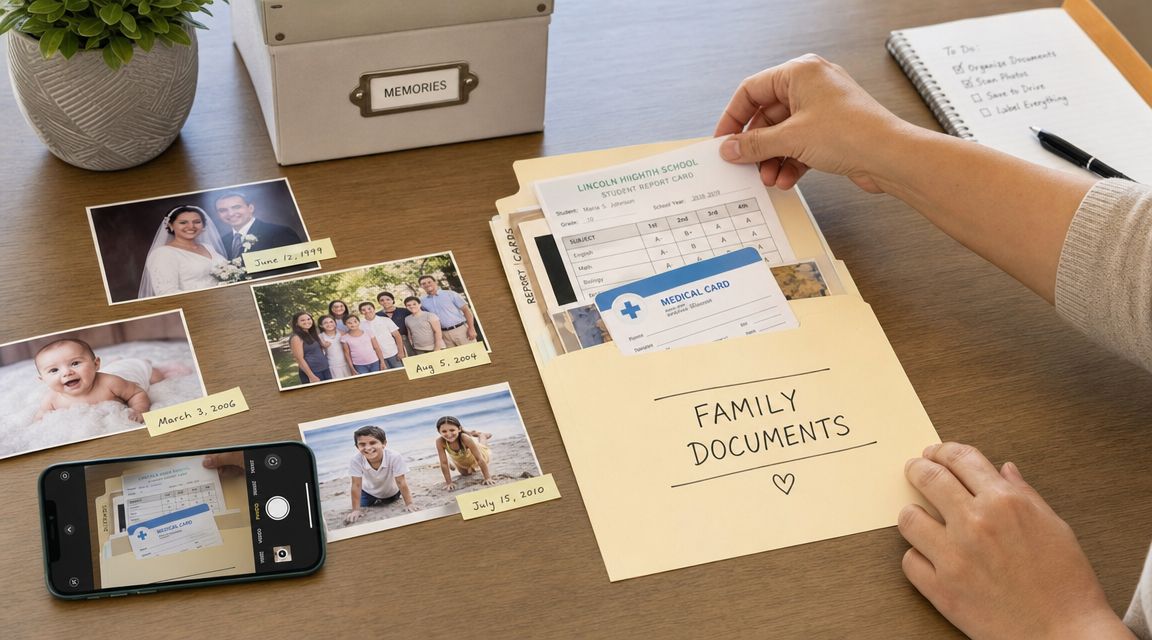
What to collect
Focus on documents and records with clear dates and context:
- Home condition evidence: Current photos of bedrooms, kitchen, food storage, and safety features.
- Child care records: School records, attendance information, report cards, medical and dental records.
- Stability records: Work schedules, pay records, daycare information, calendars, and transportation routines.
- Supportive materials: Messages showing involvement with teachers, coaches, doctors, or therapists.
A relatable example is a parent accused by an ex of maintaining an unsafe home. Instead of arguing with CPS on the porch, the parent and attorney prepare dated photos, school records, immunization records, and communication with teachers showing the child is attending school and receiving routine care. That evidence tells a clearer story than a defensive conversation ever will.
Why this matters in Texas court
Under Chapter 263, courts review service plans, placement decisions, and the child's status as a CPS case proceeds. Judges look for patterns of stability, follow-through, and credibility. Organized records help your attorney present those patterns in a way that's far stronger than “just trust me.”
This short video gives additional context on preparing for CPS issues:
Keep your evidence private. Don't hand over a stack of papers on impulse at the door. Let counsel decide what should be shared, when, and with what explanation.
7. DO NOT Make Promises to CPS Investigators About Changing Behavior, Accepting Services, or Compliance, Let Your Attorney Negotiate These Terms
Parents often think promises make them look cooperative. Sometimes they do the opposite.
If you agree on the spot to counseling, parenting classes, drug testing, supervision rules, or a safety plan, CPS may treat that promise as evidence that a problem exists. Later, if you can't complete every detail exactly as discussed, the broken promise can become a second problem.
The safer response
Use language like this:
- Acknowledge without agreeing: “I hear your concern.”
- Reserve decision-making: “My attorney will review any proposed services or plan.”
- Ask for writing: “Please put that request in writing so counsel can evaluate it.”
A realistic example is an investigator saying, “If you just sign this and agree to classes, it'll look better.” A parent signs because they want the visit to end. Weeks later, the parent misses sessions because of work or transportation issues, and noncompletion gets framed as noncooperation. An attorney could have evaluated whether the proposal was necessary, realistic, or worded in a way that implied an admission.
Texas parents should be especially careful with informal agreements tied to safety plans. Those documents can affect who lives in the home, who can see the child, and what CPS later tells the court. Before signing anything, read guidance on refusing to sign a CPS safety plan in Texas.
“I'm willing to review any recommendation with my attorney” is cooperative. “Yes, I need those services” can sound like an admission.
That distinction becomes critical if the case later involves allegations severe enough to trigger litigation under Chapter 161, where the state seeks to terminate parental rights. Never make a promise just to reduce tension in the moment.
8. DO Keep Detailed Records of All Investigator Contact, Communications, and Statements, Share With Your Attorney Immediately
An investigator leaves your porch. Your heart is racing. Two hours later, you are already second-guessing what was said, what you answered, and whether the investigator promised to call back or demanded something by tomorrow. That is how parents lose details that matter.
A written contact log gives your attorney something better than stressed memory. It gives dates, wording, and sequence. In CPS matters, those details can shape how your lawyer responds to shifting allegations, disputed statements, or claims that you agreed to something you never accepted.

What to record after every CPS contact
Write your notes immediately after the call, visit, voicemail, text, or office meeting. If you wait until evening, small details disappear first.
Include:
- Who contacted you: Full name, agency, title, phone number, and badge number if provided
- When and where: Date, time, location, and how the contact happened
- Who witnessed it: Anyone present for the conversation, including relatives, neighbors, or other adults in the home
- What was said: The investigator's questions, your exact answers, and any statements about allegations, safety concerns, or next steps
- What was requested: Documents, interviews, home access, drug testing, meetings, or signatures
- What you said in response: Short quoted phrases help, especially if you used rights-based language such as “I want my attorney present” or “Please put that request in writing”
- Deadlines or threats mentioned: Any timeline, warning, or statement about removal, court, or noncooperation
Do not clean up your wording later. Do not rewrite notes to make them sound better. A rough, timely record usually helps more than a polished version created days later.
Here is the kind of detail that helps. A parent notes that the investigator first described the case as a supervision complaint tied to a school incident, asked to interview the child alone, and said no court order had been obtained. Three days later, the investigator refers to broader safety concerns and suggests the parent was evasive. A same-day log lets counsel compare the agency's later description against the original contact and respond with precision.
Use tools that help you capture details quickly
Pen and paper work. A notes app works. A voice memo can work too, if it is used right after the contact ends and saved securely for your attorney. If speaking is faster than typing, tools like AIDictation for Mac audio to text can help you turn fresh recollection into a usable timeline.
Do not record conversations with CPS casually without first getting legal advice. The safer practice is to document the exchange immediately afterward and send that summary to your lawyer.
Texas cases often move fast, and early statements can harden into the agency file before a parent understands the legal stakes. That is the trade-off. Waiting feels easier in the moment, but prompt documentation gives your attorney a better chance to challenge inaccuracies before they become the official version of events.
A simple script helps: “I'm making a note of this contact and sending it to my attorney today.” That statement is calm, professional, and protective.
8-Point Guide: What to Say (and Not) to CPS Investigators
| Action | Implementation Complexity 🔄 | Resource Requirements ⚡ | Expected Outcomes 📊 | Ideal Use Cases ⭐ | Key Advantages / Tips 💡 |
|---|---|---|---|---|---|
| Exercise your right to remain silent and request an attorney immediately | Low 🔄, simple verbal step, requires composure | Low ⚡, access to counsel advised | High 📊, prevents self-incrimination; preserves legal strategy | Immediate contact or interviews by CPS investigators | Protects against damaging statements; say: "I invoke my right to remain silent and request an attorney." Document names/times 💡 |
| Do NOT admit to allegations or speculate about what might have happened | Medium 🔄, requires restraint and precise language | Low ⚡, attorney involvement recommended | High 📊, avoids recorded admissions; preserves credibility | When asked to explain conduct or provide timelines | Prevents mischaracterized statements; give full account only through counsel; avoid "maybe/guess" phrasing 💡 |
| Do NOT consent to home searches or interviews without a warrant/court order | Medium–High 🔄, requires firmness and legal awareness | Medium ⚡, may need attorney to challenge warrants | High 📊, preserves Fourth Amendment challenges; may suppress evidence | Requests for warrantless entry or searches | Verbally refuse consent, request warrant/case info, do not physically block entry; call attorney immediately 💡 |
| DO remain calm, respectful, and professional, avoid hostility or outbursts | Medium 🔄, emotional discipline in stressful context | Low ⚡, self-control; optional coaching | Moderate–High 📊, improves investigator documentation of demeanor | All in-person interactions with investigators | Neutral tone and brief replies reduce negative observations; breathe, keep statements short 💡 |
| DO NOT discuss the investigation with children, family, or others without attorney guidance | Low–Medium 🔄, requires boundary-setting | Low ⚡, communication controls; counsel coordination | High 📊, prevents conflicting statements and social-media evidence | Conversations with children, relatives, coworkers, or online | Use attorney as sole spokesperson; give children age-appropriate, minimal explanations; instruct family not to talk 💡 |
| DO gather and preserve evidence of parenting, home conditions, and stability before investigation becomes official | Medium–High 🔄, organized, lawful evidence collection | Medium ⚡, time, documents, possible copying/scanning costs | High 📊, provides corroborating, pre-investigation proof | Anticipated or early-stage investigations | Collect dated photos, records, and references; coordinate with attorney to avoid improper handling 💡 |
| DO NOT make promises to CPS about changing behavior or services, let your attorney negotiate | Low–Medium 🔄, requires deferral and clear phrasing | Low ⚡, attorney negotiation recommended | Moderate–High 📊, avoids informal admissions and unrealistic commitments | When investigators propose services, plans, or safety agreements | Decline informal commitments; request written terms and attorney review before agreeing 💡 |
| DO keep detailed records of all investigator contact, communications, and statements, share with your attorney immediately | Medium 🔄, requires discipline and contemporaneous notes | Low–Medium ⚡, notebook/transcription tools; timely attorney review | High 📊, documents investigator statements; supports challenges to reports | Every contact or exchange with CPS investigators | Log date/time/name/quotes, save emails/texts, ask for written confirmations; provide records to attorney promptly 💡 |
From Investigation to Resolution Your Next Steps to Protect Your Family
A CPS investigation can make even good parents feel trapped. You want to sound respectful, but you also want to protect yourself. The safest path is usually the same one lawyers give in other high-stakes investigations. Stay calm. Say little. Don't guess. Don't consent casually. Don't sign under pressure. Let your attorney manage the substance of the case.
For Texas families, that advice isn't abstract. It fits the way these cases unfold under the Texas Family Code. Chapter 262 can bring urgent hearings and removal issues. Chapter 263 shapes what happens next through court oversight, service planning, and permanency review. Chapter 161 governs the most serious cases, where parental rights may be on the line. A bad conversation at the beginning can echo through all of it.
A simple way to remember what to say and what not to say to CPS investigators is this: be polite, be brief, and be deliberate. If you need a script, use one. “I want my attorney present before I answer questions.” “I do not consent to a search.” “Please put that in writing.” “I'm not going to guess.” Those aren't hostile statements. They are protected, disciplined responses.
One realistic scenario shows why this matters. A parent who panics may talk for twenty minutes on the porch, invite the investigator inside, agree to services on the spot, and then spend months trying to explain what they “really meant.” Another parent may stay calm, request counsel, preserve records, gather school and medical documents, and let a lawyer address the allegations in proper context. The second parent hasn't “hidden” anything. That parent has handled the case strategically.
If CPS has already contacted you, don't wait for the next visit to get organized. Write down what happened. Save every message. Gather documents showing your child's routines, medical care, school attendance, and home stability. Stop discussing the case with anyone who doesn't need to know. Most important, get legal advice before the agency shapes the story without your input.
The Law Office of Bryan Fagan PLLC is one option for Texas families dealing with CPS-related issues and overlapping criminal or family law concerns. If you're trying to protect your child, your rights, and your future, early legal guidance can make the process clearer and more controlled.
If CPS has contacted your family, speak with Law Office of Bryan Fagan PLLC for a free consultation. You can get practical guidance on what to say, what not to say, and how to protect your rights under Texas law before one stressful conversation turns into a much larger case.