Skip to content
A knock at the door can turn an ordinary Texas afternoon into the most frightening moment of a parent's life. One minute you're cleaning the kitchen, helping with homework, or trying to get dinner started. The next, someone says they're with Child Protective Services, and your mind goes straight to the worst possible outcome.
Most parents in that moment feel two things at once. Panic, and pressure to start talking. That combination leads to mistakes. Good parents say too much, let people in before they understand their rights, agree to things they haven't had time to think through, or answer loaded questions because they're trying to look cooperative.
A more useful response is calm, controlled, and informed. If CPS is at your door, you need a plan for the first few minutes, the first conversation, and the first days after contact. You also need to know that fear itself doesn't mean you've done anything wrong. It means you're a parent facing a serious government investigation.
The Knock on the Door That Changes Everything
A common scene goes like this. A parent opens the door and sees a caseworker holding a badge and a folder. The caseworker says there's a report, they need to come in, and they need to speak with the children. The parent feels caught off guard and starts explaining everything at once. That usually doesn't help.
What helps is slowing the moment down.
A CPS visit is serious, but it is still an interaction governed by law. The parent who understands that has a better chance of protecting the family, preserving evidence, and avoiding avoidable damage. If you're dealing with a surprise home contact, this guide on a Texas CPS home visit can also help you understand how these encounters often unfold.
A relatable moment many families face
Take a simple example. Your child fell at the playground, a teacher noticed bruising, and someone made a report. Or a neighbor heard yelling during a stressful evening and assumed the worst. By the time CPS appears, you may have no idea who called or what was said.
That uncertainty is what rattles parents most.
The first goal is not to win an argument on the porch. It's to protect your rights, avoid careless statements, and make sure the next step happens on legally sound terms.
What works and what doesn't
Some responses usually make things worse:
- Arguing at the door: Raising your voice or accusing the worker of harassment creates a poor record.
- Talking to fill the silence: Parents often volunteer facts CPS never asked for.
- Letting fear run the interaction: Once the caseworker controls the pace, the parent often loses control of the facts.
Better responses are steady and deliberate:
- Confirm who is there
- Keep the conversation at the threshold or outside
- Ask whether they have a court order
- Say you want to speak with a lawyer before answering detailed questions
That isn't being difficult. That's being careful.
Your Rights at the Threshold Before You Say a Word
When CPS shows up, your first decisions matter. You do not need to make those decisions in a panic.
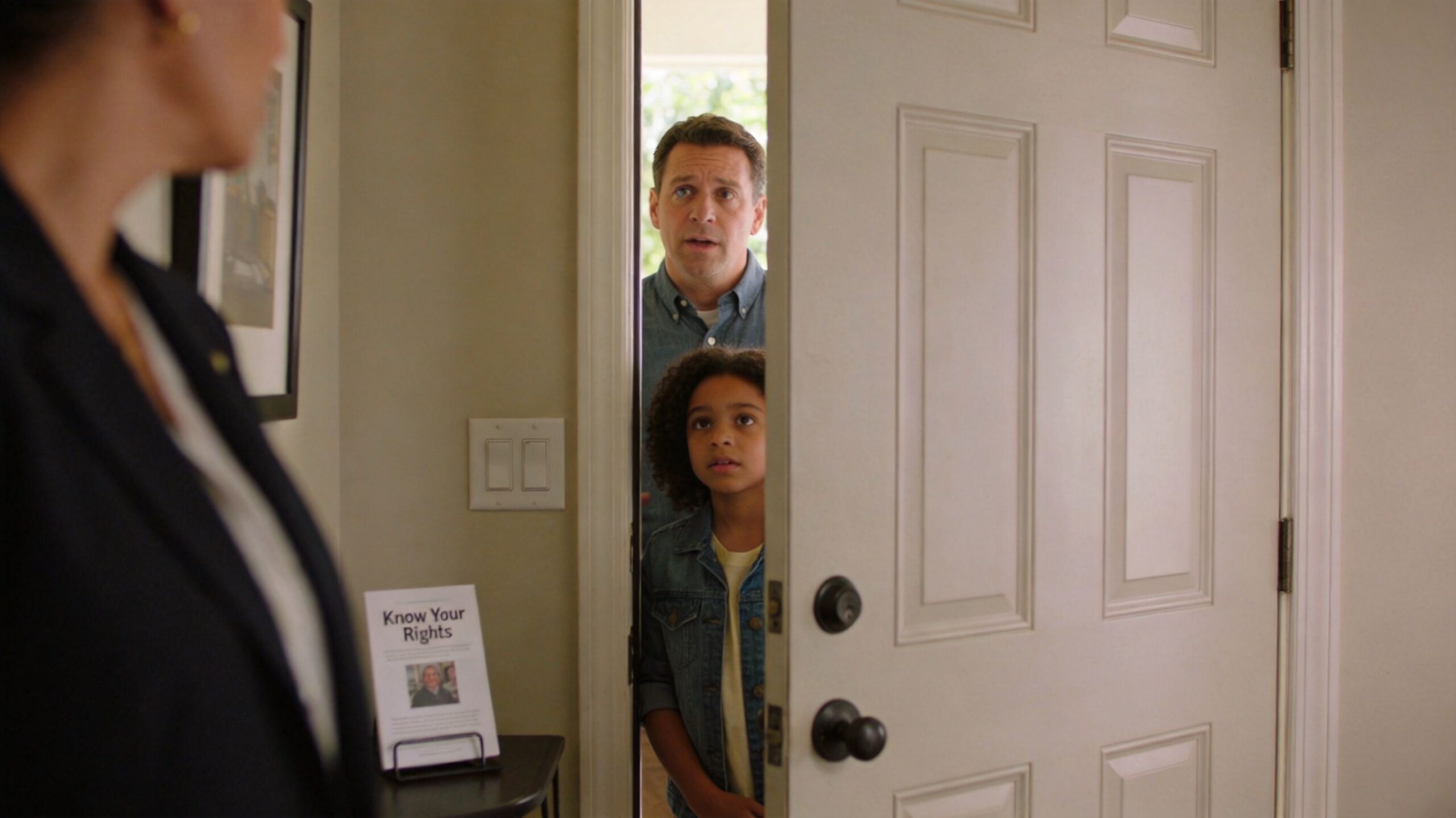
Start with three immediate actions
Before you answer substantive questions, do these things first:
Step outside if you can
Speaking on the porch or just outside the doorway keeps you from casually allowing entry into the home.Ask for identification
Get the caseworker's full name, agency information, and, if possible, a business card.Ask why they're there
You're not asking for a debate. You're asking for the basic nature of the allegation and whether they have legal paperwork.
A calm opening script often sounds like this:
“I'm willing to be respectful, but I want to handle this carefully. Please show me your identification and tell me whether you have a court order or warrant.”
Know the line between a request and a legal command
Many parents feel intimidated at this stage. A caseworker may sound urgent, confident, or authoritative. But authority has limits.
Under Texas Family Code Section 261.301 and the related explanation of CPS investigations and entry limits, CPS has a legal duty to investigate certain reports of child abuse or neglect, but CPS does not have automatic entry rights to your home. Without a court order, warrant, or evidence of immediate danger to a child, a CPS worker cannot legally enter a residence. That protection is tied to the Fourth Amendment.
That means there is a real difference between:
- “We need to come in.”
- “We have a signed order permitting entry or removal.”
Those are not the same thing.
If you need a fuller discussion of that issue, review whether you can refuse CPS entry in Texas.
Phrases that protect you in the moment
You don't need a dramatic speech. You need short, controlled language.
Use phrases like these:
- “I'm not consenting to entry at this time.”
- “If you have a court order, please let me see it.”
- “I want to consult an attorney before answering detailed questions.”
- “I'm willing to schedule a time to speak after I get legal advice.”
What usually does not work:
“You can't do anything to me.”
That sounds combative and careless.“Fine, come in, I've got nothing to hide.”
That gives up control for no strategic reason.“Let me explain the whole story.”
Long explanations often create new issues that weren't in the original report.
Civility matters
A firm answer is better than a hostile one. Caseworkers write reports. Judges read reports. If your tone becomes aggressive, that can shape how your actions are described later.
Here's a useful standard: be polite enough that nobody can say you were out of control, and be careful enough that nobody can say you knowingly gave up your rights.
This video gives additional context on how these doorstep encounters can develop in Texas family cases.
Navigating the CPS Interview What to Say and Do
Once the conversation starts, many parents think the safest choice is to talk as much as possible. In practice, that's often where a manageable investigation becomes more dangerous.
The interview stage is not a therapy session. It is not your chance to tell your life story. It is an information-gathering process, and your words can shape what happens next.
A simple rule for answering questions
Be truthful. Be brief. Don't guess.
If you don't know an answer, say you don't know. If a question assumes facts that are wrong, correct only that point. If the question goes into complicated territory, pause and ask to consult counsel before responding.
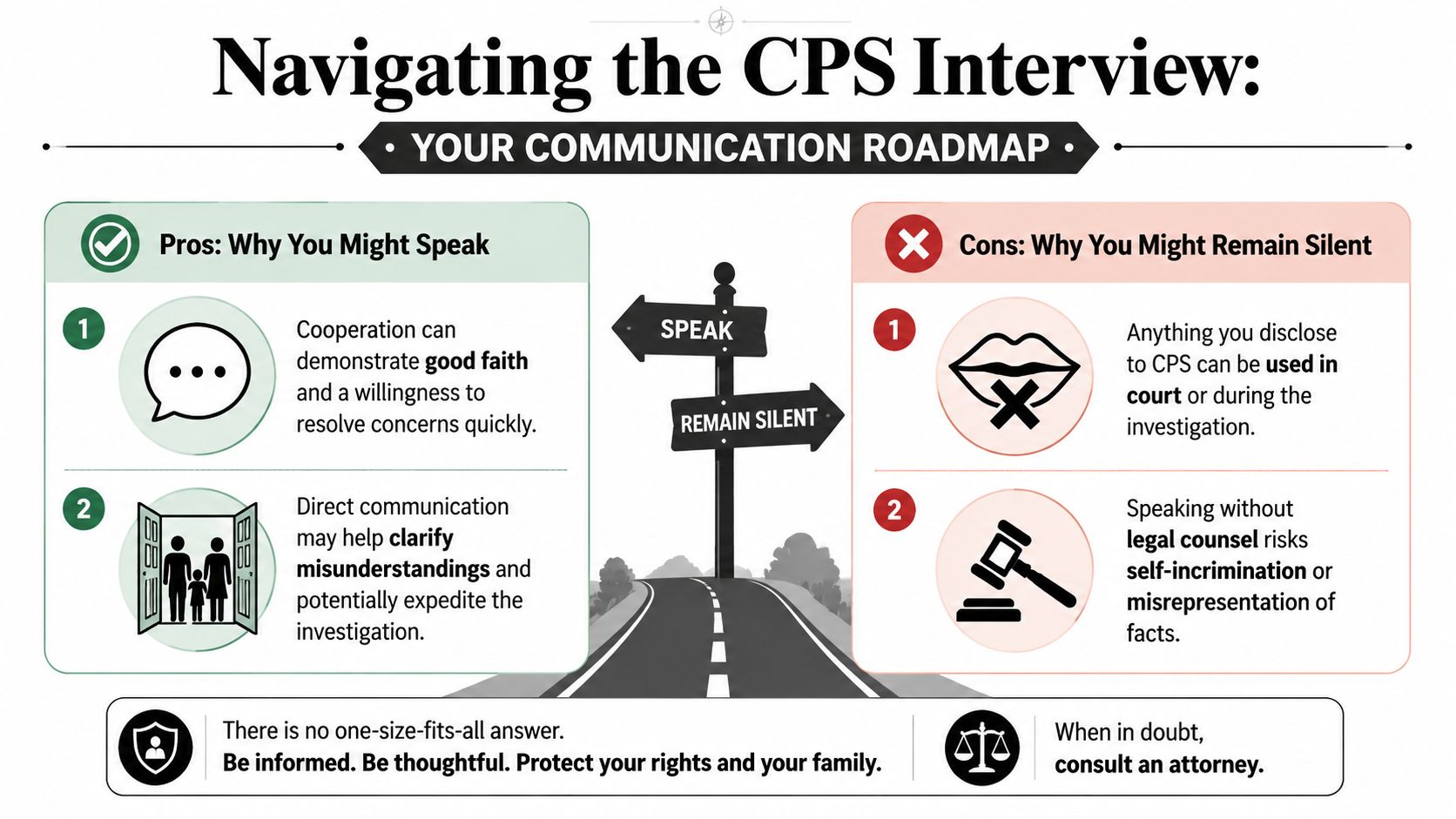
What a careful answer sounds like
Suppose a caseworker asks, “Do you and your spouse fight in front of the children all the time?”
That question is loaded. It contains an accusation inside the wording. A poor response would be a long emotional speech about every marital problem you've ever had. A better response is narrower:
Practical rule: Answer the actual question, not the accusation hidden inside it.
You might say:
- “No, not all the time.”
- “We've had disagreements, but I want to speak with an attorney before discussing family conflict in detail.”
- “That description isn't accurate.”
Each answer is controlled. None of them invites a broad fishing expedition.
Document the interaction as it happens
One of the most overlooked protections is simple note-taking. The verified guidance on how parents should document a CPS visit and respond carefully emphasizes recording the caseworker's name, visit time, date, and statements made during the interaction. That same guidance stresses that parents should avoid volunteering unnecessary information and can say, “I'd like to consult with my attorney before responding.”
If another adult is present, that helps. A witness can later confirm tone, timing, and what was said.
Keep a written record of:
Who came to the home
Full name, title, and agency details.What they asked
Not your interpretation. The actual question as closely as you remember it.What you answered
Short, factual notes.What they requested
Entry, interviews, paperwork, drug testing, photographs, or follow-up meetings.
Don't sign just to end the pressure
Parents under stress often sign papers to make the encounter stop. That can be a mistake. If you're handed a safety plan, release, service document, or any written agreement, read it carefully and get legal advice before signing if possible.
A signature can create obligations that shape the case from that point forward.
Cooperation has trade-offs
There is no single answer that fits every family. Sometimes speaking briefly and clearly can correct a misunderstanding early. In other situations, talking without counsel gives CPS more statements to interpret, compare, and use.
That's why strategy matters more than emotion. If you want more guidance on interview preparation, review these strategies for answering Texas CPS questions in an interview.
A good interview approach usually looks like this:
| Situation | Better response | Risky response |
|---|---|---|
| Basic identification questions | Answer briefly and accurately | Acting evasive for no reason |
| Allegations you don't fully understand | Ask for clarification and pause | Guessing or speculating |
| Questions about sensitive history | Request legal advice first | Oversharing to look honest |
| Written forms or plans | Review before signing | Signing under pressure |
What Happens If CPS Wants to Remove Your Child
This is the moment every parent fears. If a caseworker says your child is leaving with them, stay calm enough to focus on procedure.
Panic can lead to two bad outcomes at once. First, you may miss critical details in the paperwork. Second, an emotional confrontation can be written up as instability or noncompliance.
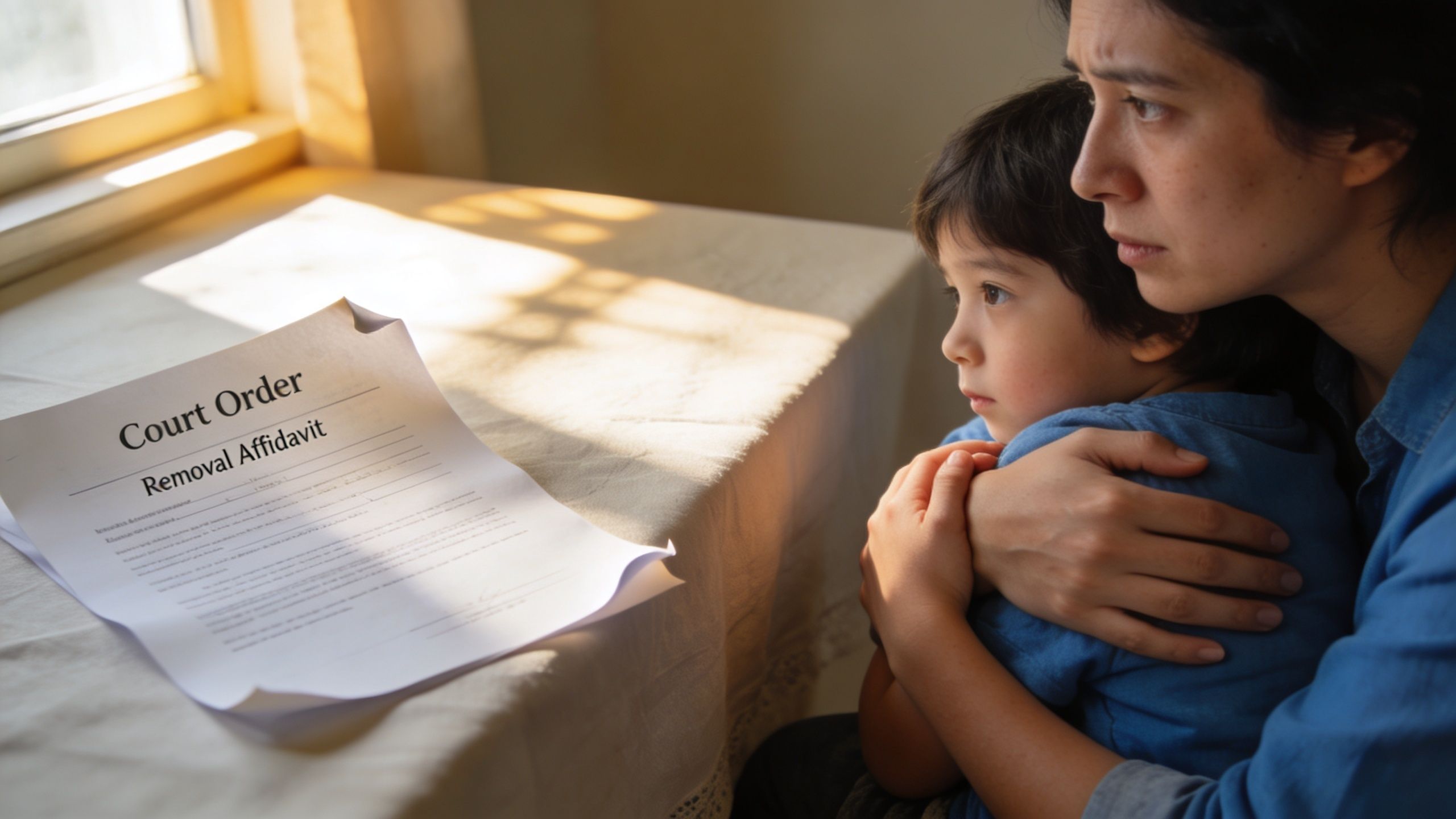
What to demand before a child leaves
If CPS says they have authority to remove your child, ask to see the signed court paperwork immediately. The verified guidance in the earlier cited YouTube material states that if CPS claims to have a removal order, parents should verify that it is physically signed by a judge before any child leaves the home.
That means you should ask for the document and read it.
Look for basic points such as:
- The judge's signature
- The child's name
- The address or case details
- What authority the order grants
Do not rely on oral summaries. Read the paper.
What to say if removal is happening
Use direct, restrained language:
“I want a copy of every document. I do not consent, but I will not interfere. I am calling my attorney now.”
That sentence does several things at once. It states objection, avoids physical interference, and creates a record that you asked for legal help immediately.
What doesn't work:
- Blocking the doorway
- Refusing to hand over a child when officers are present
- Tearing up paperwork
- Screaming accusations instead of collecting information
Those responses don't stop the process. They usually create more problems.
Why Chapter 262 matters
In Texas, child removal issues are governed through the court process addressed in Chapter 262 of the Texas Family Code. For a parent, the practical takeaway is this: removal is supposed to be tied to legal procedure, not just a caseworker's personal decision. Once court involvement begins, deadlines and hearings start quickly.
If the situation may turn into a broader custody fight alongside CPS involvement, families sometimes also need guidance from counsel who handle related parent-child litigation. In that context, experienced Austin child custody attorneys can be a useful reference point for understanding custody procedure and court expectations.
The checklist for the worst moment
If removal is threatened or underway, focus on five actions:
- Ask to see the signed order
- Request copies of all documents
- State clearly that you object, without becoming physical
- Write down every name involved
- Call counsel immediately
If you remember nothing else, remember this. Read the order, don't resist physically, and get legal help at once.
The First 14 Days Your Immediate Legal Lifelines
After a removal, parents often feel numb. Then the clock starts moving.
Texas procedure moves fast in these cases. The first hearing window matters because it is the first real opportunity to challenge what CPS says, present your side, and begin working toward your child's return. Chapters 262, 263, and 161 of the Texas Family Code become important at different stages. Chapter 262 deals with removal and emergency intervention. Chapter 263 governs ongoing hearings and permanency issues. Chapter 161 addresses termination of parental rights in the most serious cases.

What to gather right away
In the days immediately after removal or a major CPS intervention, start building your file.
Gather items such as:
Photographs of the home
Focus on sleeping arrangements, food, utilities, medications stored safely, and general condition.Medical and school records
These can provide context that broad allegations often leave out.Names of witnesses
Teachers, relatives, neighbors, childcare providers, counselors, or doctors who know your family's day-to-day reality.A written timeline
Start with the CPS visit and work backward through the events that may relate to the report.
Prepare like the court will read everything
Because the court may review affidavits, reports, and testimony, details matter. Dates matter. Tone matters. Contradictions matter.
A short, accurate timeline is usually more useful than a long emotional narrative. If you texted someone about the event that led to the report, save it. If a doctor examined the child after an injury, get the records. If there is a sober relative who can explain what happened, identify that person early.
Legal help changes the pace of the case
Once counsel is involved, communication often becomes more orderly. The lawyer can evaluate allegations, review filings, prepare for hearings, and help you avoid statements or agreements that make the case harder.
One option for parents facing this situation is the Law Office of Bryan Fagan PLLC, which handles Texas CPS defense matters and related family law issues. The important point is not branding. It's getting a lawyer who understands how CPS cases move from investigation to court and how fast that can happen.
Focus on what judges look for
Judges often want to know whether the child can be safe, whether the parent understands the concerns, and whether there is a concrete plan moving forward.
That means practical steps count:
- Stable housing
- Negative explanations backed by records, not just denials
- Reliable relatives or support persons
- Immediate compliance with reasonable court-ordered steps
- A parent who shows up prepared and controlled
Parents often think the hearing is about whether they are good people. It is usually more concrete than that. The court wants facts, safety, and a workable plan.
After the Visit Your Crucial Next Steps
When the door closes, the case is not over. In many families, that is when the actual risk begins. Parents replay the conversation, call relatives, post online, or start texting angry explanations to anyone who might listen. Those reactions can create evidence and confusion that follow the case.
The better approach is disciplined.
First, contact a Texas family law attorney immediately. The verified guidance already discussed makes this point clearly: the first and most important step is contacting an attorney right away, documenting the visit, and using calm language such as “I'd like to consult with my attorney before responding” during complex exchanges. Once a lawyer is involved, communication with CPS can become more controlled and strategic.
Your short checklist after CPS leaves
Write everything down immediately
Names, time, statements, requests, and who witnessed the interaction.Preserve documents and messages
Don't delete texts, photos, emails, or voicemails that may matter later.Do not discuss the case casually
Friends, neighbors, and social media are not safe places to process allegations.Follow through on legal advice quickly
Delay is costly in CPS cases because the agency and the court keep moving whether you're ready or not.
If you were searching for How to Respond When CPS Shows Up at Your Door in Texas, the most important answer is this: stay calm, protect the threshold, speak carefully, insist on seeing court paperwork, and get legal help before small mistakes become long-term damage.
If CPS has contacted you or come to your home, you do not have to figure this out alone. The Law Office of Bryan Fagan PLLC offers free consultations for Texas parents facing CPS investigations, removals, and related court proceedings. If you need clear advice about your rights, your next move, or how to protect your family starting today, contact the firm and speak with someone who understands how these cases work.