Skip to content
Yes. In Texas, CPS can interview your child without a parent present in some situations, including at school, and parents generally must be notified within 24 hours unless CPS decides that notice would endanger the child, the reporter, or the investigation. If your child was interviewed this way, that does not mean CPS can do anything it wants, and it does not mean you have no rights.
Few calls shake a parent like hearing that a caseworker has already spoken to your child alone. You may feel blindsided, angry, or terrified that something serious is happening behind your back. Those reactions are normal.
A lot of parents start searching for answers with one urgent question: Can CPS interview my child without a parent in Texas? The hard part is that the answer isn't a simple yes or no. It depends on where the interview happened, whether you were physically present, whether you objected, and whether CPS claims a safety reason for acting quickly or delaying notice.
What helps most in that moment is understanding the rules before you respond. Once you know why Texas law allows some interviews, where the limits are, and what to do next, you can make calmer decisions for your child and protect your family more effectively.
The Knock at the Door You Never Expected
Your phone rings in the middle of the workday. You expect a routine school call. Instead, someone tells you a Child Protective Services investigator met with your child privately.
That moment feels unreal. Parents often ask whether the school should have stopped it, whether CPS had to call first, and whether the interview can be undone. The fear gets worse when no one explains what was said, who was present, or what happens next.
Consider a common scenario. A mother picks up her daughter from school and notices she's unusually quiet. Later she learns a CPS investigator asked the child questions about home life, discipline, and whether she feels safe. The mother's first reaction is anger at the school. Her second is panic that she is about to lose her child.
Those feelings make sense. CPS investigations touch the most personal part of your life.
Why this feels so overwhelming
A CPS interview doesn't happen in a vacuum. Parents hear "investigation" and immediately think removal, court, or accusations they haven't had a chance to answer. They also worry that one awkward statement from a scared child could be misunderstood.
Practical rule: Treat every CPS contact as a legal event, even if the caseworker sounds informal or reassuring.
That doesn't mean you should panic. It means you should take the situation seriously from the start.
What this moment does and doesn't mean
An interview alone does not automatically mean CPS will remove your child. It also doesn't automatically mean the allegations are true. It means CPS is gathering information.
What matters now is how you respond. Stay steady. Get details. Preserve your rights. Avoid making rushed statements just because you feel cornered.
A parent in this position usually needs three kinds of clarity right away:
- What happened legally: Was CPS allowed to speak to the child where it occurred?
- What rights remain: Can you refuse home entry, delay questioning, or ask for counsel?
- What comes next: Will there be more interviews, a safety plan, or court involvement?
Once you know those answers, the situation becomes less mysterious and more manageable.
The Legal Grounds for a CPS Interview Without Parents
Texas does allow CPS to interview a child without a parent in some investigations, but the rule is narrower than many parents are led to believe. The starting point is Texas Family Code § 261.302(b)(1). It gives investigators authority to speak with an alleged child victim at a reasonable time and place, which can include school, if the interview is part of an abuse or neglect investigation and a parent is not physically present.

A good way to understand this rule is to picture a narrow gate, not an open field. CPS does not get unlimited access to your child just because a report was made. The agency is using a specific exception built into Texas law. If the facts fit that exception, the interview may happen without asking you first. If the facts do not fit, CPS may need consent, a court order, or an immediate safety basis for acting first.
What the law means in plain English
Texas wrote this rule around one concern. A child may not speak openly about abuse if the accused parent is in the room, nearby, or alerted in advance. For that reason, CPS often tries to question a child in private and in a neutral setting.
That is why school comes up so often. A school interview is not automatically lawful just because it happened on school property. The legal question is whether CPS had authority under the statute at that moment. If you want a fuller explanation of how that issue plays out on campus, this guide on when CPS can talk to a child at school in Texas breaks down the school setting in more detail.
The exceptions parents need to know
The biggest point of confusion is this: the same law that gives CPS power also creates limits.
If a parent is physically present when CPS wants to interview the child, consent matters. That detail can change the analysis quickly. Parents are often told only the broad rule, "CPS can talk to your child without you." That statement leaves out the part that matters most in real cases, which is whether the legal exception applied.
A prior refusal can matter too. If a parent has already refused consent, CPS does not always get to work around that refusal by changing the location and going to the school instead. In some situations, the agency may need a court order unless it claims urgent safety concerns.
Those are not technical details. They are the pressure points in many Texas CPS cases.
Why privacy matters to CPS, and why it matters to you
CPS usually wants to interview children alone because the agency believes children may be influenced by fear, loyalty, or pressure from adults. From the state's perspective, a private conversation may produce a more reliable first statement.
From a parent's perspective, that same privacy can feel extremely unfair, especially if no one told you it was happening.
Both things can be true at once. Texas law tries to balance child protection with parental rights, and that balance is imperfect in practice. The safest approach is to treat the interview as a legal event and immediately find out three facts: who conducted it, where it happened, and why CPS believed it could proceed without your consent.
Why schools usually do not block the interview
Parents often ask why the principal, counselor, or front office did not step in. In many cases, school staff believe they must allow the interview if CPS says it is authorized by law. They are usually not making a judgment about your guilt or innocence. They are responding to what they understand as a legal request.
That does not mean CPS followed the rules correctly. It means the school's cooperation does not answer the legal question by itself. The key question is whether the facts fit one of the limited grounds Texas law recognizes.
When and Where These Interviews Typically Happen
Your child goes to school like any other day. By pickup, a counselor tells you CPS already spoke with them in a private room. For many parents, that is the moment the case becomes real.
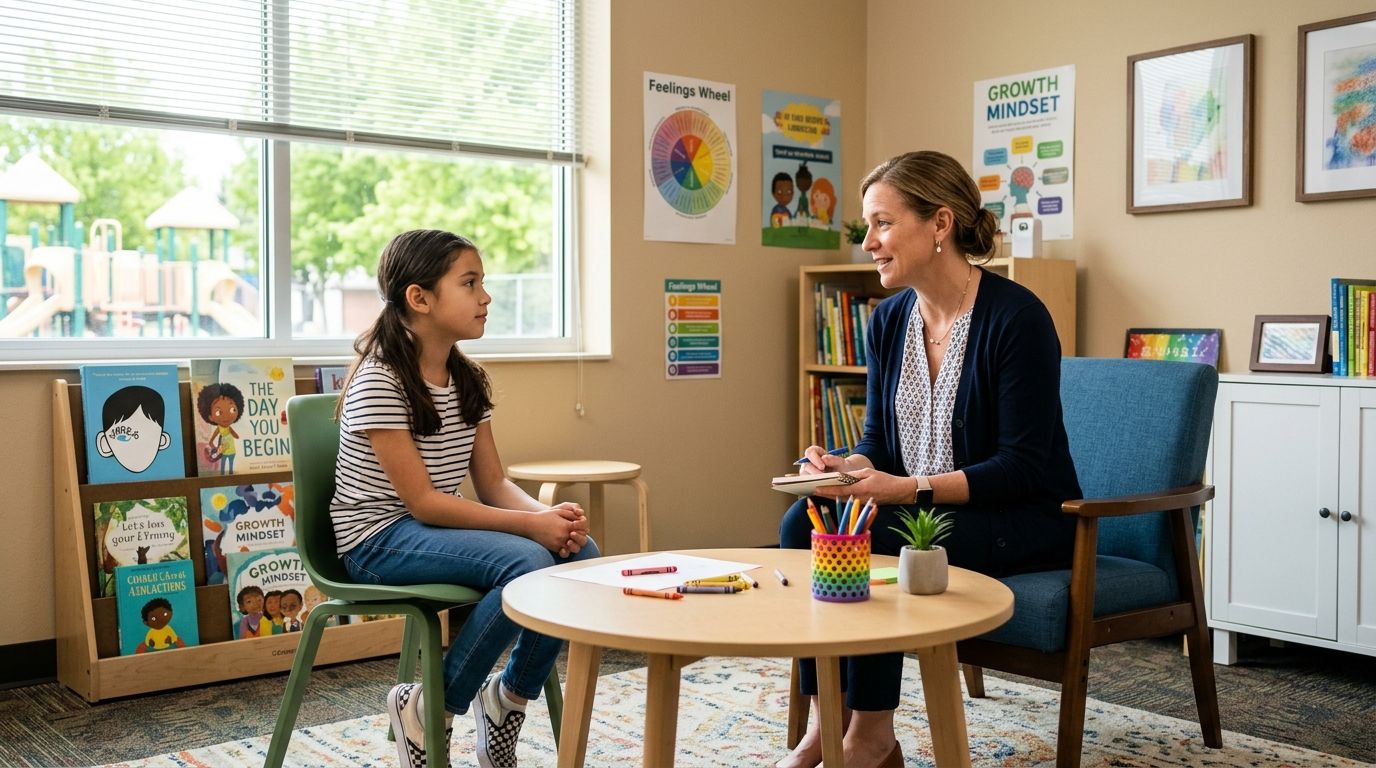
The school setting
School is one of the most common places for a first interview because the child is already there, separated from the home, and easy for CPS to reach quickly. The meeting may happen in a counselor's office, a nurse's room, or an administrative office with the door closed.
That setting matters. A school interview often happens before a parent has any chance to object, ask questions, or contact a lawyer. If you want a closer look at how this works in practice, see this explanation of CPS talking to a child at school in Texas.
Schools also tend to cooperate because they are trying to avoid interfering with a child-protection investigation. That cooperation does not answer whether CPS handled your case correctly. It only explains why the interview may have happened so quickly.
Other places parents should know about
School is not the only setting. CPS interviews also happen at daycare, a hospital, a forensic interview center, or another location where the child is receiving care or supervision.
Each location serves a different purpose. A hospital may be used if there are injury concerns. A forensic center may be used when trained interviewers want to reduce repeated questioning. Daycare can function much like school. It gives CPS access to the child before the parent is present.
The location can tell you a lot about what CPS was trying to do.
Emergency situations
Sometimes the agency acts fast because it believes waiting could put the child at risk. In plain terms, CPS may treat the first interview like triage. The goal is to gather enough information to decide whether the child is safe right now, not to give the family a full explanation first.
That urgency can feel one-sided to a parent. It also creates one of the most important follow-up questions in the case: what facts did CPS rely on when it decided speed mattered more than notice?
Cases involving law enforcement
Some interviews happen with police involvement or alongside a criminal investigation. That changes the temperature of the case. What sounds like a child-safety inquiry can also become evidence in a criminal file.
Parents often miss that distinction at first. They hear "CPS" and assume the matter is only civil. It may not be. If law enforcement was present, listed in paperwork, or mentioned by the school, treat the situation with extra care before giving detailed statements.
Why notice may come later
One of the hardest parts for parents is learning about the interview after it already happened. Texas practice often allows delayed notice when CPS believes earlier notice could put the child, the reporter, or the investigation at risk. In real life, that means the rule is less like a guaranteed alarm and more like a delayed receipt. You may get notice, but not on the timeline you expected.
That is why your first calls should focus on facts, not arguments. Find out who interviewed your child, where it happened, whether anyone else was in the room, and what CPS says justified doing it without you.
| Situation | What parents often expect | What may actually happen |
|---|---|---|
| Interview at school or daycare | A call before questions begin | Notice after the interview |
| Injury or emergency concern | A full explanation right away | Limited information at first |
| Police or forensic involvement | One agency handling the matter | CPS and law enforcement both involved |
If you learn an interview already happened, stay calm and get specifics. Ask for the caseworker's name, the location, the date and time, and the reason CPS believed it could proceed without waiting for you.
Your Legal Rights as a Texas Parent
After a surprise interview, many parents feel like the ground has shifted under them. That feeling is normal. It is also the moment to slow down and separate two different questions: what CPS was allowed to do in that moment, and what rights you still have now.
Texas law does not erase a parent's rights just because CPS opened an investigation. A child interview is one piece of the case. It is not a blank check for unlimited access to your home, your records, or your statements.
The rights notice you should receive
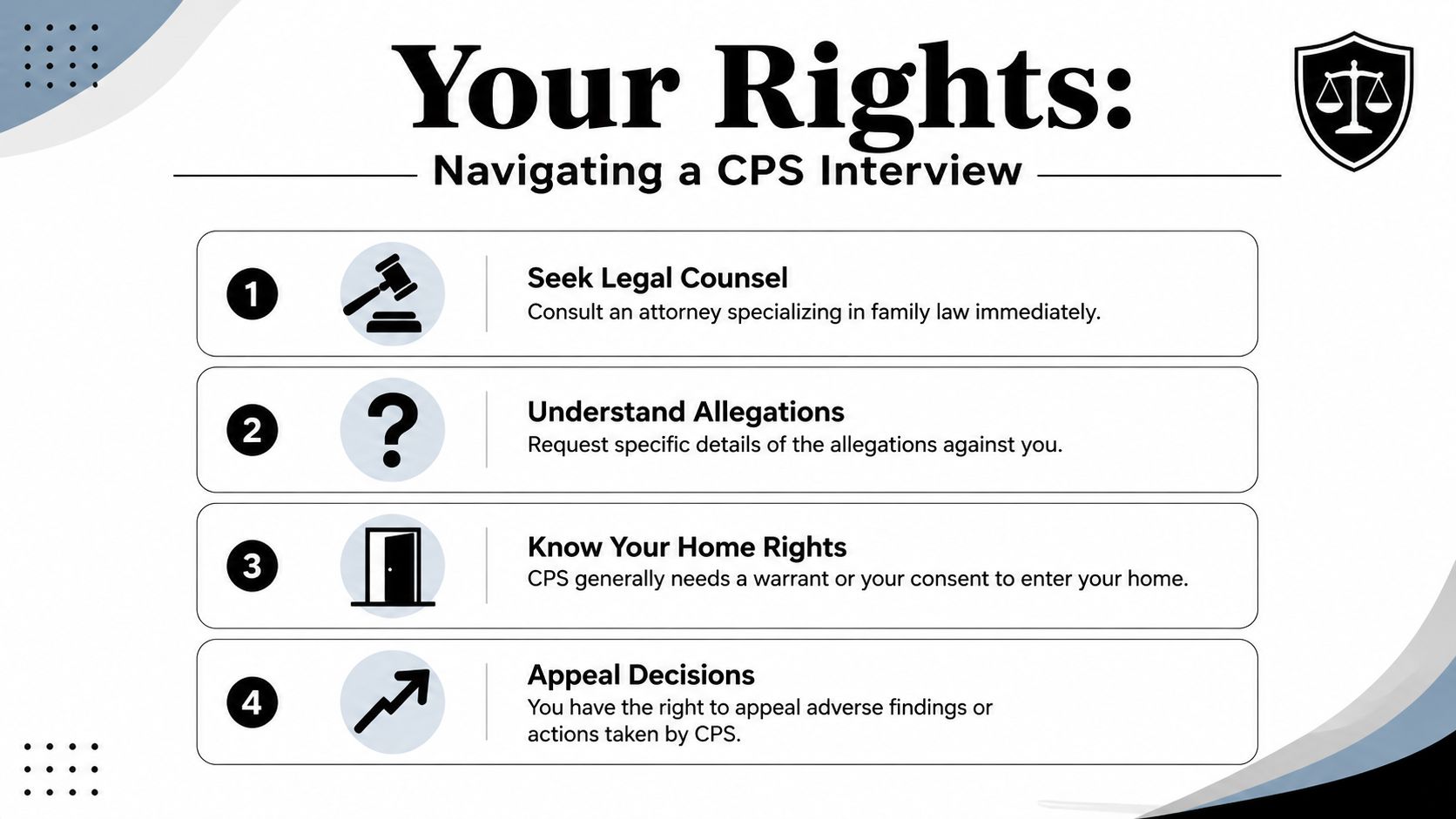
Texas now requires investigators to give parents and caregivers notice of certain rights early in a child abuse investigation. You may hear people call these "CPS Miranda Rights." The label is informal, but the idea is simple. Before a parent starts answering questions or allowing access, the parent should be told about basic protections.
Those protections can include the right to consult an attorney, the right to decline entry into your home unless CPS has legal authority to come in, and the right to be informed about the nature of the investigation. A useful overview appears in this explanation of Texas CPS Miranda Rights.
That matters because stress changes how people respond. Parents often believe that staying calm means saying yes to everything. In a CPS case, staying calm usually means listening carefully, asking questions, and not agreeing to more than the law requires.
Your home, your statements, and your consent
Parents often blend several issues together. A school interview, a home visit, and a request for a written statement are related, but they are not the same legally.
Your home has stronger protections than a school setting. If CPS already interviewed your child at school, that does not automatically mean the caseworker can enter your house on demand. It also does not mean you must answer detailed questions on the spot or sign papers without reading them.
If you want a plain-English explanation of your rights during a CPS investigation, start there and use it as a checklist for your next contact with CPS.
These short responses can protect your rights without sounding hostile:
- If CPS asks to come inside: "I want to cooperate. Please show me any court order, and I want to speak with a lawyer before I consent to entry."
- If a caseworker asks for a detailed interview right away: "I want to understand the allegations first. I would like legal advice before answering questions."
- If you are asked to sign a release or safety plan quickly: "I need time to read this carefully before I sign anything."
Short is better. Clear is better. You do not have to fill the silence.
A point many parents miss about refusal of consent
One of the biggest misunderstandings involves consent. Parents sometimes assume that if they refuse an interview in one place, CPS can try again somewhere else and get around that refusal.
Texas practice is more limited than that. As noted earlier, a parent's express refusal can matter a great deal, especially in a two-parent household. CPS does not get unlimited freedom to sidestep that objection by changing locations unless legal authority or an urgent safety concern supports it. This is one reason the exact facts matter. Who refused, when they refused, what CPS said in response, and whether police were involved can all change the analysis.
A good way to think about it is a locked door. Changing doors does not erase the lock. CPS may still need consent, a court order, or a legally recognized emergency before going further.
Practical rule: Be polite, be brief, and be consistent. Do not argue facts you do not know yet. Do not guess. Do not sign under pressure.
Rights that matter if the case grows
Some cases end after the first round of interviews. Others expand into requests for services, court hearings, temporary orders, or removal litigation. That is when parents need to understand the bigger legal frame.
Texas Family Code Chapters 262, 263, and 161 often become important as the case develops:
- Chapter 262 deals with emergency action and removal issues.
- Chapter 263 covers review hearings, service plans, and permanency deadlines.
- Chapter 161 governs termination of parental rights.
Here is the practical takeaway. The interview may feel like the whole crisis because it happened first. Legally, it is often the front gate. What you say, sign, or allow after that point can affect every later stage of the case.
What to Do Immediately After an Interview Occurs
The first day after learning about an interview often determines whether a parent helps or hurts their own case. Focus on calm, documented action.

Start with your child
Ask simple, open-ended questions. Don't coach. Don't suggest answers. Don't turn the conversation into an interrogation.
You might say, "Who talked with you today?" or "How did that conversation make you feel?" That's very different from saying, "Did they make you say something bad about me?" The first approach helps your child feel safe. The second can create pressure and confusion.
Build a timeline right away
Write down everything you know while it's still fresh. Include who called, when you learned of the interview, what the school said, what your child remembers, and any contact from CPS. Save voicemails, emails, screenshots, and business cards.
For parents trying to organize records carefully, how to document your case to protect yourself from CPS can help you think through what to preserve.
A useful timeline usually includes:
- The first notice you received from the school or CPS.
- Names and roles of everyone involved.
- Statements made by the caseworker, as close to exact wording as you can remember.
- Your response and any documents you were asked to sign.
Get legal advice before the next contact
Many parents make their biggest mistake after the interview, not during it. They panic, call the investigator back immediately, and start explaining family history, discipline methods, arguments, or medical issues without preparation.
This is a better next step to watch and consider before your next conversation with CPS:
A lawyer can help you evaluate whether CPS acted within its authority, whether a safety plan should be negotiated carefully, and whether the case has any criminal overlap. If you want counsel from a Texas firm that handles CPS-related matters, Law Office of Bryan Fagan PLLC is one option parents can contact for a consultation.
Know the removal timeline if things escalate
Most interviews do not end in immediate removal. But if CPS removes a child from a home without a court order because it claims immediate danger under Texas Family Code §262.104, the court must hold an adversary hearing within 14 days to decide whether the removal is justified, as explained in this discussion of Texas CPS removal hearings.
That deadline matters. If removal happens, the case moves fast, and parents need to be prepared to gather documents, identify helpful witnesses, and present safer alternatives quickly.
Take Control and Protect Your Family Today
Your child may be interviewed by CPS without you present in some Texas cases. That answer matters, but it is only the starting point.
What matters next is what CPS relied on, where the interview happened, what your child said, and what rights you can still use now. A CPS case often feels like a train that started moving without your permission. You may not be able to rewind the interview itself, but you can still decide how to respond, what information to gather, and how to protect your family from avoidable mistakes.
Start with a simple goal. Slow the situation down.
Do not fill in gaps for the investigator out of fear. Do not guess about what your child said. Do not sign papers you do not understand. Ask for the investigator's name, contact information, the allegations being investigated, and whether CPS is asking for anything specific next, such as another interview, a home visit, records, or a safety plan.
Good parents often freeze after learning an interview already happened. That reaction is normal. It does not mean you failed your child. In many families, the serious damage begins after the interview, when a parent speaks too quickly, agrees to vague terms, or treats a CPS request like an informal conversation instead of a legal matter with real consequences.
A careful response usually includes four basic steps. Write down the timeline while it is fresh. Save every text, email, voicemail, and business card. Get copies of any paperwork you were given. Speak with a Texas family law attorney before making detailed statements if the case could involve allegations of abuse, neglect, drug use, or any issue that might overlap with criminal accusations.
Early legal advice can make a major difference if CPS starts asking for broad releases, repeated interviews, supervised contact, or temporary placements with relatives. If the case grows into court proceedings under Chapters 262, 263, or 161 of the Texas Family Code, your earlier decisions may be examined closely.
If you want legal guidance, Law Office of Bryan Fagan PLLC is one Texas firm parents can contact for a consultation. The goal is not to panic. The goal is to get clear advice, protect your rights, and make steady decisions that put your child and your family in the strongest position possible.