Skip to content
Your phone rings. A CPS caseworker says your drug test came back positive. In that moment, most Texas parents don't hear the rest. They hear one fear: Are they about to take my child?
When dealing with CPS drug test what happens if you fail Texas, it's common to feel scared, embarrassed, and overwhelmed by rules that seem impossible to follow. That's a normal reaction. A failed test is serious, but it isn't the same thing as an automatic permanent loss of custody.
Texas law gives CPS power to act when a child faces danger, but it also gives parents procedures, hearings, and opportunities to show change. Recent legal updates have made one point especially important: a positive result by itself is not the whole case. CPS still has to focus on child safety and actual risk.
A common scenario looks like this. A mother agrees to test because she thinks cooperation will quickly clear things up. The result comes back positive. She assumes the worst and starts explaining everything at once. Meanwhile, CPS is looking less at her panic and more at practical questions: Is the child safe today? Is there a sober caregiver? Is the parent willing to follow a plan?
That difference matters. Many parents find this aspect confusing. They think the test result decides everything. It doesn't. The next steps, the paperwork, the hearings, and the evidence you build afterward all matter.
Facing a Failed CPS Drug Test
When CPS first gets involved, the process can feel cold and sudden. One day you're handling school pickup, work, and dinner. The next, someone is asking about drug use, your home, and who cares for your child when you're tired or stressed.
For many parents, the hardest part is not knowing what happens next. They expect an immediate yes-or-no answer about custody, but CPS cases rarely work that way. The agency usually starts by trying to understand whether the child is in danger right now, not solely whether a parent made a mistake.
A relatable Texas parent scenario
Consider a father in Texas who takes a test after a report to CPS. He thinks the issue is minor and expects a short conversation. Then he learns the result is positive. His first thought is that he has already lost.
That isn't necessarily true.
If the child is safe, the home is stable, and the parent starts addressing the concern, CPS may respond with supervision, services, or a safety plan instead of immediate permanent action. If the facts suggest immediate danger, the response can be much more aggressive. The point is that the failed test starts a process. It doesn't end one.
A failed CPS drug test can change the direction of your case quickly, but it doesn't erase your parental rights overnight.
Why parents get confused
Parents often hear two messages at once, and they sound contradictory:
- The test matters a lot. CPS may treat it as a sign of possible endangerment.
- The test isn't everything. Texas law focuses on danger, neglect, and the child's safety as a whole.
Both are true.
Recent Texas legal developments have pushed this issue into sharper focus. Legal commentary discussing Texas HB 567 and later regulatory updates explains that CPS must show clear evidence of danger beyond a mere positive result, and that the system focuses on risk, not just the test result in removal decisions, especially where marijuana is involved and there is no corroborating evidence of harm (Bryan Fagan legal discussion of failed marijuana CPS drug tests in Texas).
What helps right away
When emotions are high, parents often make the same mistakes. They over-explain, argue with the caseworker, or sign documents they don't understand.
A steadier response usually includes:
- Stay calm: Speak respectfully, but don't rush into long explanations.
- Write things down: Record the test date, who contacted you, and what CPS asked for.
- Think about safety first: If CPS asks who can help care for the child, be ready with a safe adult option.
- Get legal advice early: The sooner you understand the process, the fewer avoidable mistakes you'll make.
Understanding CPS Drug Testing Procedures
CPS drug testing in Texas sits inside a broader child-safety investigation. Under Texas Family Code Chapters 262 and 263, CPS may seek testing when substance use appears relevant to a child's safety, home conditions, or supervision concerns. Sometimes a parent agrees to test during the investigation. In other situations, the issue becomes part of court proceedings and orders.
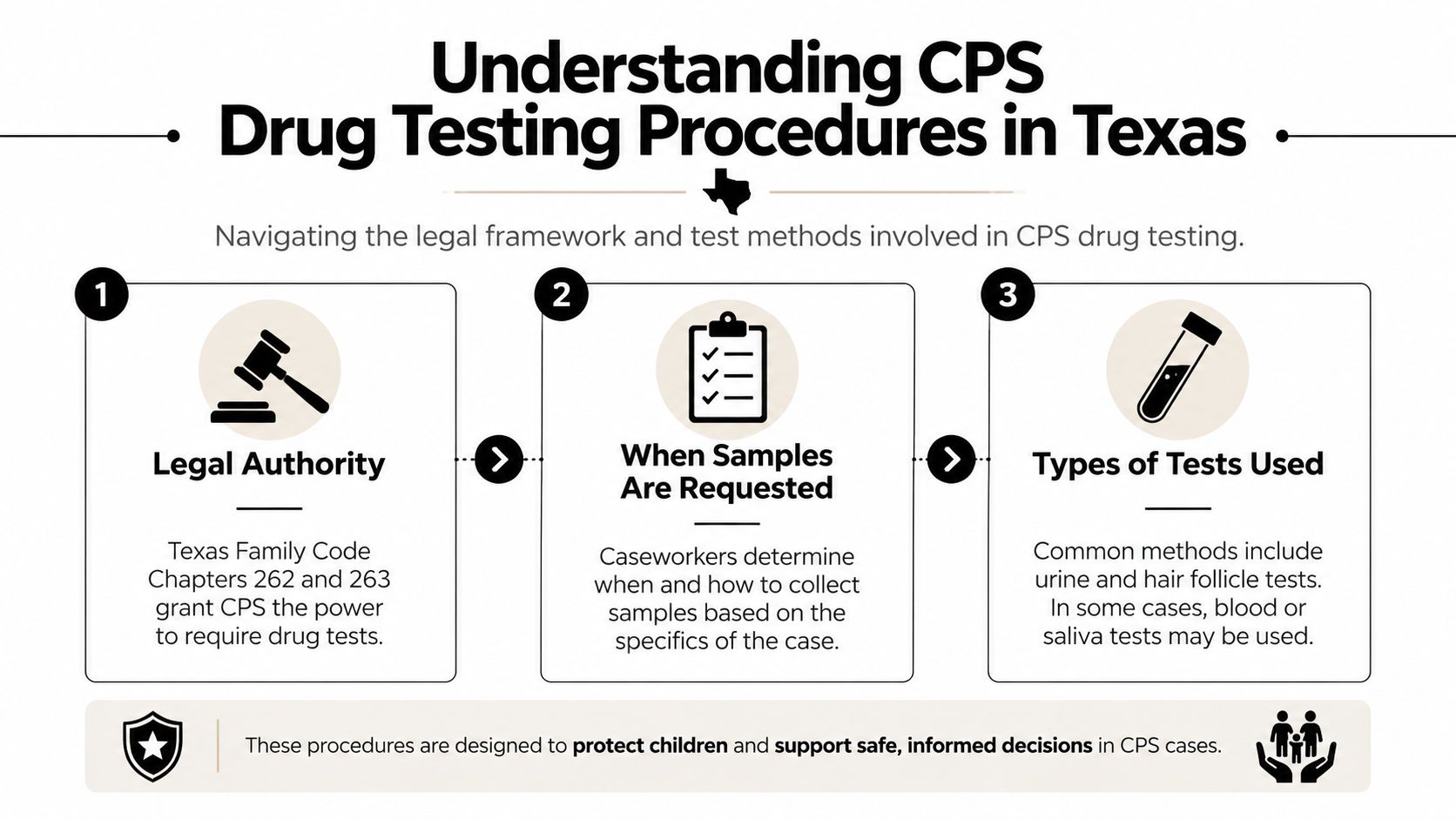
Parents usually encounter several test types. Urine tests are commonly used for recent use. Hair follicle tests can reach back much longer, sometimes covering several months. Some cases may also involve saliva or other testing methods. If you want a broader overview of how these requests arise in practice, this guide on Texas CPS drug testing gives helpful context.
What the timeline means
One deadline many parents miss is the result-checking rule. In Texas, CPS caseworkers must check drug test results within two business days of sample submission and continue daily checks until results arrive (DFPS CPS handbook on drug testing procedures).
That doesn't mean every parent gets a formal answer within two business days. It means CPS is supposed to actively monitor the result instead of letting the issue sit untouched. For parents, that timeline matters because the case can move fast once results post.
Practical rule: Ask for the date of the sample, the lab information if available, and the exact result that CPS says it received.
Voluntary tests and court-ordered tests
Not every test request carries the same weight. A voluntary test during an investigation differs from a court-ordered test after a case enters court. Parents often miss that distinction because the pressure feels intense either way.
A few basic points help:
| Situation | What it usually means |
|---|---|
| Voluntary request | CPS is gathering information during the investigation |
| Court-ordered testing | A judge has formally required compliance |
| Refusal concerns | CPS may treat refusal as a serious red flag in its risk analysis |
Parents also need to understand where a case can lead if CPS believes substance use forms part of a larger danger pattern. Termination of Parental Rights in CPS Cases addresses when CPS seeks to permanently terminate parental rights and how to contest it.
Immediate Consequences of a Failed Test
A failed test often changes the tone of the case overnight. CPS may not remove a child immediately, but the agency usually increases scrutiny and starts building a safety response around what it sees as risk.
The first days matter because CPS is trying to answer practical questions fast. Who is supervising the child? Is there another safe adult in the home? Does the parent seem willing to address the concern?
What CPS often does first
After a positive result, parents commonly see some combination of these responses:
- Safety planning: CPS may ask for a temporary arrangement that limits who can be alone with the child.
- More home contact: Expect more visits, calls, and check-ins.
- Random retesting: CPS may require additional tests to watch for a pattern.
- Services: Parents may be directed toward counseling, substance abuse assessment, or outpatient treatment.
In Texas, losing a CPS drug test does not automatically mean permanent custody loss. It often leads first to a mandatory safety plan, increased surveillance, and requirements such as random testing, counseling, or outpatient treatment. The same legal discussion also notes an important substance-specific rule: under Texas Family Code § 262.116(a)(7), a parent testing positive for marijuana alone cannot have their child removed, though tests positive for harder drugs like meth can prompt immediate custody loss (Texas CPS drug test rights and consequences discussion).
The marijuana rule confuses many parents
At this point, many people understandably get mixed up. They hear that marijuana alone cannot be the sole basis for removal, and they assume that means the test doesn't matter.
It still matters.
CPS may still investigate parenting decisions, supervision, home conditions, and any other facts suggesting neglect or danger. The legal protection is narrow. It does not mean a parent is shielded from scrutiny. It means marijuana alone is not supposed to do all the legal work by itself.
What you should do in the first few days
The best immediate response is practical, not defensive.
- Follow instructions carefully: Missing a meeting or retest can make the case look worse.
- Document your efforts: Save proof of assessments, counseling intake, and every negative test you later receive.
- Protect your words: Short, accurate communication is usually safer than emotional explanations.
- Review every document before signing: A safety plan can affect your daily life and your case narrative.
Short and Long-Term CPS Responses
A failed test can push a CPS case down very different paths. Some cases stay in the world of safety planning and services. Others move into court, removal, and in severe situations, termination proceedings.
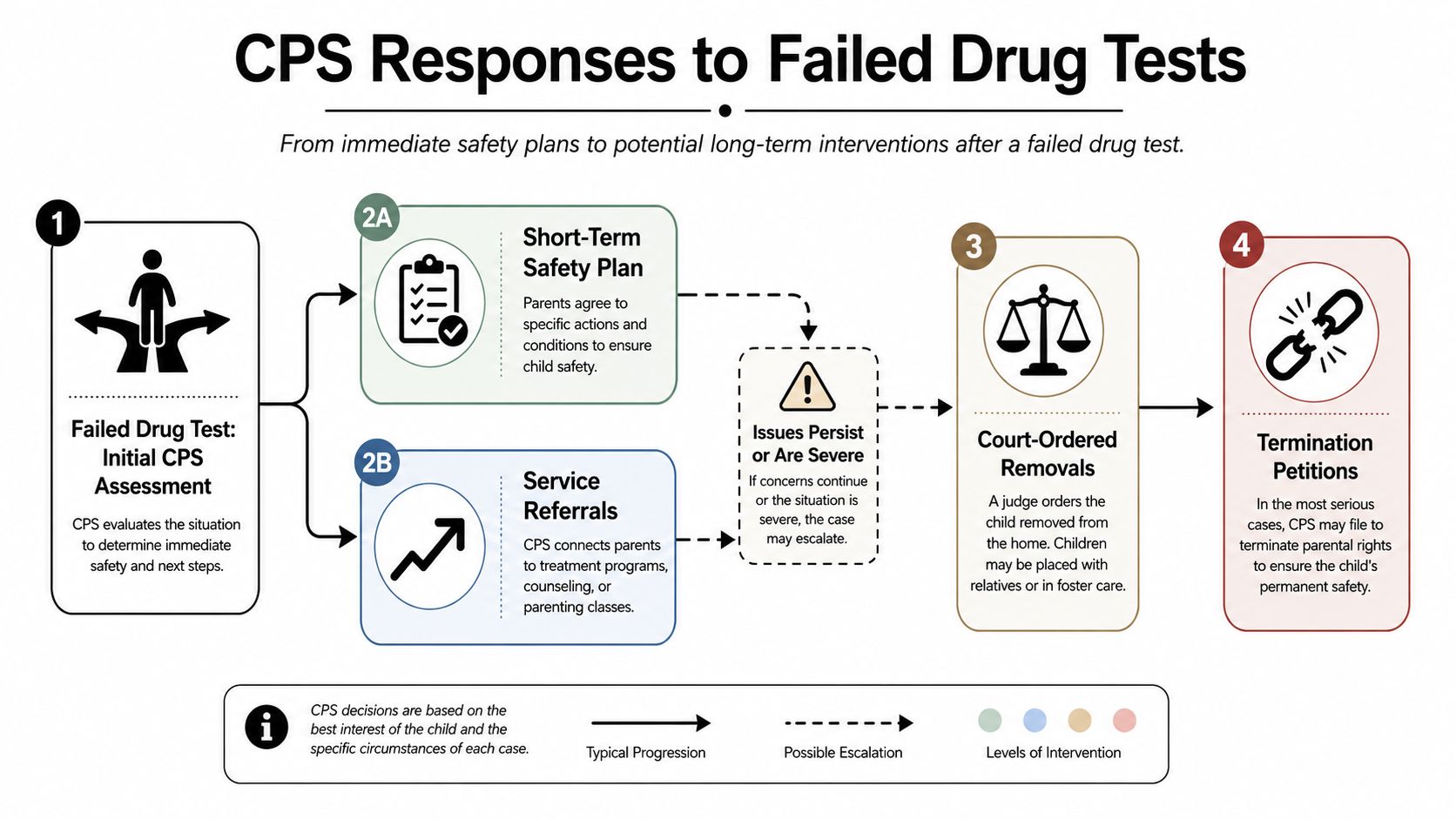
The difference usually comes down to severity, surrounding facts, and what happens after the failed test. A single positive result with a safe home plan may lead to temporary restrictions. Repeated positive tests, refusal to cooperate, or evidence that the child faced direct danger can move the case much further.
Short-term responses
In the short term, CPS often tries to stabilize the home without immediately seeking the most severe remedy.
That can include:
| Response | What it looks like |
|---|---|
| Safety plan | Another adult supervises or helps care for the child |
| Service referrals | Counseling, treatment, classes, or evaluations |
| Increased monitoring | More frequent visits and continued testing |
These measures are temporary by design, but they matter. If a parent complies and shows progress, they can support reunification. If a parent ignores them, CPS may argue the home remains unsafe.
When the case moves into court
If CPS removes a child based on evidence of immediate danger, there is a strict deadline. Under Texas Family Code § 262.102, CPS has 14 days to file suit and secure a hearing after removing a child based on immediate danger evidence such as a failed drug test (Texas discussion of failed CPS drug tests and emergency removal deadlines).
That 14-day hearing is one of the most important deadlines in the case. It is the point where emergency action must face judicial review. The judge examines whether the child should remain out of the home and what temporary orders should control the case going forward.
If your child has already been removed, don't treat the first hearing as a formality. It can shape placement, visitation, and the court's early view of your credibility.
For parents trying to place that hearing in the bigger case picture, Texas CPS Court Hearing Timeline: Status, Permanency & Trial explains the full sequence of CPS court hearings from adversary hearing through final trial.
Long-term escalation
Long-term risk grows when CPS sees a pattern rather than a single event. Repeated failed tests or refusal to test can lead to harsher visitation limits, tougher court orders, and in extreme cases, efforts to seek permanent conservatorship or termination of parental rights.
If your case includes a temporary plan outside of removal, it helps to understand how those agreements work in daily life. A focused guide on CPS safety plans in Texas can help parents see what these arrangements often mean in practice.
Protecting Your Parental Rights
A CPS case can move so quickly that parents feel they have no room to think. You do. But you need to act with purpose.

The strongest protection often starts with simple habits. Keep records. Ask clear questions. Don't assume cooperation means signing everything put in front of you.
Four early moves that matter
Ask to review the result
If CPS says you failed, ask what test was used, when it was collected, and what substance was reported. A vague statement like "you failed" isn't enough for you to make smart decisions.Consider independent testing
If you believe the result is wrong or incomplete, independent testing may help create a clearer record. This doesn't erase the CPS result, but it can become part of your evidence.Read safety plans carefully
Many parents sign a safety plan just to end the conversation. That can backfire. A safety plan may affect where your child stays, whether contact is supervised, and how CPS later describes your level of risk.Talk to a lawyer early
Legal advice can help you comply where necessary without casually giving up ground you didn't realize mattered.
For parents trying to rebuild credibility while working through treatment issues, this discussion of CPS and substance abuse recovery in Texas helps connect recovery steps to reunification.
Here is a short video that many parents find useful as they start thinking about their rights and response:
What to keep in your file
Build one file for the whole case. Paper or digital is fine. What matters is consistency.
- Test records: Keep every result, especially later negative ones.
- Program documents: Save intake forms, attendance records, and completion papers.
- Communication log: Note dates, names, and what CPS asked you to do.
- Court papers: Keep hearings, orders, and service plan documents together.
Keep proof the way a judge would want to see it, not the way you remember it.
A quiet but important warning
Don't confuse compliance with surrender. You can participate in services, testing, and court requirements while still protecting your legal position. Parents often damage their cases when they think they must either fight everything or agree to everything. Usually, the smarter path is more disciplined than either extreme.
Building Your Defense with Evidence and Next Steps
When a failed drug test becomes part of a CPS case, evidence is how you push back against fear, assumptions, and one-sided narratives. Courts and caseworkers respond to records. They respond to consistency. They respond to parents who can show progress, not just promise it.
What evidence helps most
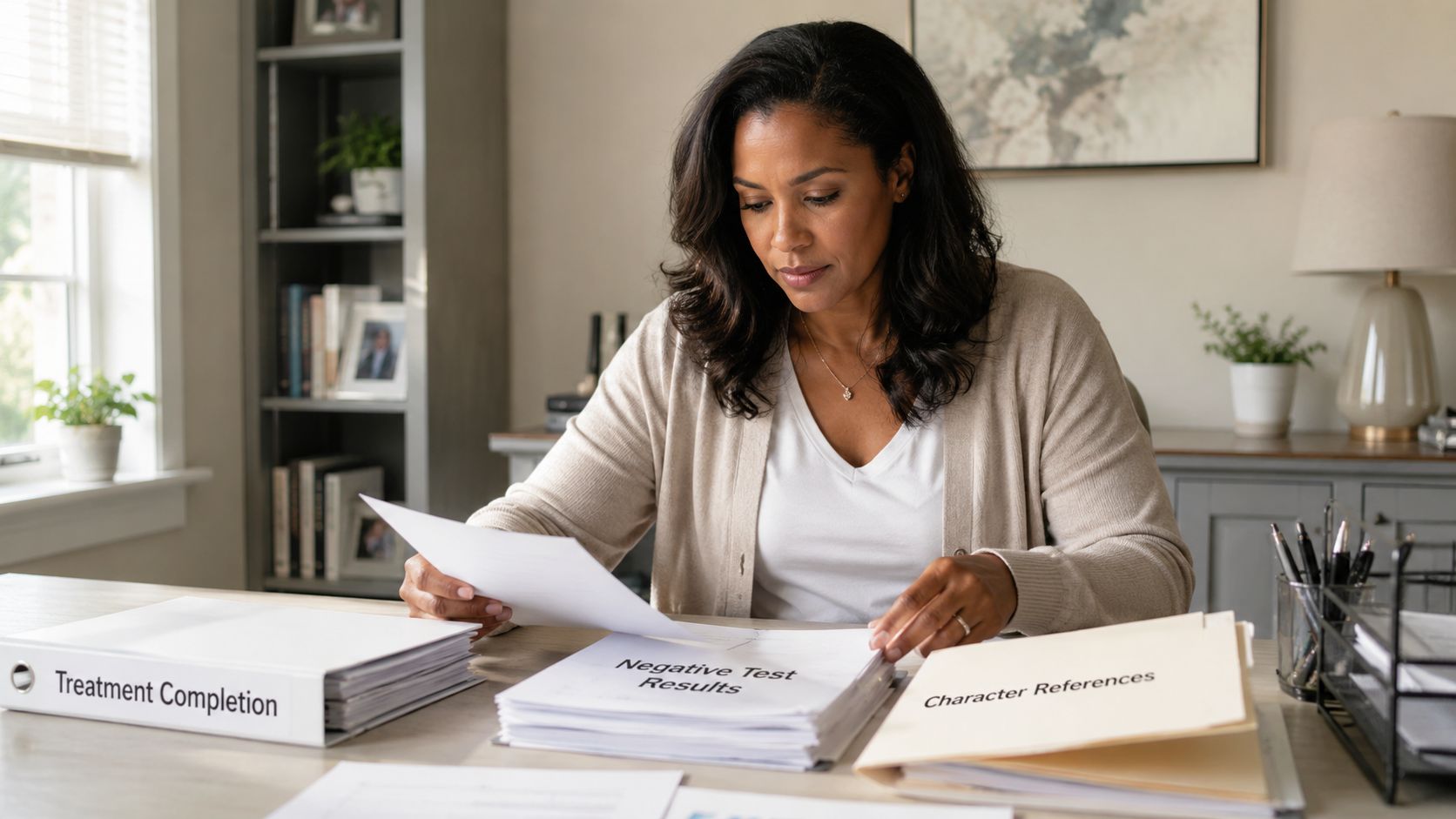
Useful defense evidence often includes:
- Negative follow-up tests: These can help show that the failed result was not the whole story.
- Treatment records: Certificates, attendance logs, and discharge paperwork matter.
- Character support: Letters from people who regularly see you parent can provide context.
- Parenting proof: School involvement, medical participation, and stable caregiving records can all help.
A short written statement can help too, but it should stay factual. Explain what you've done since the test, what services you've completed, and how your child is being kept safe. Avoid dramatic language. Avoid blaming everyone else. Judges and caseworkers usually find steady, documented progress more persuasive than emotional speeches.
When outside support strengthens your case
If treatment is part of your plan, quality and accessibility matter. Some parents who need flexible support because of work, childcare, or location look for structured remote treatment options. A resource discussing online recovery for Pennsylvania adults can be useful for understanding how virtual recovery models may fit into a broader treatment strategy, even though Texas parents should still make sure any provider they use fits their case requirements.
If you're preparing a response to CPS allegations more broadly, this guide on building a strong defense against CPS allegations lays out the kinds of records and arguments that can support your position.
When to involve legal counsel
Some parents wait too long because they think they should only call a lawyer if CPS files to terminate their rights. That's usually a mistake. Legal help is useful much earlier, especially when there are disputed test results, emergency hearings, criminal exposure, or safety plans that could later be used against you.
One option Texas parents consider is the Law Office of Bryan Fagan PLLC, a Texas firm that handles CPS-related matters and criminal cases that can overlap with family safety investigations. The key is not choosing a lawyer because you're panicking. The key is choosing counsel who understands how CPS procedure, court deadlines, and evidence fit together.
If you're living through the question "what happens if you fail a CPS drug test in Texas," remember this: the system looks closely at what you do next. A failed test can start the case, but your response helps shape where it goes.
If CPS is investigating your family or you've already failed a drug test, don't wait for the next hearing or the next call from a caseworker to get answers. Contact Law Office of Bryan Fagan PLLC for a free consultation. You can get clear guidance about your rights, your deadlines, your evidence, and the practical steps that may help protect your child and your future.