Skip to content
Being told you are facing a first offense Class A misdemeanor in Texas can feel like the ground has crumbled beneath your feet. It's the most serious charge you can face short of a felony, carrying penalties of up to one year in county jail and a fine that can reach $4,000. For parents and families, hearing those words brings a terrifying wave of uncertainty that threatens not just your freedom, but the very stability of your home and your relationship with your children.
The Overwhelming Reality of a Texas Criminal Charge

The moment you or a loved one is charged, it feels like the world is closing in. The fear, confusion, and sense of helplessness are completely normal, especially as your mind races with terrifying questions. What will happen to my kids? Could Child Protective Services (CPS) get involved and try to take my children away? How will this affect my job?
Imagine a father getting into a heated argument with his ex-spouse during a custody exchange. Tempers flare, things get physical, and he's suddenly charged with Assault Causing Bodily Injury—a Class A misdemeanor. His first thoughts aren't about legal statutes. They're about his children. He's terrified that this one mistake could be used against him in family court, potentially jeopardizing his custody rights and his future with his kids. This is the real, human stake behind every criminal case, especially when a family's bond is at risk.
Taking the First Critical Steps
In the chaotic hours and days that follow an arrest, the actions you take are incredibly important. The legal system moves fast, and being proactive is the best way to start protecting yourself and your family. Your priority is to take clear, decisive action.
Getting released from custody is almost always the first hurdle. Knowing the basics of the bail process is a huge help. You can find helpful resources online, like a guide on how to bail someone out of jail. This step is crucial because it allows you to fight your case from a position of freedom, not from behind bars.
After dealing with bail, the next steps are just as crucial for building a solid defense:
- Preserve All Evidence: Do not delete anything. Save any text messages, emails, photos, or documents related to the incident. Even if you think something looks bad, your attorney needs to see everything to build the strongest defense.
- Document Everything: As soon as you can, write down a detailed account of what happened while it's fresh in your mind. Include dates, times, locations, and the names of anyone who was there.
- Limit Communication: This is critical. Avoid discussing the details of your case with anyone except your lawyer. Anything you say to friends, family, or even the alleged victim can be twisted and used against you. This is especially important if CPS is involved, as an investigator may try to use your words to build a case against you.
This is not the end of your story. It's the beginning of a legal journey where the proactive choices you make today can make a massive difference in the outcome. You have the power to take control of this situation right now.
Understanding your rights and options is the first step toward turning that fear into empowerment. This guide is here to give you the practical, reassuring advice you need to navigate this overwhelming challenge and fight for your family's future.
What a Class A Misdemeanor Charge Means for Your Family
When you're suddenly facing the legal system, the terminology alone can be overwhelming. Hearing the words "Class A misdemeanor" is enough to cause serious stress, but what does it actually mean for you and your children? Let's cut through the jargon.
Simply put, a first offense Class A misdemeanor in Texas is the most severe type of misdemeanor charge you can face. It’s one step below a felony, and the potential consequences reflect that seriousness, especially in cases where CPS may become involved. The Texas Family Code gives CPS broad authority to investigate allegations of abuse or neglect, and a criminal charge like this can trigger an investigation that runs parallel to your criminal case.
Think of Texas misdemeanors as a three-rung ladder. At the bottom, you have Class C offenses, which are typically ticket-level violations. A step up is Class B, which introduces jail time. A Class A misdemeanor sits at the very top of that ladder, carrying the heaviest penalties and the greatest risk of impacting your family life.
The Maximum Penalties You Could Face
The Texas Penal Code lays out the worst-case scenario. A conviction for a Class A misdemeanor can result in up to 1 year in county jail and a fine of up to $4,000.
It's absolutely critical to understand that these are the maximums, not a guaranteed outcome. The entire purpose of hiring a skilled defense attorney is to fight for a much better result—a dismissal, a reduction to a lesser charge, or an alternative like probation that keeps you out of jail and helps demonstrate to a family court that you are a safe and responsible parent.
How Misdemeanor Classes Compare
Seeing the different classifications side-by-side really puts a Class A charge into perspective. The jump in potential penalties is significant.
Here’s a quick breakdown to help you see the difference.
Texas Misdemeanor Classes at a Glance
| Misdemeanor Class | Maximum Jail Time | Maximum Fine |
|---|---|---|
| Class A | Up to 1 Year in County Jail | Up to $4,000 |
| Class B | Up to 180 Days in County Jail | Up to $2,000 |
| Class C | No Jail Time | Up to $500 |
As the table shows, the possibility of spending a full year behind bars is what makes a Class A misdemeanor a threat that demands an immediate and serious defense. That kind of disruption can turn a family's life upside down, and it's a factor CPS will consider heavily.
Common Examples of Class A Misdemeanors
These charges stem from real-world situations that can happen to anyone, often in moments of high stress or poor judgment.
Some of the most common examples include:
- Assault Causing Bodily Injury: This often arises from a physical fight, including domestic disputes, where someone else suffers pain. An allegation of family violence will almost certainly trigger a CPS investigation.
- Second DWI Offense: If you have one prior conviction for driving while intoxicated, a second arrest is elevated to a Class A charge. A DWI can be interpreted by CPS as a sign of neglectful supervision if a child was in the car or at risk.
- Theft of Property Valued Between $750 and $2,500: This includes shoplifting or other theft offenses within this specific value range.
- Burglary of a Vehicle: This is more than just theft; it’s the act of breaking into someone’s car to commit a felony or any theft.
- Violation of a Protective Order: Disobeying a court-issued protective order, often put in place after family violence allegations, is taken very seriously. Per Chapter 262 of the Texas Family Code, a violation can be grounds for emergency removal of a child.
A criminal charge feels isolating, but you are not alone in this. Many Texas families have stood exactly where you are now, facing the same fears and uncertainties. The key is to transform that fear into informed action.
Facing a first offense Class A misdemeanor in Texas is a serious challenge, but it is far from a hopeless one. Our guide on what constitutes Class A misdemeanors in Texas provides more detail. The next crucial step is understanding the legal process and how to protect your parental rights along the way.
Navigating the Texas Criminal Justice Process
For a family staring down the legal system for the first time, it feels like being dropped into a maze with the lights off. A charge for a first offense Class A misdemeanor in Texas kicks off a chain of events that is confusing and scary. Think of this section as your map—a light to guide you down the path and turn that confusion into confidence.
We're going to walk through the entire journey, from the moment of arrest to the final day in court, keeping in mind how this process can intersect with a CPS investigation. Knowing what’s coming is the first real step toward taking back some control over your family's future.
From Arrest to Arraignment
The clock starts ticking the second an arrest is made. The individual is taken to jail for booking—a cold, administrative process of fingerprinting, photos, and paperwork. It's a dehumanizing experience, but it’s standard procedure.
Shortly after booking—usually within 48 hours—the accused is brought before a magistrate for an arraignment. This is the first critical hearing. Here, the judge will:
- Formally state the specific charges filed against you.
- Read you your constitutional rights, including the non-negotiable right to an attorney.
- Set a bail amount, which is the money required for release from jail while the case is pending.
You don't plead guilty or not guilty here. This hearing is just about getting the official process started. Having a lawyer present can make a huge difference in arguing for a fair bail amount, which gets you home to your family where you can better manage both your criminal case and any potential CPS involvement.
The Pre-Trial Phase: What Happens Next
Once you're out on bail, the case moves into the pre-trial phase. This is where the real legal heavy lifting happens, and it can stretch for several months. It has a few key parts.
The most important is discovery. During this process, your lawyer formally requests every piece of evidence the prosecution has—police reports, witness statements, body cam footage. Going through this evidence with a fine-tooth comb is how a good lawyer finds the weak spots in the state's case and starts building a strong defense that also considers family law implications.
"The criminal justice system is not a single event but a long journey. The pre-trial phase is where opportunities are found—chances to challenge evidence, negotiate with prosecutors, and lay the groundwork for the best possible outcome for you and your children."
This is also the time for filing pre-trial motions. For example, your attorney might file a Motion to Suppress Evidence, arguing that the police obtained certain evidence illegally. Winning a motion like this can sometimes cripple the prosecutor's case, occasionally leading to a full dismissal—the best possible outcome for your family.
The flowchart below gives you a bird's-eye view of the criminal offense hierarchy in Texas.
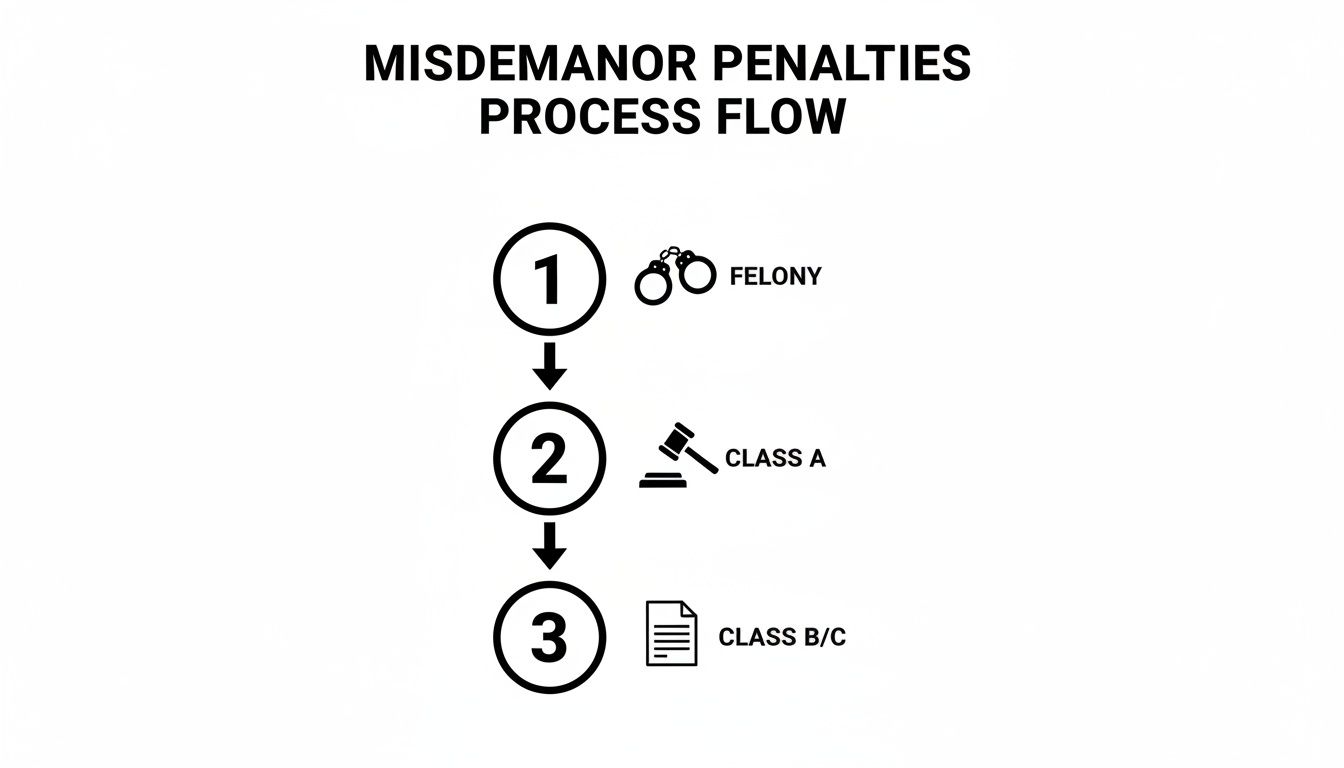
As you can see, felonies are at the top, and Class A misdemeanors are the most serious non-felony offenses, which is why they can trigger such serious consequences in family law and CPS cases.
Case Resolution: Reaching an Outcome
The vast majority of criminal cases never go to trial. Instead, they get resolved beforehand in one of two main ways.
The first is a plea bargain agreement. This is where your lawyer negotiates directly with the prosecutor. A good deal might involve pleading to a lesser charge (like knocking a Class A down to a Class B) or agreeing to a specific sentence, like probation. When children are involved, a key goal is to avoid any plea that includes an "affirmative finding of family violence," as this can have devastating consequences in custody cases.
The second, and best, outcome is a dismissal of the charges. A case might get dismissed if your lawyer successfully challenges the evidence or if you complete a special program like pre-trial diversion. A dismissal is a powerful tool to show a CPS caseworker or family judge that the allegations were unfounded.
If a deal can't be reached, the case gets set for trial. Understanding these stages helps you see the road ahead, one step at a time.
Building a Defense for a Better Outcome

Getting that call—the one where you learn a loved one has been arrested—is a gut-wrenching moment. But in the middle of all that fear, it's crucial to hold onto one powerful truth: an arrest is not a conviction.
The time between the charge and the final resolution is an opportunity. It's a chance to build a smart, strategic defense aimed at protecting your family's future. Facing a first offense Class A misdemeanor in Texas feels overwhelming, but the legal system has tools a skilled attorney can use to fight for a much better outcome. It's time to move past the worst-case scenarios and focus on what’s actually possible.
The Power of Negotiation in Plea Bargaining
Despite what you see on TV, most criminal cases aren't resolved in a dramatic courtroom trial. They're handled through negotiation. This process, known as plea bargaining, involves your attorney working with the prosecutor to reach an agreement that is far better than facing the maximum penalties.
A good plea bargain can look a few different ways. For the father in our earlier scenario, charged with Assault Causing Bodily Injury, a successful negotiation might result in pleading to a much lesser offense, like a Class C misdemeanor for simple assault, with no finding of family violence. That simple change eliminates the threat of jail time and, crucially, avoids the automatic negative presumptions in a custody case that come with a family violence conviction.
Deferred Adjudication: A Pathway to Dismissal
For many parents facing a first-time charge, one of the best possible outcomes is something called deferred adjudication. This is a special type of community supervision (probation) that can ultimately lead to the case being dismissed entirely—without a conviction.
Here’s a simple breakdown of how it works:
- You plead "guilty" or "no contest," but the judge doesn't actually find you guilty. Instead, the judge "defers" a finding of guilt and places you on community supervision.
- You have to complete specific conditions. These might include anger management classes, parenting courses, or substance abuse counseling—all things that can be presented positively in a CPS case to show you are proactively addressing any concerns.
- Once you successfully finish, the case is dismissed. This is the critical part. Because there was never an official finding of guilt, you were never convicted of the crime.
Successfully completing deferred adjudication means you can honestly say you have not been convicted of that offense. This is a huge advantage that helps protect your future and can be a deciding factor in achieving a positive outcome in a CPS or custody case.
This option is a powerful tool. It offers a second chance for parents to prove that one mistake doesn't have to define them. To get a deeper dive into how this works, check out our guide on what deferred adjudication is in Texas.
Challenging the Prosecution's Evidence
A strong defense isn't just about making deals; it's about aggressively challenging the evidence. It's your attorney's job to scrutinize every detail and hold the police and prosecution accountable.
This often involves filing pre-trial motions. For instance, a Motion to Suppress Evidence is used to argue that evidence was collected illegally. If the police conducted a search without a valid warrant, any evidence they found can get thrown out.
Imagine a Burglary of a Vehicle case. If the police pulled someone over without a legitimate reason and then illegally searched the car, a successful motion to suppress could get that evidence excluded. Without key evidence, the prosecutor's case might fall apart, leading to a dismissal. From questioning witness credibility to poking holes in police procedure, this proactive approach creates leverage to get the best possible result for you and your family.
Protecting Your Future from Long-Term Consequences
The true weight of a criminal charge isn’t just felt in the courtroom; it’s the long shadow it casts over your future. A conviction for a first offense Class A misdemeanor in Texas can become a heavy burden, creating lasting barriers to employment, housing, professional licenses, and even your ability to volunteer at your child's school.
For parents, this is a terrifying reality. The fear is that one mistake could permanently limit your ability to provide for your family. But you have the power to fight back against this long-term damage by taking proactive legal steps today. The goal is to prevent a permanent conviction from ever appearing on your record, as this is a critical factor in any CPS case, especially those that proceed to termination of parental rights under Chapter 161 of the Texas Family Code.
Expunction vs. Nondisclosure: What's the Difference?
When we talk about clearing a criminal record in Texas, two important legal tools come into play: expunction and an order of nondisclosure. Though they sound similar, they accomplish very different things.
An expunction is the gold standard. Think of it like a complete erasure. When a record is expunged, all files related to the arrest are destroyed. It’s as if the arrest never happened, and you can legally deny it ever occurred.
An order of nondisclosure, on the other hand, is more like sealing the record. The record still exists, but it is hidden from the public, including potential employers and landlords. While law enforcement and certain state agencies (including CPS) can still see it, it effectively removes the charge from public background checks.
Securing Your Eligibility for a Clear Record
So, how do you get one of these powerful remedies? Eligibility depends entirely on how your case is resolved.
- Expunction Eligibility: You can typically only get an expunction if your case results in a complete dismissal, an acquittal (a "not guilty" verdict), or if you are pardoned.
- Nondisclosure Eligibility: The most common path to an order of nondisclosure is by successfully completing deferred adjudication. Once you complete all the requirements and the case is dismissed, you can petition the court to seal the record.
Understanding how probation in Texas works is essential, as successfully completing it isn’t just about avoiding jail; it’s about protecting your long-term reputation and your relationship with your children. Showing a family court judge or CPS caseworker that you took responsibility and completed a program can be a powerful step toward reunification and closing out a CPS case, as outlined in Chapter 263 of the Texas Family Code.
The legal system recognizes that a single mistake should not define a person's entire life. Reducing the lasting consequences of a misdemeanor can be a powerful factor in preventing future contact with the justice system.
This isn't just a hopeful idea; it's a practical reality. Studies show that when people can move forward without a criminal record holding them back, they are better able to secure stable jobs and housing. For parents, this stability is the foundation of a safe home for their children. A Class A misdemeanor could also lead to protective orders in Texas, which can have significant long-term effects. Taking decisive action now is the most important step you can take to safeguard your family's future.
Why You Must Act Quickly to Secure Legal Help
When your family’s future is on the line, every single second counts. A first offense Class A misdemeanor in Texas isn't something you can wait out. That window of time right after an arrest is the most critical period for building a solid defense, and getting an experienced lawyer on board immediately can completely change the direction of your case.
We understand that fear and confusion can be paralyzing. It’s natural to feel overwhelmed, but the single most powerful thing you can do to take back control is to make that first call to a defense attorney. While you're trying to process everything, the prosecution is already building its case, and a CPS investigator may be trying to contact you. You need a dedicated advocate in your corner from day one.
The Stakes Are Too High to Wait
Putting off hiring an attorney means losing precious opportunities. Evidence can vanish. Witnesses' memories fade. Crucial deadlines pass. The longer you delay, the bigger head start you give the prosecution and the more risk you expose your family to.
And make no mistake, the consequences of a conviction are serious and long-lasting:
- Jail Time: You could be looking at up to a full year in jail—an outcome that would tear your family apart and could be used by CPS as grounds to remove your children.
- Steep Fines: A fine of up to $4,000 can put an immense financial burden on your family.
- A Permanent Criminal Record: A conviction is for life. It creates major roadblocks when you’re trying to find a good job, rent a home, or simply be present for your children.
These aren't just abstract penalties. They are real-world consequences that threaten the stability and future you’ve worked so hard to build for the people you love.
The difference between a conviction and a dismissal often comes down to the strategic moves made in the first few days and weeks after an arrest. A seasoned attorney knows exactly how to use this time to your advantage.
A lawyer can get to work right away. They'll investigate the facts, track down witnesses, and pick apart the state’s evidence to find its weak spots. They can take over all communication with the police, prosecutors, and CPS, making sure you don't accidentally say something that hurts your case. This proactive defense is your best shield.
A skilled lawyer doesn’t just play defense; they fight for positive outcomes, whether that’s getting the charge reduced, negotiating entry into a diversion program, or getting the case thrown out entirely. Protecting your family’s future is our number one priority. We know how much is riding on this, and we’re here to provide the compassionate, family-focused legal support you need. Your first step is a simple, no-risk conversation. Contact The Law Office of Bryan Fagan for a free consultation to understand your rights and start building your defense today.
Answering Your Top Questions About Texas Misdemeanors
When you're facing a misdemeanor charge in Texas, the questions start piling up fast, especially when your family's future hangs in the balance. Let's cut through the noise and get you some direct, clear answers to the most common concerns we hear.
Can I Get Probation for a First Offense Class A Misdemeanor in Texas?
Yes, absolutely. In fact, probation is a very common outcome for a first-offense Class A misdemeanor in Texas. The courts here call it "community supervision," and it's a way to serve your sentence without going to jail.
Instead of incarceration, a judge might sentence you to up to two years of supervision. This isn't a free pass, though. It almost always comes with a list of conditions you have to follow, like checking in with an officer, attending counseling, or completing community service. The key is to successfully complete the entire probation period—do that, and you stay out of jail and can start moving on with your life. For parents, completing court-ordered services can also satisfy requirements from a CPS safety plan, helping resolve two legal issues at once.
Will a Class A Misdemeanor Affect My Gun Rights in Texas?
This is a critical question, and the answer is a firm yes. A conviction can definitely impact your Second Amendment rights, and you need to understand how.
If you're convicted of any Class A misdemeanor that involves family violence, you'll be hit with a federal ban on possessing a firearm. For other types of Class A convictions, you could face a five-year state-level ban that kicks in after you've completed your sentence. It is absolutely vital to go over the specifics of your charge with an attorney to see exactly how it could affect your right to own a gun.
A criminal charge is never just about the immediate penalties. It's about understanding and fighting back against all the potential ripple effects on your life, including your constitutional rights and your fundamental rights as a parent.
How Long Does a Class A Misdemeanor Stay on My Record?
A conviction, if left alone, will stay on your record forever. But "forever" doesn't have to be the final answer. Texas law provides some powerful tools to clear your name if your case ends in your favor.
If your case is dismissed by the prosecutor or if you are found not guilty at trial, you may be eligible for an expunction. This is the best-case scenario, as an expunction completely destroys the record of the charge. It's like it never happened.
Another great option is available if you successfully complete a deferred adjudication program. Once you're done, you can petition the court for an order of nondisclosure. This doesn't destroy the record, but it does seal it from public view, protecting you when you're applying for jobs or housing down the road. This is an invaluable tool for parents trying to show they are stable and responsible caregivers.
Facing a criminal charge is a heavy burden, but it's not one you have to carry by yourself. The dedicated attorneys at the Law Office of Bryan Fagan PLLC are here to offer the compassionate guidance and aggressive defense your family needs. We understand the fear and uncertainty you're experiencing, especially when your children's well-being is at stake. We will fight to protect your future and your family. For a free, confidential consultation to discuss your case and understand your options, contact us today.