Skip to content
The knock usually comes on an ordinary day. The house may be half-clean, a child may have toys spread across the living room, and you may still be trying to understand why Child Protective Services is at your door in the first place. Most Texas parents in that moment feel the same mix of fear, anger, and confusion. They want to protect their children, but they also don't want to make a mistake that makes things worse.
That panic is real, but it shouldn't drive your decisions. A CPS home inspection is serious, yet it's still a process with rules, timelines, and limits. If you understand what the caseworker is evaluating, what conditions trigger concern, and what your rights are inside your own home, you can approach the visit with a clearer head and a better plan.
A parent I might describe in this situation is someone who gets a report notice on Tuesday, scrambles to wash bedding on Wednesday, and worries all night about whether clutter in the hallway or medicine in a bathroom drawer could be misunderstood on Thursday. That's a common scenario. The good news is that CPS isn't grading your home for perfection. They're looking for safety, basic care, and signs that children's needs are being met.
Responding to the Knock at the Door
When a CPS investigator arrives unexpectedly, the first job is simple. Slow the moment down.
You don't need to answer every question on the porch. You don't need to fill silence with nervous explanations. You also don't need to assume that one visit means CPS has already decided something about you as a parent. In Texas, an investigation has a timeline, and that matters because it reminds families that this is a defined legal process, not an open-ended threat.
Under Texas CPS protocols, the investigation phase must be completed within 45 days from the date of intake, and a caseworker can request a 45-day extension with good cause, but the investigation must be finalized no later than 90 days after intake unless a Program Director approves a further extension, according to Texas Law Help's explanation of the CPS investigation phase.
What to do in the first few minutes
A calm opening usually helps more than a defensive one. Ask for the investigator's name, agency information, and the general nature of the allegation. Write it down. If you're flustered, use your phone notes or a notepad on the kitchen counter.
A practical response sounds like this:
- Ask who they are: “Please tell me your full name and what office you're with.”
- Ask the reason for contact: “What are you investigating?”
- Ask about urgency: “Are you saying there's an emergency right now?”
- Take notes: Record the date, time, and what was said.
Practical rule: Calm is not the same as surrender. A respectful tone protects you better than panic does.
Don't confuse urgency with helplessness
Many parents assume that because CPS showed up, they have no control left. That isn't true. You still control how you communicate, what documents you gather, and whether you get legal guidance early. If you need a grounded explanation of those first decisions, this guide on how to respond when CPS shows up at your door in Texas lays out the immediate issues families usually face.
One common mistake is trying to “fix” the whole case in the doorway. Parents start overexplaining family conflict, discipline issues, medical history, or a former partner's behavior. That often creates confusion instead of clarity. A better approach is to stay polite, answer basic identification questions, and avoid volunteering details you haven't had time to think through carefully.
Another mistake is assuming a messy house equals automatic failure. It doesn't. Unsafe conditions are the primary issue. That distinction matters, especially when families are scared and trying to do everything at once.
What CPS Inspectors Really Look For
The phrase how to pass a CPS home inspection makes many parents think about deep cleaning. Cleaning matters, but the legal standard is broader and more specific than that. Inspectors are looking for a home that is safe, functional, and appropriate for children.
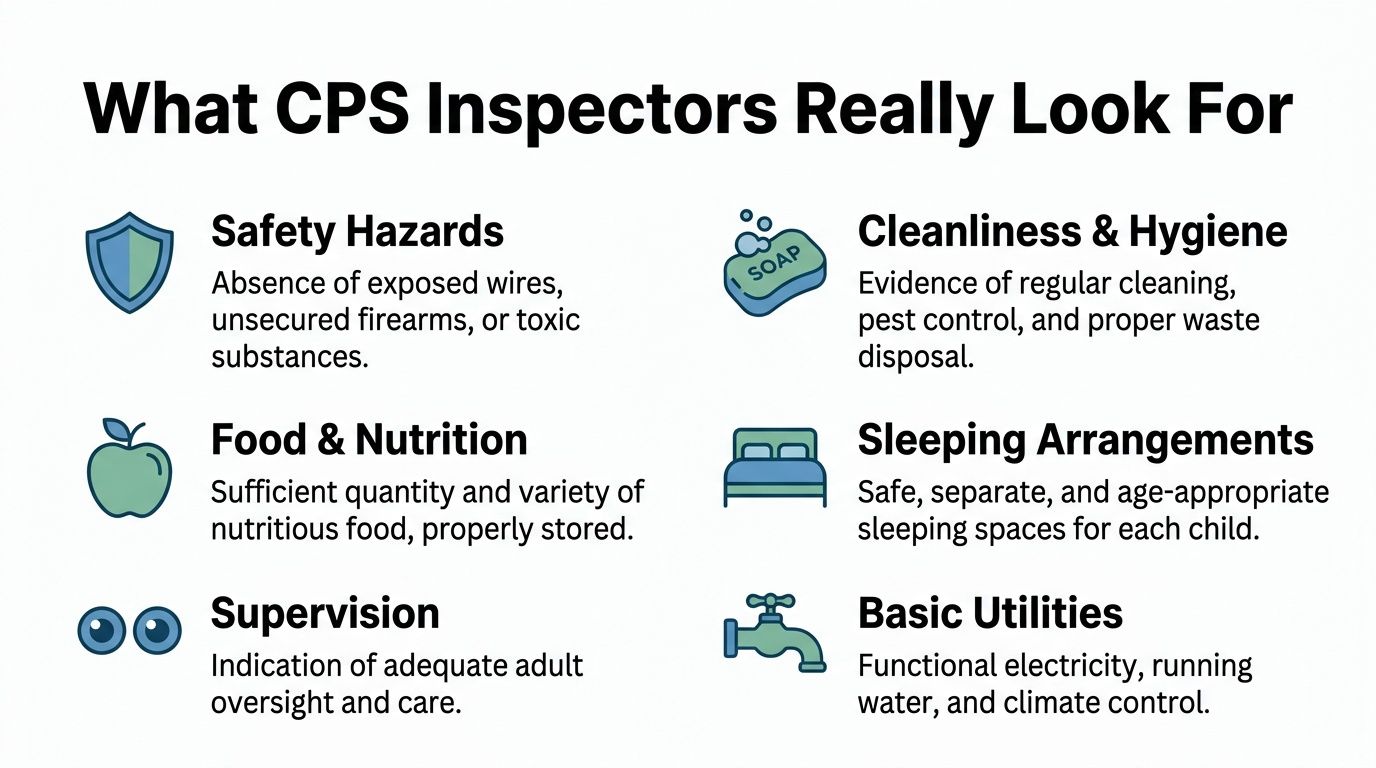
The inspector's central question is whether a child can live in the home without facing obvious, preventable harm.
Texas guidance puts concrete items behind that question. Homes must have working smoke detectors, no exposed wiring or unsecured weapons, and bedrooms must meet space requirements, including 70 square feet for a single bed, under Texas DFPS standards such as Form 2932, as reflected in the Texas DFPS Minimum Standards materials.
The main categories caseworkers check
A useful way to think about the inspection is to group concerns into a few practical buckets.
| Area | What the caseworker notices |
|---|---|
| Immediate safety | Fire risks, exposed wiring, weapons, dangerous chemicals, blocked exits |
| Food and sanitation | Usable food, clean preparation areas, no moldy food or widespread trash |
| Sleeping arrangements | Separate, clean, appropriate beds and adequate bedroom setup |
| Basic utilities | Running water, electricity, heat, and overall livable conditions |
| General child care | Whether the home supports ordinary supervision and daily routines |
What matters more than appearances
Parents often focus on cosmetic flaws. Old cabinets, worn carpet, or dated appliances usually don't matter by themselves. Caseworkers are usually more concerned with hazards a child can reach, missing necessities, or conditions that suggest neglect.
Keep these priorities in mind:
- Safety first: Put away medications, lock up weapons, secure chemicals, and replace dead smoke detector batteries.
- Livability next: Make sure the refrigerator and pantry contain usable food and the home has running utilities.
- Sleep setup matters: Each child should have a clean bed with proper bedding in an appropriate bedroom space.
- Access and exits count: Bedrooms and sleeping areas need to function as real rooms, not improvised corners or unsafe converted spaces.
Parents who want context on how the broader case unfolds can review The Texas CPS Investigation Process Explained, which gives a step-by-step breakdown of how a Texas CPS investigation unfolds and a parent's rights at each stage.
A Room-by-Room Home Safety and Prep Guide
Preparation works best when you stop thinking about “the whole house” and start thinking in zones. Walk through your home the way a caseworker will. Stand in each doorway and ask one question. Could a reasonable person see a child safety issue here?

Kitchen and food storage
The kitchen tells CPS a lot. It shows whether children have access to food, whether dangerous items are secured, and whether the home is functioning day to day.
Look for these common issues:
- Food condition: Throw out rotting or expired items. Keep the refrigerator and pantry stocked with usable food.
- Chemical storage: Move bleach, detergents, and other cleaners away from where children can reach them.
- Sharp objects: Store knives and similar tools in a controlled place.
- Trash and pests: Remove overflowing garbage and address signs of infestation.
If you have younger children, simple physical safeguards help. For interior safety concerns, a practical resource is this homeowner's guide to childproofing doors, especially if a child can wander into a garage, utility room, or other risky area.
Bedrooms and sleeping spaces
This area causes more trouble than many parents expect. CPS wants to see that each child has an actual place to sleep, not an improvised arrangement that changes from night to night.
Check the basics:
- Each child needs a bed: Clean, dedicated, and with proper bedding.
- The room should function as a bedroom: It needs walls, a door that closes, and normal access.
- Remove obvious hazards: No exposed cords, unstable furniture, or blocked pathways.
- Respect age-appropriate sleeping arrangements: Don't assume CPS will overlook children sharing spaces that raise concerns.
A bare mattress on the floor isn't always the issue by itself. The larger concern is whether the child has a stable sleeping arrangement that looks safe, intentional, and appropriate.
Bathrooms and medication control
Bathrooms are often small, but they can create big problems quickly. Prescription bottles on the sink, razors in reach, and no hot water all draw attention.
A home inspection will automatically fail for critical safety violations like doors that can be locked from the outside, windows that are permanently secured shut, lack of running hot water, or exposed electrical wiring, as noted in this discussion of what CPS looks for during a home inspection.
Use this bathroom checklist:
- Store medication securely
- Confirm hot water works
- Clear moldy towels, trash, and dirty surfaces
- Remove loose electrical hazards near sinks
A closer look at what families can expect during an in-home visit appears in this guide on a Texas CPS home visit.
Living room, hallways, and outside areas
Common areas don't need to look staged. They do need to be reasonably safe. Clear walkways. Make sure children can move through the home without stepping over broken items, trash, or dangerous clutter.
If a caseworker sees a lived-in home that is safe and manageable, that's very different from seeing a home where hazards control the space.
Screen obvious burn hazards if needed, keep exits usable, and deal with pet waste right away. Pets themselves aren't the problem. Unsanitary conditions are.
This short video can help you think through home-visit preparation in practical terms.
Communicating with the Caseworker and Preparing Documents
The condition of the home matters. So does the impression you create while explaining it.
Some parents talk too little because they're terrified. Others talk far too much because they're trying to sound cooperative. The better approach is cooperative but careful. Be polite. Be truthful. Keep answers focused on the question that was asked.
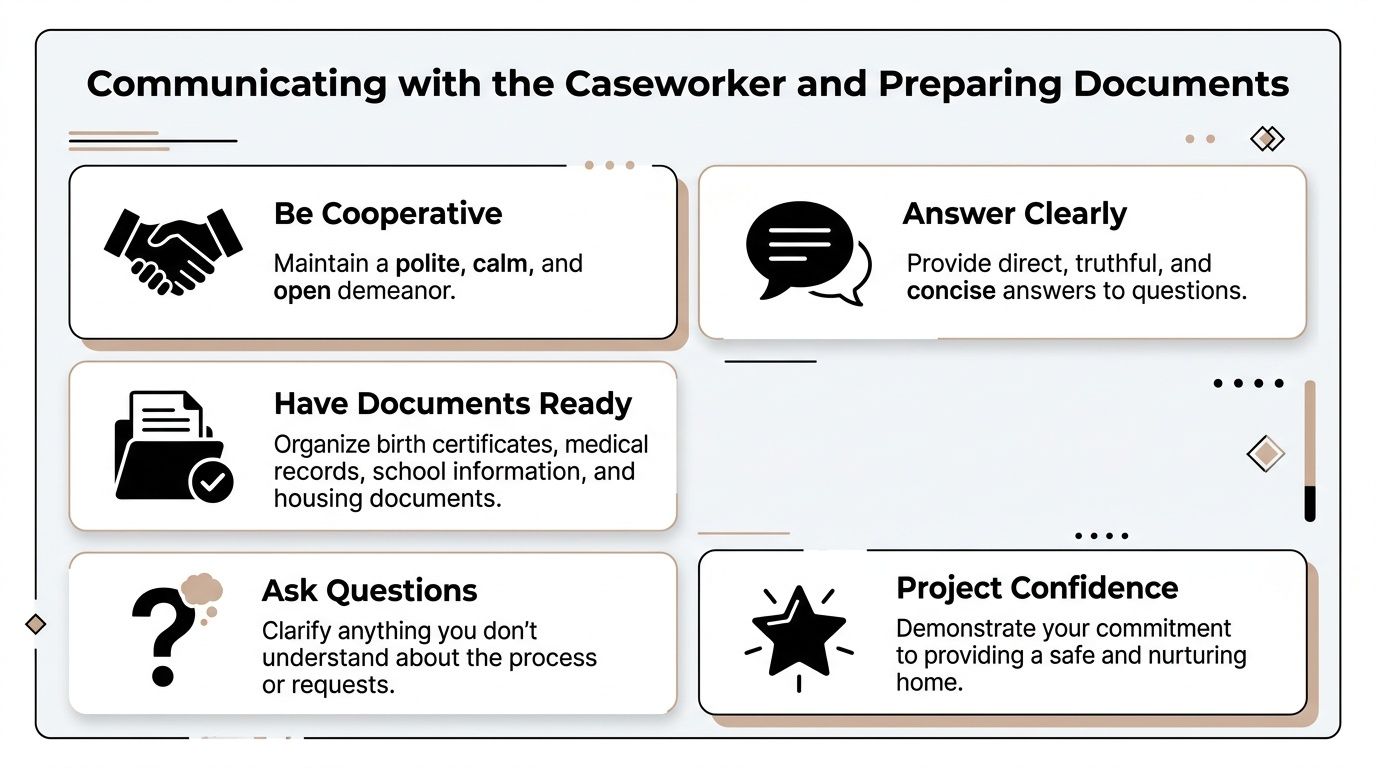
What good communication sounds like
You do not need to argue with the investigator to protect yourself. You also don't need to guess. If you don't know an answer, say you don't know. If you need clarification, ask for it.
Useful phrases include:
- When a question is vague: “Can you be more specific about what you're asking?”
- When you need accuracy: “I want to answer carefully, so let me think about that.”
- When you've corrected something: “That issue has been addressed, and I can show you.”
- When a request feels unclear: “Please explain exactly what you need from me.”
Bias can affect what the worker thinks they see
This is one of the least discussed parts of a CPS home inspection. Families with limited means often worry that ordinary clutter, older furniture, or a small apartment will be treated as danger. That concern isn't imaginary. A 2024 Oregon DHS report found that 34% of CPS home removals in low-income counties were based on “perceived safety” rather than documented hazards, as discussed by Embrella in its foster home inspection overview.
That doesn't mean every inspection is unfair. It does mean presentation matters.
Important distinction: Poverty is not neglect. A modest home can still be safe, stable, and appropriate for children.
Documents that help show stability
Organized paperwork can reduce suspicion because it shows follow-through. Put documents in one folder or expandable file before the visit if you can.
Bring together items such as:
- Identity documents: Birth certificates or identifying records for the children if available to you
- Medical records: Immunization information, prescription details, pediatrician contact information
- School records: Enrollment papers, attendance notes, report cards, or school contacts
- Housing records: Lease, rent receipts, utility bills, or other proof of residence
- Household contacts: Names and numbers for relatives, caregivers, counselors, or service providers
If a caseworker asks a hard question, answer the question asked. Don't add five extra facts out of panic. Parents often hurt themselves by trying to sound “open” when what they're really doing is giving fragmented statements that can be taken out of context.
Your Legal Rights During a CPS Home Search
Many articles about how to pass a CPS home inspection stop at mopping floors and making beds. That leaves out one of the most important parts of the conversation. You have rights in your own home.
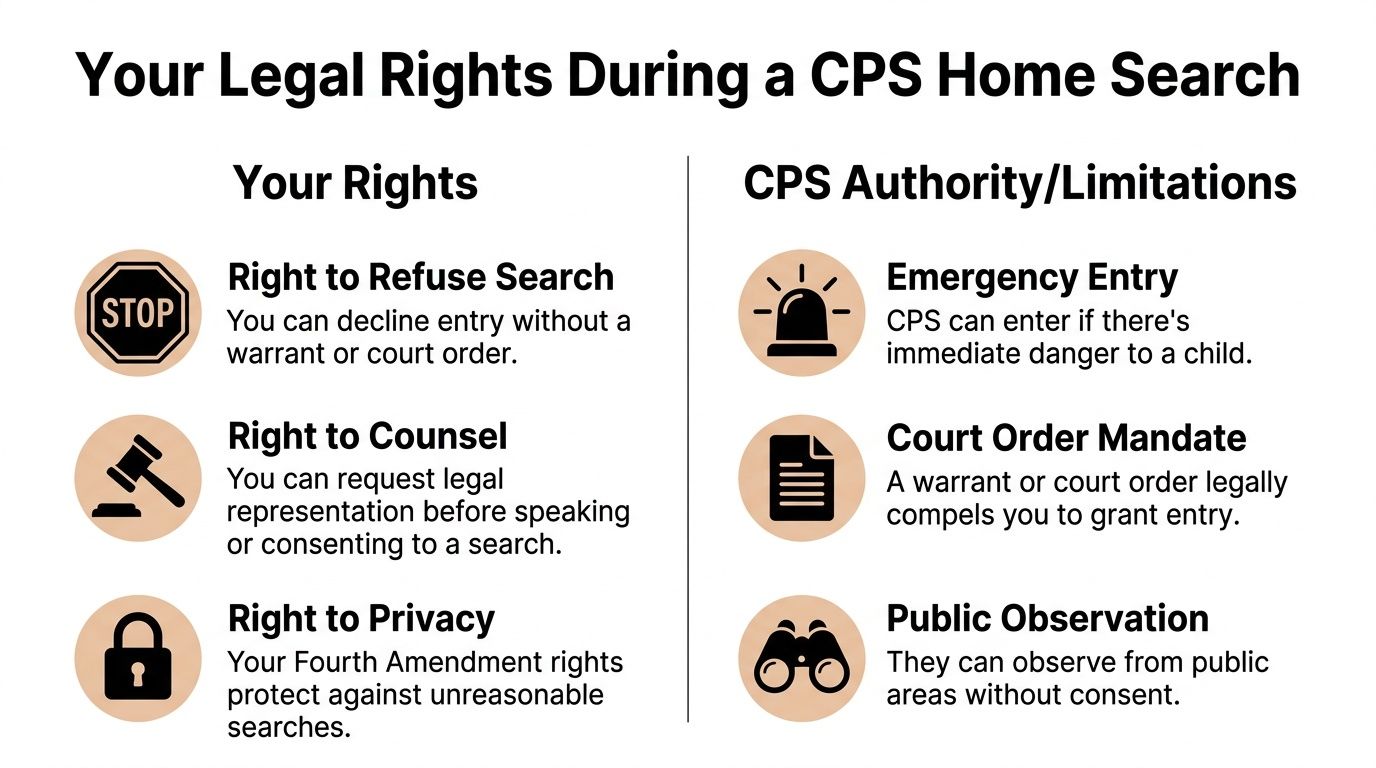
Parents have a legal right to refuse to allow a CPS investigator into their home without a warrant, unless the investigator declares an emergency, sometimes called exigent circumstances, according to the ACLU of Southern California's explanation of child welfare investigation rights.
What that right means in practice
This right doesn't mean refusing entry is always the best strategic move. It means you should know that consent and legal compulsion are not the same thing.
A useful distinction looks like this:
| Situation | What it usually means |
|---|---|
| You consent to entry | You voluntarily allow CPS into the home |
| They have a warrant or court order | The law requires compliance |
| They claim an emergency | They may assert immediate danger justifies entry without waiting |
If you're unsure whether what CPS is doing is lawful, this discussion of illegal search and seizure can help you think through the issue.
When parents should pause before consenting
Parents often consent because the worker is standing there, the children are nearby, and the situation feels compulsory. But pressure is not the same as legal authority.
Pause if:
- You haven't been told the allegation
- The worker won't explain whether there is a warrant or court order
- You feel pushed to agree immediately without understanding the consequences
- The request goes beyond a basic welfare check and turns into a broad search
You can be respectful and still ask, “Do you have a court order or warrant authorizing entry?”
Know the family law context
Texas CPS matters can move from investigation to court involvement quickly, especially if the agency seeks emergency action under Chapter 262 of the Texas Family Code. Ongoing oversight and permanency issues often fall under Chapter 263, and termination allegations can implicate Chapter 161. Parents don't need to memorize the statute book at the door, but they should understand the stakes. A home visit can become evidence in a larger case.
That's why legal self-advocacy matters. The right response depends on the facts. Some families benefit from cooperation with boundaries. Others need counsel before allowing a search that may later be described in the worst possible light.
When You Need a CPS Attorney on Your Side
Some inspections stay limited and resolve without court action. Others escalate fast. The moment you sense the case is moving beyond a basic visit, legal help stops being optional and starts being protective.
Call a lawyer quickly if any of these things happen:
- You're asked to sign documents you don't understand
- The caseworker threatens immediate removal
- You're accused of drug use, abuse, abandonment, or dangerous neglect
- A police officer appears with CPS
- You believe your home is being judged unfairly and the worker won't listen to correction
- You're being pushed into a “voluntary” plan that doesn't feel voluntary
A Texas attorney can help you evaluate search issues, prepare for interviews, address safety corrections without unnecessary admissions, and understand how a CPS investigation can intersect with court proceedings under Chapters 262, 263, and 161 of the Texas Family Code. In some situations, legal counsel can also help you document improvements, challenge inaccurate assumptions, and keep a temporary problem from becoming a permanent record.
If you're scared, that doesn't mean you're powerless. It means the situation is critical, and critical situations deserve clear advice.
If CPS has contacted you, don't wait for confusion to turn into a bigger problem. The Law Office of Bryan Fagan PLLC works with Texas families facing CPS investigations and related legal issues. If you need clear answers about a home inspection, your rights, or the next hearing in your case, contact the firm for a free consultation.