Skip to content
A CPS case often begins with a knock at the door, a call from your child's school, or paperwork that says you need to be in court fast. In a few hours, ordinary parenting decisions can start showing up in reports, affidavits, and courtroom testimony. Parents in that position are usually scared, tired, and trying not to make things worse. That is exactly why early mistakes happen.
Texas law gives CPS and the court a short timeline to make decisions that can affect where your child lives and what you must do to get your family back on track. Chapter 262 of the Texas Family Code governs emergency removals, temporary orders, and early hearings. Chapter 263 controls service plans, review hearings, and the deadlines that push these cases toward a final outcome. If the case deteriorates far enough, Chapter 161 is where termination of parental rights becomes the legal issue.
The risk is not just one major mistake. It is a series of smaller choices that create a record. Missing a drug test because you had to work. Sending an angry text to a caseworker. Letting a restricted relative stop by "just for a minute." Telling CPS you finished a class before the certificate is issued. Each one gives the agency something concrete to write down and present to the judge.
That is also the practical good news. Many of the mistakes that damage a CPS case can be corrected early, or prevented altogether.
For each problem in this guide, the analysis will do two things. It will explain the specific legal damage under Texas law, and it will give immediate do-and-don't steps you can use the same day. For example, if you miss a hearing or review date, the legal problem is not just inconvenience. It can affect temporary orders, visitation, and how the court views your reliability. The practical response is to contact your lawyer at once, confirm the next setting in writing, and learn what happens if you miss a CPS court date in Texas before that absence turns into a bigger credibility problem.
This article is built to help you work through the case with a clear head. Fear is real. So are the deadlines, the paperwork, and the consequences. Parents who understand both the legal stakes and the next right step usually make better decisions under pressure.
1. Failing to Comply with Court Orders and CPS Requirements
A parent leaves court thinking, "I am trying." Then real life hits. A work shift runs late, the counseling intake gets pushed back, the drug test location closes before they arrive, and one missed visit turns into two. By the next hearing, the parent sees effort. The court sees a record.
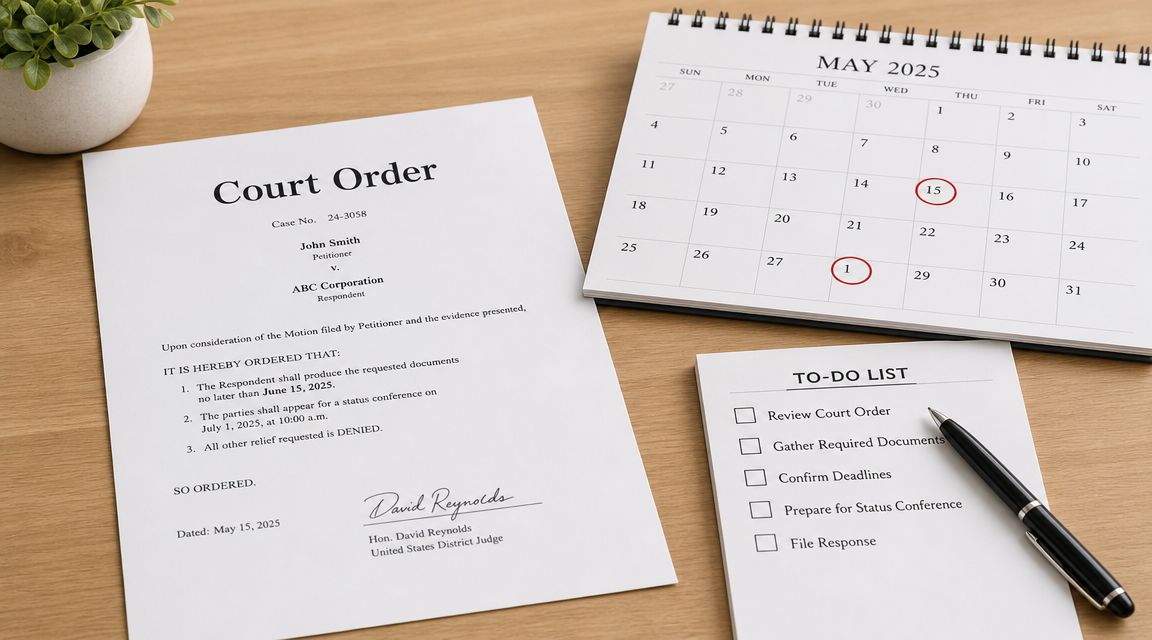
When a Texas judge signs temporary orders or adopts a service plan, compliance becomes evidence. Orders tied to removal, return, and review hearings under Chapters 262 and 263 of the Texas Family Code are not suggestions. They are part of how the court measures whether the safety issues that brought CPS into the case are being addressed.
Why this hurts in Texas court
Judges usually do not focus on your reasons first. They focus on patterns. If your order says drug testing, counseling, parenting classes, supervised visitation, stable housing, or a psychological evaluation, each missed item gives CPS a simple argument: the parent has not shown consistent protective action.
That matters more as the case reaches permanency deadlines under Chapter 263. At that stage, the court is not only asking whether you love your child. The court is asking whether you followed through, whether the home situation is safer, and whether return can happen without ongoing danger. A parent can lose ground fast by treating partial compliance as good enough.
I see one mistake often. Parents wait to fix a problem until the review hearing is close. That is usually too late. Courts respond better when the parent identifies the barrier early, documents it, and asks for a workable solution before the missed service turns into a pattern.
The specific legal damage
Failure to comply can affect more than the judge's general impression of you. It can shape rulings on visitation, extensions, return of the child, and whether CPS argues that reunification efforts failed because the parent did not complete the required services. In a Texas CPS case, the paper trail matters. A missed test may be recorded as noncompliance. An incomplete class may be recorded as not completed. A late start on counseling may be treated as delay, not progress.
That does not mean every missed requirement ends the case. It means each one needs a response, fast and in writing.
Parents also get into trouble by making informal choices that conflict with the written order. If the paperwork says supervised visits only, do not accept a verbal shortcut. If the service plan requires a particular provider or approved test, use the provider or test the order requires unless your lawyer gets clarification. Small deviations create unnecessary disputes over whether you really complied.
Before any CPS interview or status check, prepare your answers carefully. Parents who answer loosely often create avoidable problems about whether they completed services, understood the plan, or followed instructions. This guide on how to answer Texas CPS questions in an interview can help you avoid statements that make a compliance problem look worse than it is.
What to do, and what to avoid
Do keep one compliance file. Save court orders, service plans, sign-in sheets, certificates, test receipts, appointment confirmations, and provider contact information in one place.
Do calendar everything twice. Put dates in your phone and on paper. Build in extra time for traffic, work delays, and childcare issues.
Do tell your lawyer about barriers right away. Transportation problems, job conflicts, illness, and cost issues may be addressable if raised early.
Do submit proof before the hearing. Never assume CPS already has the certificate or attendance record.
Do ask for clarification in writing. If you do not understand a service requirement, get the answer documented.
Do not decide on your own that a requirement is unfair or unnecessary. Your objection needs to go through your lawyer and, if needed, back to the court.
Do not treat a missed drug test or visit as minor. In many cases, it will be recorded as a missed requirement unless corrected immediately.
Do not rely on verbal assurances. If a caseworker says a class, provider, or schedule change is acceptable, confirm it in writing.
Do not wait until the next court date to explain a problem. Delay makes noncompliance look intentional or careless.
Practical rule: If you cannot prove completion, the court may treat the task as incomplete.
If you have already missed a hearing or setting, act now. This guide on what happens if you miss a CPS court date explains the immediate risk and the next steps to take.
2. Damaging Credibility Through Dishonesty, Contradictions, and Hostile Demeanor
A common CPS turning point looks like this. A parent starts the interview scared, tries to sound stronger than the facts support, denies an old problem, then gets frustrated when the investigator already has records. By the time the hearing arrives, the issue is no longer just the allegation. It is whether the court believes anything the parent says.
In Texas CPS cases, credibility affects nearly every decision that follows. Judges, investigators, CASA volunteers, and guardians ad litem compare what you said at intake, what you texted, what appears in medical or school records, and what you say later under oath. If those versions do not line up, CPS will often argue that the parent is minimizing risk, refusing accountability, or hiding facts that matter to the child's safety.
That argument has legal consequences. Under Texas Family Code Chapter 262, the court decides temporary orders based on immediate safety concerns and the parent's ability to protect the child. Under Section 263.307, the court also looks at whether a parent is willing and able to seek out, accept, and complete services and to make changes within a reasonable time. A parent who is dishonest, evasive, or explosive can be framed as someone who lacks insight, resists intervention, or cannot be trusted to follow protective conditions.
The damage often starts small. A parent says, "I've never had a drug problem," but later admits there was prior treatment. A parent denies any domestic violence history, but police call logs or prior protective orders suggest otherwise. A parent sends hostile late-night messages to the caseworker, then appears in court insisting they have stayed calm and cooperative the whole time.
Those facts travel. They show up in the affidavit, service plan notes, permanency reports, and testimony.
The Texas legal danger
Credibility problems rarely stay isolated to one conversation. Once CPS believes a parent is inconsistent or hostile, that impression can affect visitation recommendations, placement decisions, service planning, and the court's view of future testimony. In practice, one bad interview can become a recurring theme in the file.
Texas courts also weigh parental judgment, not just parental explanations. If a parent cannot answer directly, changes the story to fit new information, or lashes out when challenged, CPS may argue the parent cannot safely handle stress around the child. That is especially damaging in cases involving alleged neglectful supervision, substance use, family violence, or failure to protect.
Research on child welfare decision-making also shows that assessments and documentation shape outcomes in meaningful ways. A study examining CPS decision-making structures and substantiation outcomes underscores a point parents need to understand early. What gets documented, how it is recorded, and when it enters the file can influence what happens next.
What to do, and what to avoid
The goal is not to sound perfect. The goal is to be accurate, controlled, and consistent.
Do:
- Tell the truth, even if it feels uncomfortable. A past problem that is admitted and paired with proof of treatment is usually less damaging than a denial that later falls apart.
- Correct mistakes promptly and calmly. If you misspoke, send a short written correction through your lawyer or after getting legal advice.
- Answer only the question asked. Short, factual answers reduce the chance of creating new inconsistencies.
- Say when you do not know or do not remember. Guessing is one of the fastest ways to damage credibility.
- Keep written communications professional. Assume every text, email, portal message, and voicemail may appear in court.
- Prepare before interviews. Review dates, providers, prior CPS history, and any records that may come up. This guide on how to answer Texas CPS questions in an interview can help you avoid careless statements.
Do not:
- Do not deny facts that can be verified. Prior arrests, drug treatment, mental health treatment, and police contacts are often easy for CPS to uncover.
- Do not overexplain. Long, emotional narratives often create contradictions that did not need to exist.
- Do not argue by email or text. Angry written messages are hard to explain away later.
- Do not accuse everyone else of lying. Sometimes that is true. In court, constant blame without evidence usually hurts the speaker more than the target.
- Do not mistake politeness for weakness. A calm answer protects you better than a defiant one.
Practical rule: If a statement would look bad next to records, prior messages, or sworn testimony, do not say it without first getting legal advice.
Parents do not lose credibility only by lying outright. They lose it by minimizing, guessing, exaggerating, and reacting in anger. The safer approach is simple. Be honest. Be brief. Be consistent. And if you have already made a bad statement, address it quickly before CPS turns it into the story of your case.
3. Contacting or Interacting with the Alleged Victim or Other Involved Parties Against CPS Guidance
This mistake usually starts with panic, not bad intent. A parent wants to call the child, text the other parent, explain things to a relative, or ask a witness to "set the record straight." In a CPS case, that can quickly be framed as pressure, interference, or disregard of safety restrictions.
One parent may think, "I just want to tell my teenager I love them and clear up what really happened." If CPS has restricted contact, that message can become a serious problem. The same goes for asking a grandparent to pass along a note, showing up at school, or using social media to communicate indirectly.
The Texas legal danger
Under Chapter 262, temporary orders can limit possession, access, and household contact while the court sorts out safety concerns. If a parent violates those restrictions, CPS may argue the parent can't protect the child, can't follow court directives, or is attempting to influence testimony. If there is also a criminal investigation or protective order, the risk is even greater.
Courts don't just examine whether contact happened. They also look at judgment. Did the parent respect the process, or did the parent decide personal intentions mattered more than the restriction?
What to do when emotions are high
A practical way to avoid this mistake is to write down every person and every limitation connected to the case. Include the child, alleged victim, co-parent, relatives, babysitters, teachers, neighbors, and anyone else who may be involved.
- Get clarity in writing: Ask your lawyer to confirm who you may contact and through what channel.
- Warn your family: Well-meaning relatives can create violations by acting as messengers.
- Avoid accidental encounters: Don't go to the school, daycare, or exchange location unless you're cleared to do so.
- Report inbound contact: If the other side reaches out first, tell your attorney before responding.
Good intentions don't fix prohibited contact. In court, the contact itself is often the headline.
A parent who obeys restrictions, even when they feel unfair, usually presents better than a parent who "just made one exception."
4. Substance Abuse Relapse or Failure to Submit to Drug Testing
You may be doing everything else right, then get a text for a drug test on the worst possible day. Your ride falls through. You panic because you slipped. You tell yourself one missed test is better than a bad result. In a Texas CPS case, that decision can do immediate damage.
If substance use is part of the allegations, the court usually treats testing as direct evidence of present safety, not a side requirement. A missed test, refusal, diluted sample, or late appearance gives CPS room to argue the same basic point under Chapters 262 and 263 of the Texas Family Code: the child still cannot be returned safely because sobriety has not been shown in a reliable, documentable way.
Parents often assume effort will speak for itself. It usually does not. If your file shows treatment attendance but also shows missed screens or unexplained gaps, CPS will focus on the gaps.
Why relapse and missed testing hurt so quickly
In court, timing matters. A parent may have started visits, completed classes, and made real progress. Then one positive test or one no-show can shift the case from "possible return" back to "ongoing risk." Judges see relapse differently depending on how it is handled. A relapse followed by immediate disclosure, treatment adjustment, and clean follow-up testing is damaging, but often less damaging than denial, excuses, or disappearing from testing altogether.
The legal problem is not only drug use itself. It is the effect on the court's confidence. Under Chapter 263, the judge is reviewing whether the parent is making measurable progress on the service plan and whether the child can be returned home without exposing the child to danger. If CPS can show inconsistency, avoidance, or fresh impairment concerns, that can affect placement, visitation, and permanency decisions.
What to do, and what not to do
- Do treat every test notice as urgent. Read the instructions, confirm the location, and go within the required window.
- Do report practical problems fast. If transportation, work, illness, or ID issues will interfere, tell your lawyer and the caseworker immediately and keep proof.
- Do keep your own paper trail. Save test results, sign-in sheets, discharge paperwork, counseling records, and receipts.
- Do address relapse head-on. Contact your attorney, sponsor, counselor, or treatment provider the same day. Quick action shows judgment.
- Don't assume a missed test will be overlooked. In many cases, CPS will treat it as a serious setback.
- Don't try to outsmart the process. Dilution, excuses that keep changing, borrowed urine, and "detox" tricks usually make the case worse.
- Don't rely on verbal assurances. If it is not documented, it may carry little weight in court.
A better strategy is simple, even if it is hard. If you relapsed, say so early, get back into treatment, test again as directed, and build a record that shows the relapse was addressed instead of hidden. Judges have seen relapse before. What often changes the outcome is whether the parent responded like someone protecting a child or like someone protecting a secret.
For a broader discussion of risk awareness and protective decision-making in family settings, see Sachs Center for child support.
5. Failing to Secure Safe Housing or Allowing Unsafe Living Conditions
Many Texas CPS cases turn less on one dramatic event and more on whether the home looks stable, sanitary, and safe for day-to-day caregiving. If the house has no working utilities, exposed wiring, pest infestation, mold, accessible drugs, unsecured weapons, or unsafe sleeping arrangements, CPS doesn't need much imagination to argue present danger.
One parent may think, "The place is small, but my child is loved." That may be true, and still not answer the safety issue. Love doesn't repair a sewage backup or keep medication out of a toddler's reach.

Why housing problems become legal evidence
In Texas, unsafe home conditions can support removal under Chapter 262 and can later support findings that the parent failed to provide a safe environment. If the problem continues through the life of the case, Chapter 161 issues can come into view because the court is no longer looking at a temporary lapse. It is looking at ongoing endangerment or persistent inability to provide basic safety.
This is especially important because neglect concerns often center on supervision, home stability, and routine caregiving rather than a single incident. If your home creates objective hazards, CPS has photographs, worker notes, and inspection observations to present.
What parents should do immediately
Parents often wait too long because they're embarrassed. That delay hurts. The better move is to fix what can be fixed fast and document every step.
- Do a room-by-room walkthrough: Look for exposed cords, broken locks, spoiled food, pests, mold, and sleeping-space issues.
- Collect repair proof: Keep receipts, service invoices, lease records, utility statements, and before-and-after photos.
- Ask for specifics: Get a written list of what CPS says must change.
- Remove obvious dangers now: Lock up medication, firearms, alcohol, and cleaning chemicals.
This video gives a general look at issues that can affect home safety concerns in a CPS case.
A clean, safe, boring home is your friend in a CPS case. You are not trying to impress anyone. You are trying to remove reasons for concern.
6. Refusing to Cooperate with Court-Ordered Evaluations or Assessments
Parents sometimes resist evaluations because they feel insulting. A psychological exam can feel like a judgment on your character. A substance abuse assessment can feel unfair if you think the allegation is exaggerated or false. But once the court orders an evaluation, refusing it usually creates a new problem that is easier for CPS to prove than the original one.
A judge may not know yet whether the underlying accusation is true. The judge can easily see whether you attended the evaluation, completed the intake, answered questions, and followed the referral instructions.
Why refusal reads badly
Under Chapter 263, the court reviews progress and protective capacity over time. If you skip an assessment, quit halfway through, or refuse a home study because you feel offended, CPS may argue you lack insight and are not committed to reunification. Even when a parent is innocent of the worst allegations, non-participation can make the parent look resistant to oversight.
An evaluator also becomes part of the case record. If you don't show up, the report may state noncompliance. That's not nuanced, and it doesn't help.
How to handle an evaluation strategically
- Prepare with counsel: Ask what the evaluation covers and what records might matter.
- Answer truthfully and briefly: Defensive overexplaining can create more issues than a direct answer.
- Address logistics early: If distance, work schedule, disability, or cost make attendance difficult, raise that through your attorney before the appointment date.
- Request follow-up on errors: If a report contains factual mistakes, your lawyer can address them through the proper channel.
An evaluation is not the place to protest the whole case. It's the place to show that you can participate, stay regulated, and follow directions.
Parents who complete evaluations promptly often preserve arguments they would otherwise lose.
7. Allowing Unsupervised Contact Between the Child and an Alleged Perpetrator or Other Restricted Person
This mistake often happens in families with complicated loyalties. A parent wants to believe a partner, sibling, roommate, or relative "would never hurt the child." But once CPS identifies someone as a safety concern, letting that person have access to the child can undo months of progress.
A common example is the parent who says, "He was only there for a few minutes," or "She babysat once because I had no other option." In court, those explanations usually sound less important than the underlying fact that the child was exposed to a person CPS or the court had flagged.
Why judges react strongly
Texas courts look closely at protective capacity. That means whether you can identify danger, enforce boundaries, and choose the child's safety over adult relationships. If you permit contact with an alleged abuser, registered offender, violent partner, or other prohibited person, CPS may argue that the child can't be safely returned because you won't protect them inside your own household.
This can become especially serious when the parent tries to hide the contact. Secret visits, indirect handoffs, unapproved babysitters, and "accidental" encounters usually make the judgment problem worse.
Better ways to handle family pressure
- Make a written restricted-person list: Include full names, nicknames, and vehicles if needed.
- Tell every caregiver the rules: Grandparents, sitters, partners, and family friends need to know who cannot be around the child.
- Use approved supervision only: If contact is allowed, keep it within the exact terms ordered.
- Ask the court to modify restrictions if appropriate: Don't self-edit the order.
Families often struggle most when the restricted person is also financially helpful, emotionally important, or central to the home. That's understandable. But in a CPS case, choosing that relationship over compliance can change the direction of the entire case.
8. Failing to Address Mental Health Issues, Trauma, or Domestic Violence in the Home
Many parents hear CPS concerns about mental health or domestic violence as accusations that they are bad parents. That's usually the wrong frame. The court is asking a narrower question: are these conditions affecting the child's safety, stability, supervision, or emotional well-being right now?
A parent with untreated depression may love their child and still struggle to provide consistent care. A parent living with domestic violence may not be the aggressor and still face CPS claims for failure to protect. A parent with trauma symptoms may not intend harm and still react in ways that worry investigators.
Texas legal impact
Mental health, trauma, and domestic violence issues often overlap with Chapter 262 safety concerns and Chapter 263 service-plan requirements. If the parent refuses treatment, minimizes repeated violence, or stays in an unsafe relationship without a workable protection plan, CPS can argue the original danger remains unresolved.
This is one area where communication style also matters. Commentary aimed at parents has noted that CPS often evaluates judgment, insight, and predictability, and that emotional emails, repeated explanations, and therapy-language can be read as risk signals even when the parent is trying to sound self-aware. That concern appears in this video discussion of how CPS may interpret oversharing, defensiveness, and attempts to over-correct the record.
Action that actually helps
- Get evaluated by a qualified provider: Don't rely on self-diagnosis.
- Attend treatment consistently: Therapy, medication management, and support programs only help your case if you follow through.
- Document engagement: Keep appointment logs, provider letters, and discharge summaries.
- Build a safety plan if violence is present: Housing, exchanges, communications, and emergency contacts all matter.
If domestic violence is part of your case, this guide on defending a Texas CPS case involving domestic violence is a useful starting point.
For families dealing with overlapping mental health and substance use issues, this comprehensive guide to dual diagnosis can help you understand why integrated treatment matters.
The court doesn't expect perfection. It does expect visible treatment, safer choices, and proof that the child won't return to the same unresolved danger.
8-Point Comparison: Parental Mistakes That Hurt CPS Cases
| Item | Implementation Complexity 🔄 | Resource Requirements ⚡ | Expected Outcomes 📊 | Ideal Use Cases 💡 | Key Advantages ⭐ |
|---|---|---|---|---|---|
| Failing to Comply with Court Orders and CPS Requirements | Moderate 🔄, procedural but strict deadlines | Time, documentation, program fees, attorney support | High negative impact; documented non-compliance used against parent | Avoid, use checklists and attorney assistance to meet orders | Demonstrated compliance strengthens reunification and judicial trust |
| Damaging Credibility: Dishonesty, Contradictions, and Hostile Demeanor | Low–Moderate 🔄, requires consistent behavior and counsel | Attorney guidance, record-keeping, emotional regulation supports | Severe negative; loss of trust, possible perjury or adverse inferences | Always applicable, be honest, consistent, and consult counsel before statements | Preserving credibility increases weight of other evidence and favors outcomes |
| Contacting or Interacting with Alleged Victim/Parties Against CPS Guidance | Low 🔄, simple to avoid but requires vigilance | Clear boundaries, attorney-mediated communication, notice to family | Very high negative; can trigger removal, criminal charges, tampering claims | When restrictions exist: communicate only via approved channels or attorney | Avoids allegations of intimidation and preserves legal standing for reunification |
| Substance Abuse Relapse or Failure to Submit to Drug Testing | High 🔄, ongoing monitoring and accountability required | Treatment programs, random testing, support groups, costs | Catastrophic negative; single positive or missed test can prompt removal | Mandatory if history present, maintain testing, treatment, and records | Sustained sobriety and testing documentation demonstrate child safety commitment |
| Failing to Secure Safe Housing or Allowing Unsafe Living Conditions | Moderate–High 🔄, may need repairs or relocation | Money for repairs, utility bills, pest control, photographic evidence | Objective negative evidence; delays or prevents reunification | Immediate remediation before inspections; document fixes and receipts | Safe housing provides clear, objective proof of child safety to courts |
| Refusing to Cooperate with Court-Ordered Evaluations or Assessments | Low 🔄, cooperation is straightforward but mandatory | Time, evaluation fees, honesty during assessment, attorney coordination | Strong negative; adverse inferences, contempt, and stalled case plans | Participate fully; use evaluations to document progress and follow recommendations | Professional reports can support reunification and tailored treatment plans |
| Allowing Unsupervised Contact Between Child and Alleged Perpetrator/Criminal History Person | Low 🔄, avoidable with enforcement of restrictions | Supervised visitation services, communication to caregivers, monitoring | Severe negative; immediate removal, criminal implications, termination risk | Use supervised visitation or seek court modification rather than unilateral contact | Prevents re-exposure to danger and supports CPS/court safety findings |
| Failing to Address Mental Health Issues, Trauma, or Domestic Violence | High 🔄, long-term treatment and consistent engagement | Therapy, psychiatric care, domestic violence services, documentation | Significant negative; evaluator concerns, reduced custody prospects | Engage timely treatment, document progress, obtain provider letters | Treatment shows insight, reduces risk factors, and improves reunification odds |
From Fear to Action Taking Control of Your Family's Future
A CPS case can make a capable parent feel powerless very quickly. The system is formal, the timelines are short, and the record can turn on details that seemed minor at the time. That's why the mistakes parents make that hurt their CPS case are often not dramatic acts. They are missed tests, angry messages, undocumented services, unsafe relationships, and delayed treatment.
The most important shift is mental. Stop treating the case like a personal misunderstanding that will fix itself if you explain enough. Start treating it like a legal process governed by evidence, credibility, compliance, and child-safety findings under Texas Family Code Chapters 262, 263, and, in the most serious situations, 161. Once you make that shift, your decisions tend to improve.
A simple example shows the difference. Parent A tells the caseworker, "I'm doing everything you asked," but keeps no paperwork, misses one counseling session, and allows a restricted relative to stop by because "it wasn't a real visit." Parent B keeps a binder, confirms instructions in writing, fixes the home, attends treatment, avoids prohibited contact, and tells counsel immediately when a problem arises. Both parents may love their children equally. Only one is building a record the court can trust.
That's also why legal guidance matters so much early. A lawyer can't erase every allegation, but good counsel can help you avoid making the file worse. Your attorney can prepare you for interviews, challenge overreach, explain what the court expects, present compliance evidence before hearings, and help you respond when CPS mistakes cooperation for surrender.
If you're trying to rebuild trust at home while the case is ongoing, support outside the courtroom can matter too. These SEL tips for parents and educators may be helpful as a general resource for repairing communication and consistency.
If your family is already involved with CPS, the safest next step is to get case-specific legal advice now, not after another missed hearing or another damaging report entry. Law Office of Bryan Fagan PLLC is one option for Texas parents who need guidance on CPS-related legal issues, protective concerns, and related family court strategy. The right response is usually calm, documented, and immediate.
You do not have to approach this blindly. With the right plan, many parents can stop repeating harmful patterns, show measurable progress, and put themselves in a stronger position for reunification or defense against unnecessary restrictions. The sooner you act, the more options you usually preserve.
If you're facing a CPS investigation or court case in Texas, contact Law Office of Bryan Fagan PLLC for a free, confidential consultation. You can get clear guidance on your rights, your immediate risks, and the steps that may help protect your relationship with your child.