Skip to content
A CPS investigator at your door can make the room feel smaller in seconds. Parents often tell me the same thing afterward: they were trying to listen, protect their child, stay calm, and understand what was happening, all at once. That's a hard place to think clearly from.
If you're trying to figure out how to choose the right CPS defense attorney in Texas, the most important point is this: you are not just hiring a courtroom advocate. You are choosing the person who will help control the first conversations, preserve the right records, and keep your case from being shaped by rushed, avoidable mistakes.
A good lawyer in this setting doesn't just “fight CPS.” The right lawyer understands how Texas CPS cases move, what triggers escalation, which hearings matter first, and how to respond without handing the agency extra problems to write into the file. That strategic mindset matters as much as legal knowledge.
That Knock on the Door Your First 48 Hours with CPS
The first contact usually feels surreal. A knock. A phone call from school. A message that an investigator wants to “just ask a few questions.” Many parents make the same mistake in that moment. They think cooperation means answering everything immediately, explaining every detail, and trying to sound innocent.
That instinct is understandable. It can also hurt your case.
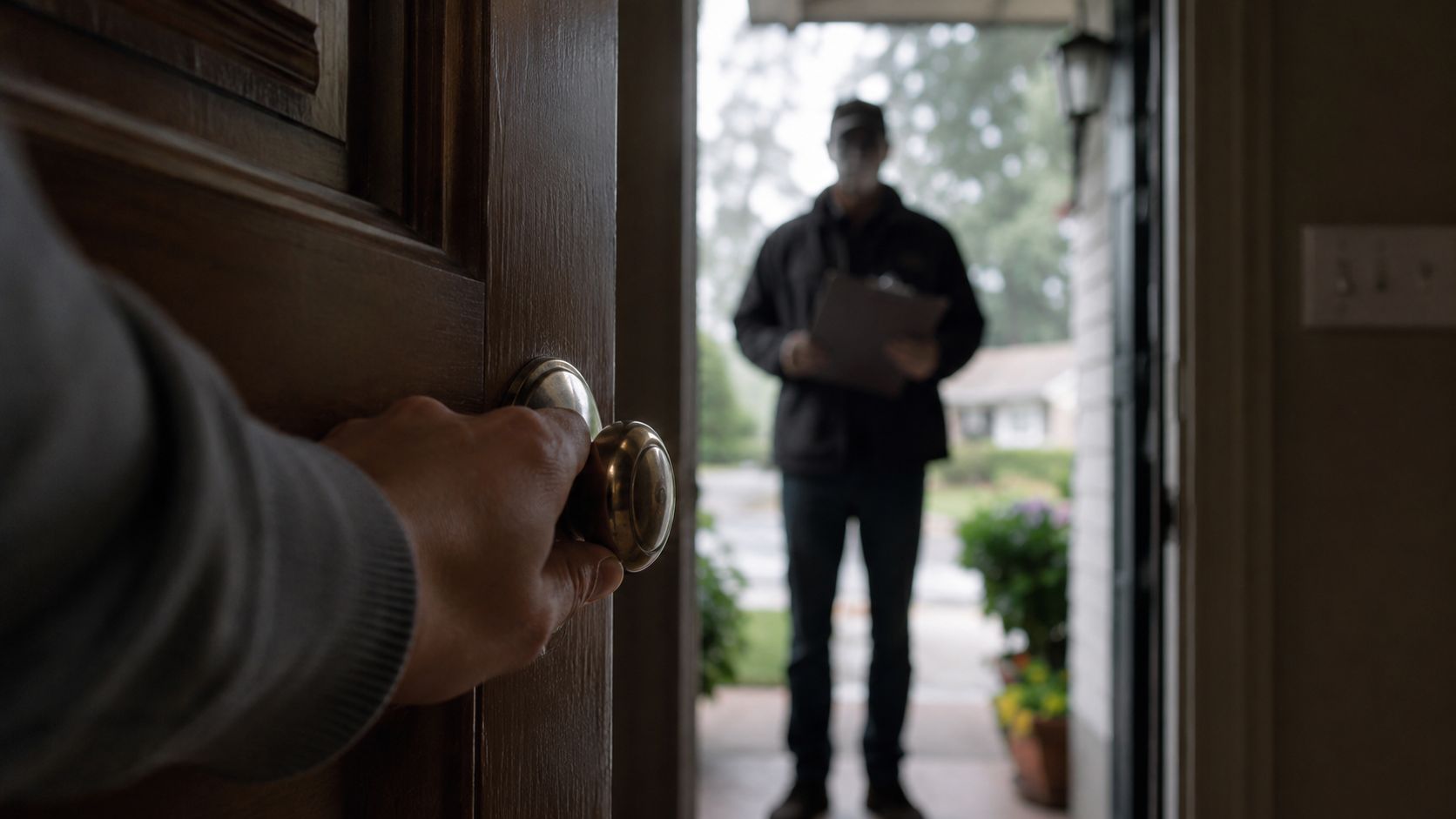
A Texas CPS case starts building from the first contact. Notes get written. Statements get summarized. Family dynamics get interpreted by people who don't know you yet. In those first hours, the best move is usually not “say more.” It's slow the process down enough to respond carefully.
One practical example. A parent may think, “I'll clear this up right now,” and start talking through old arguments with a co-parent, medical history, discipline issues, and household stress. By the end of the conversation, the investigator has far more material than the original allegation. A CPS-focused attorney approaches that differently. The goal is to answer what must be answered, protect the client from unnecessary disclosure, and begin documenting every contact.
Why the first decisions matter
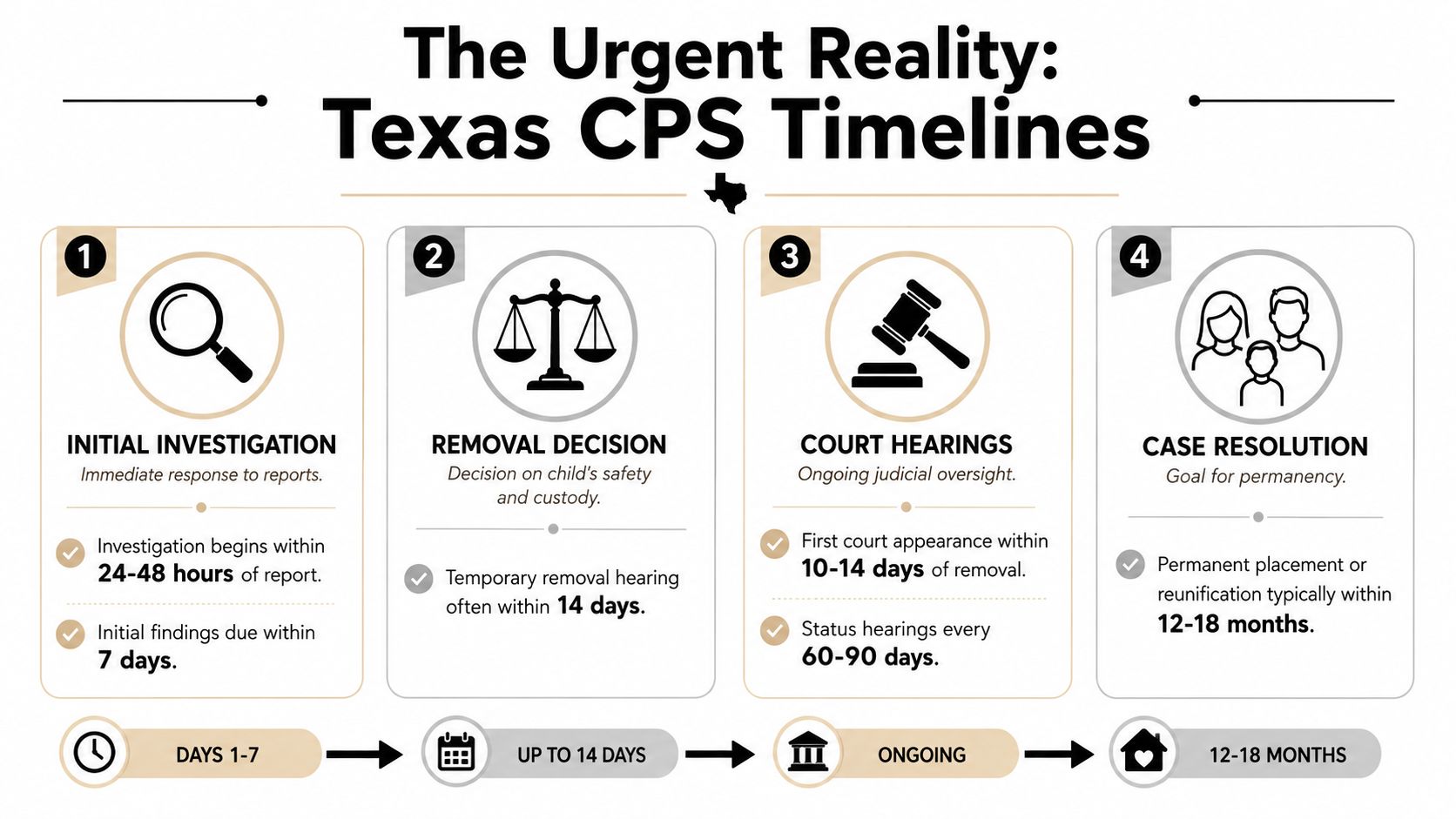
Texas cases can move faster than families expect. The Texas Department of Family and Protective Services says the average length of a child protective investigation is 45 days, and if a child is removed, the first court hearing typically happens within 14 days, as noted in the Texas DFPS parent guide to investigations. That means the early window is short, and the consequences can arrive before you feel ready.
Practical rule: In a CPS case, the first calm decision is often more valuable than the first emotional explanation.
That's why choosing counsel quickly matters. You need someone who can preserve texts, identify witnesses, organize records, and keep you from stumbling into avoidable admissions. If CPS has already contacted you, a practical next step is reviewing guidance on how to respond when CPS shows up at your door in Texas.
Why You Must Act Immediately in a Texas CPS Case
Some legal problems allow a wait-and-see approach. A Texas CPS matter usually doesn't.
The timing problem is twofold. First, the agency's internal process moves whether you feel prepared or not. Second, the legal system doesn't automatically hand you a lawyer at the beginning. Texas Law Help states that parents are not entitled to a court-appointed lawyer during the investigation stage, and that appointed counsel generally becomes available only after CPS files a lawsuit, the parent is indigent, and the parent contests the petition, as explained in Texas Law Help's guide to your right to a lawyer in CPS cases.
That single reality changes the hiring decision. If you wait for the system to provide a lawyer, you may wait until after the investigation has shaped the narrative.
Here is the visual version of that urgency.
What early counsel actually does
A strong CPS defense attorney starts working before a hearing date appears on the calendar. That means:
- Controlling communications so you don't turn a narrow allegation into a broader case file
- Preserving documents such as medical records, school communications, texts, photos, and timelines
- Identifying witnesses early before memories shift or people become harder to reach
- Preparing for removal issues if CPS begins pressing for immediate safety changes
- Coordinating related risk if the case touches a pending divorce, custody dispute, or criminal investigation
Many families hire the wrong kind of lawyer. A general family law attorney may be excellent in custody modifications and still not have the operating rhythm needed for an active CPS investigation. A criminal defense lawyer may understand silence and exposure, but not the practical pressure points inside a child protection case. Texas CPS work often sits right at that intersection.
The legal chapters that shape the case
You don't need to memorize the Texas Family Code, but you should know the framework your lawyer is navigating.
A CPS lawyer in Texas should be comfortable working within:
| Texas Family Code area | Why it matters |
|---|---|
| Chapter 262 | Removal procedures, emergency action, and the court process after removal |
| Chapter 263 | Court review, service planning, permanency issues, and the ongoing case path |
| Chapter 161 | Termination of parental rights and the most serious end-stage litigation |
That framework is one reason speed matters. A lawyer who knows the process can tell the difference between a temporary investigative issue and a case that is drifting toward removal or termination exposure.
A practical companion resource is How to Fight CPS and Win in Texas, which is a strategic guide to mounting an effective defense against CPS in Texas.
Before you interview lawyers, it also helps to hear the issue explained out loud:
Decoding the Unique CPS Legal Landscape
Parents often assume CPS is just another family law dispute. It isn't. Others assume it works like a criminal case. It doesn't work like that either.
That misunderstanding causes hiring mistakes.
A custody lawyer may focus on long-term parenting schedules, conservatorship language, and negotiation between private parties. A criminal lawyer may focus on police procedure, suppression issues, and proof beyond a reasonable doubt. A CPS case is different because the state, through an agency, is investigating family safety and asking the court to intervene in the parent-child relationship.
Why CPS experience is its own category
Texas-focused guidance often tells parents to ask whether a lawyer has handled CPS cases or gone to trial. That's a start, but it doesn't go far enough. What matters is whether the lawyer understands how CPS attorneys and caseworkers operate, can anticipate next steps, and knows how to push timelines instead of reacting. That point is discussed in this Texas CPS defense overview on evaluating CPS-specific experience.
The practical difference is easy to see.
Suppose a mother is already in a custody dispute with the child's father. Then CPS appears after a report tied to school attendance and home conditions. A general family lawyer may treat it like a high-conflict custody problem and focus on the other parent's motives. A CPS lawyer sees a different problem set. What is already in the agency file? Who has significant knowledge? Is there criminal exposure in any statements? What issue is driving the agency's tempo? Which records rebut neglect concerns without overproducing irrelevant material?
A top CPS attorney doesn't just prepare for the hearing. That attorney prepares for the agency's next move before it happens.
What Chapters 262, 263, and 161 mean in real life
These chapters matter because they reflect the life cycle of a CPS case.
Chapter 262 is where removal issues become urgent. If CPS claims immediate safety concerns, the case can move from investigation to court involvement quickly.
Chapter 263 governs the review-heavy middle of the case. During this phase, many parents get worn down by service plans, court dates, agency expectations, and ongoing scrutiny.
Chapter 161 is where the stakes become permanent. Termination cases demand disciplined preparation, clean evidence, and a lawyer who understands how the earlier stages created the record.
The hiring lesson most parents miss
The right attorney for your CPS case is often not the most dramatic speaker or the most aggressive personality in a consultation. It's the lawyer who can explain the agency's process in plain language, identify the immediate risks, and show how facts will be gathered and presented over time.
This is how to choose the right CPS defense attorney in Texas. You are looking for system knowledge under pressure.
The Critical Interview Questions to Ask Before You Hire
Consultations can blur together fast. Most lawyers sound competent in the first fifteen minutes. The better approach is to ask questions that reveal process, not just confidence.
A parent in crisis often asks, “Can you win my case?” That question usually produces a polished answer and very little useful information. Better questions force the attorney to show how they think.

Ask about the first week, not just the final result
Start here:
What would you do in my case during the next few days?
You want specifics. A serious CPS lawyer should mention records, communication limits, witness identification, and preparation for meetings or hearings.How do you want me to communicate with CPS once you're hired?
This reveals whether the attorney has a disciplined communication protocol or just plans to “handle it as it comes.”What documents should I start gathering today?
Good lawyers think in files, timelines, and proof. Weak answers stay abstract.Who in my family or community counts as a useful witness?
This shows whether the attorney understands “significant knowledge” and how to develop corroborating evidence.
Ask about low-disclosure strategy
One of the most important filters is whether the lawyer uses a documentation-heavy, low-disclosure protocol. Texas guidance recommends keeping a precise log of every CPS contact, saving all texts, emails, and letters, answering only what is asked, and avoiding unsupervised communication with CPS or other parties. Texas Law Help also warns parents not to speak with CPS without counsel and to have lawyers attend important meetings and hearings, as discussed in this step-by-step Texas CPS response guide.
That sounds technical, but in practice it means the lawyer should be able to explain:
- How they organize your evidence
- What they do with inconsistent statements
- How they prepare you for interviews
- When they choose to disclose information and when they don't
- How they reduce the risk of accidental overexplaining
Hiring shortcut: If the attorney talks mostly about being “aggressive” but says little about records, timelines, disclosure control, and witness prep, keep looking.
Ask who will actually communicate with you
In a CPS case, delay creates anxiety fast. You need to know whether the lawyer has a real client communication system.
That includes practical questions like:
- Who returns urgent calls?
- How are after-hours concerns handled?
- Will I hear from the attorney directly before major meetings?
- How do you keep clients updated when CPS activity picks up?
For parents who care about responsiveness, it's useful to understand how law firms structure intake and message handling. A resource like Eden's law firm answering service gives a practical look at how legal calls are triaged and routed, which can help you evaluate whether a firm's communication promises are realistic.
Ask questions that test cross-over experience
Many CPS cases overlap with criminal risk. Others intersect with divorce, custody, or protective order issues. If your case touches any of that, ask directly:
- How do you handle a CPS case when there may also be criminal exposure?
- How do you coordinate strategy if there is already a family law case pending?
- Have you handled removal hearings in cases with both family and criminal concerns?
If your situation includes criminal allegations or parallel exposure, a broader question list like questions to ask a criminal defense lawyer can help you evaluate whether the attorney understands both sides of the problem.
One more practical point. If an attorney can't explain the first steps clearly, they usually won't execute them clearly either.
Green Flags and Red Flags When Choosing Your Advocate
Once you've spoken with a few lawyers, the decision often comes down to feel. That's normal, but it helps to make the choice with concrete markers.

Green flags that usually mean real CPS competence
| Green flag | What it usually tells you |
|---|---|
| The lawyer explains the process plainly | They understand it well enough to guide you under stress |
| They talk about documents early | They know CPS cases are built on records, not just arguments |
| They ask focused factual questions | They are spotting risk, witnesses, and procedural leverage |
| They discuss communication rules | They understand that bad conversations can damage the case |
| They set realistic expectations | They're treating your case seriously, not selling certainty |
A good attorney should also be able to explain fees in a way that makes sense. You should know what the retainer covers, what events may create additional billing, and who will perform the work. You don't need a bargain. You need clarity.
Red flags that should make you pause
Some warning signs are obvious. Others are subtle.
Guaranteed outcomes
No lawyer can promise a CPS result. Anyone who does is either oversimplifying the process or trying to close the consultation.Vague strategy
If the answer to every hard question is “we'll fight” or “I'll take care of it,” you still don't know the plan.Dismissive attitude
A lawyer doesn't need to validate every emotion, but they should listen carefully. Parents under CPS pressure often leave out facts at first because they're embarrassed or scared. A good attorney knows that.Confusing fee terms
If the billing structure feels slippery in the consultation, it usually feels worse later.
Some of the biggest mistakes parents make happen before the case ever reaches a major hearing. This overview of common mistakes to avoid with attorneys against CPS is useful if you're comparing representation options.
How to think about cost without choosing blindly
The cheapest lawyer isn't always the least expensive in the long run. A lawyer who responds slowly, fails to organize your evidence, or lets you speak to CPS without structure can create problems that cost far more later.
At the same time, high fees alone don't prove quality. Ask what work will be done in the investigation stage, who handles hearings, and how the office manages urgent developments. The right fit is a lawyer whose process matches the urgency and complexity of your case.
You've Hired Your Attorney What Happens Next
Hiring counsel often brings the first real breath of relief. It also changes your role. You're no longer trying to solve the case alone. But you are still part of the defense team.
Your job becomes simple, even if it isn't easy. Be honest. Be organized. Respond quickly. Follow instructions closely. If there are bad facts, tell your lawyer early. Surprises hurt more in CPS cases when they appear in a caseworker's report instead of your own preparation.
What a productive attorney-client partnership looks like
A strong start usually includes a few things happening at once:
- Your timeline gets built from the first CPS contact forward
- Your documents get organized into something usable, not just a pile of screenshots
- Your communication gets tighter so you aren't freelancing responses out of panic
- Your family situation gets mapped including relatives, childcare, schooling, medical history, and any related court matters
If the allegation is false, your lawyer should help you frame the rebuttal with proof rather than outrage. If there are real problems in the home, the strategy may include corrective action, service compliance decisions, and a safer presentation to the court. Both paths require honesty and discipline.
The next right step
Parents often think they need to fully understand the whole case before calling a lawyer. They don't. They need enough clarity to act before the record hardens around them.
If you're still sorting through what happened, keep the focus narrow. Save every message. Write down names, dates, and what was said. Don't try to “fix” the situation by explaining it to everyone involved. Let your lawyer help you decide what matters, what doesn't, and what should happen next.
And if your case may involve false reporting or retaliatory accusations, Defending Against False CPS Allegations offers practical guidance on responding when a report is baseless or malicious.
If CPS has contacted your family, you don't have to guess your way through the next step. The attorneys at Law Office of Bryan Fagan PLLC help Texas parents respond to CPS investigations, removal hearings, and related family law issues with a practical, informed strategy. If you need clear guidance right now, contact the firm for a free consultation and talk through what's happening, what risks need immediate attention, and how to protect your relationship with your child.