Skip to content
Your phone rings. The caller says they're with CPS, and they want to come by your home.
Most parents I speak with remember that moment clearly. Their stomach drops. They start looking around the house. They wonder whether they should start scrubbing floors, cancel work, call a relative, or explain everything right away. Fear does that. It pushes good people into rushed decisions.
A CPS home visit is serious, but it isn't a test you pass by panicking. It's a legal interaction and a child-safety review happening at the same time. If you understand both parts, you're in a far better position to protect your child, protect your rights, and avoid mistakes that make a bad situation worse.
The practical question isn't just how to prepare for a CPS home visit. It's how to prepare your home, your documents, and your words. Texas law gives parents important protections, and Texas caseworkers also look for specific safety conditions inside the home. You need both pieces.
If you're facing a visit soon, focus on three things. Make the home safe. Get your paperwork together. Stay cooperative, but careful.
The Phone Call No Parent Wants to Receive
A CPS investigator calls while you are making dinner or driving home from work. The worker says a report was made and asks to come to your home. In that moment, many parents stop thinking clearly and start trying to fix everything at once.
That instinct is understandable. It also causes mistakes.
The first call matters because it sets the tone for the rest of the case. This is not just a housekeeping issue. It is the start of a legal interaction with possible consequences for your home, your child, and your statements. Parents usually do better when they stay polite, organized, and careful about what they agree to before they understand what CPS is asking for.
What to do in the first few hours
Start by writing things down. Get the caseworker's full name, office, phone number, and the basic reason given for the contact. If the worker mentions a deadline or a proposed visit time, note that word for word.
Then slow the situation down enough to think.
A home visit is only one part of the process. Parents who understand the sequence usually make better decisions early on. This overview of what happens during a CPS investigation in Texas explains where the home visit fits and what may come next.
One practical rule helps here. Treat the first call as the beginning of a record, not as your chance to explain every family problem from the last six months.
I tell parents this often because I see the same pattern. Fear leads to overtalking. Overtalking creates inconsistent details, extra issues for CPS to examine, and statements that are hard to walk back later. Cooperation helps. Loose, emotional explanations usually do not.
A better response than panic cleaning
Parents often swing between two bad approaches after that call. One is doing nothing because they feel defeated. The other is turning the house upside down in a rush, stuffing clutter into closets, throwing away ordinary items, and coaching children so heavily that everyone seems tense.
That kind of scramble can make the home feel less stable, not more.
Use the time to fix real problems, not stage a performance. If medication is left out, lock it up. If there are exposed cords, broken glass, accessible alcohol, firearms, or unsafe sleeping arrangements, correct those first. If the refrigerator is nearly empty or the lights are about to be shut off, address that problem directly and keep proof of what you did.
A focused plan works better than frantic cleaning:
- Handle safety risks first: medications, weapons, chemicals, sharp objects, and obvious hazards
- Check the basics: food, running utilities, working bathrooms, and appropriate sleeping space
- Pull together records: school, medical, counseling, or prescription information that may answer predictable questions
- Choose your approach to communication: be respectful and truthful, but keep answers short and accurate
I have seen many cases where the parent's biggest problem was not the original allegation. It was the reaction to the call. Calm preparation shows judgment. Careless talking and rushed cosmetic fixes can create new concerns that did not need to exist.
You do not need a perfect house. You need a safe home, a clear head, and a plan.
Your Rights When a Caseworker Is at Your Door
A CPS visit is not just a home check. It is a legal interaction at your front door, and parents often make avoidable mistakes because they do not realize that until the conversation is already underway.
In Texas, the first question is simple. Is the caseworker asking for your permission, or are they acting under a court order? Those are two different situations with two different consequences. If you consent to entry, you are allowing CPS inside. If they have a court order or warrant, that changes what they can do. Ask which one applies before you decide how to respond.
A quick visual summary helps many parents hold onto the basics in a stressful moment:
What you can say at the door
Texas parents do not have to treat every request like a command. A caseworker cannot force entry into your home without legal authority. If there is no court order or warrant, you can refuse entry and still remain polite. A good summary of CPS home visits in Texas explains that distinction.
Use calm, direct language. I often tell parents to keep it short.
You can say:
“I want to cooperate. Do you have a court order or warrant?”
Or:
“I'm willing to speak with you, but I do not consent to entry without legal authorization.”
That approach matters. A respectful tone lowers tension. Clear wording protects you from giving broader consent than you intended.
Cooperative but careful
Parents usually do best with a cooperative but careful strategy. That means no argument on the porch, no dishonesty, and no broad consent given out of panic.
If you decide to let the caseworker in, keep in mind that cooperation does not require turning the visit into an open-ended search. You can ask what the visit is about. You can listen before answering. You can avoid volunteering extra information that has nothing to do with the allegation. Reviewing your rights with CPS in Texas before or during an investigation can help you understand where that line is.
The same is true of Your Rights During a CPS Investigation, which explains the legal protections Texas parents still have during an active case.
Be careful with questions that go beyond immediate child safety. Caseworkers may ask about past drug use, relationships, mental health history, discipline, or old allegations. Some of those topics matter. Some do not. If a question is unclear, say so. If you do not know an answer, say that. If you need time to gather records or speak with counsel, say that too.
What to avoid during the visit
Small decisions at the door can affect the rest of the case.
- Do not argue about the accusation at the threshold. The doorstep is a poor place to clear up a complicated report.
- Do not guess. An inaccurate answer can create a credibility problem that lasts longer than the visit itself.
- Do not hand over your phone or private recordings casually. Ask why they want them and get legal advice if the request goes beyond ordinary observation.
- Do not coach your children in front of the caseworker. That can look like pressure, even when a parent is only trying to help.
- Do not confuse a clean home with a waived right. You can keep a safe, child-ready home and still limit consent. If you need practical safety ideas, review expert childproofing advice for parents.
A short break in the conversation can help reset the tone. This video walks through practical points parents often face during a visit.
The goal is steady, informed cooperation. Be courteous. Be truthful. Know the difference between helping an investigation and giving away more access than Texas law requires.
Preparing Your Home for a CPS Inspection
The house does not need to look staged. It needs to look safe, stable, and suitable for your child.
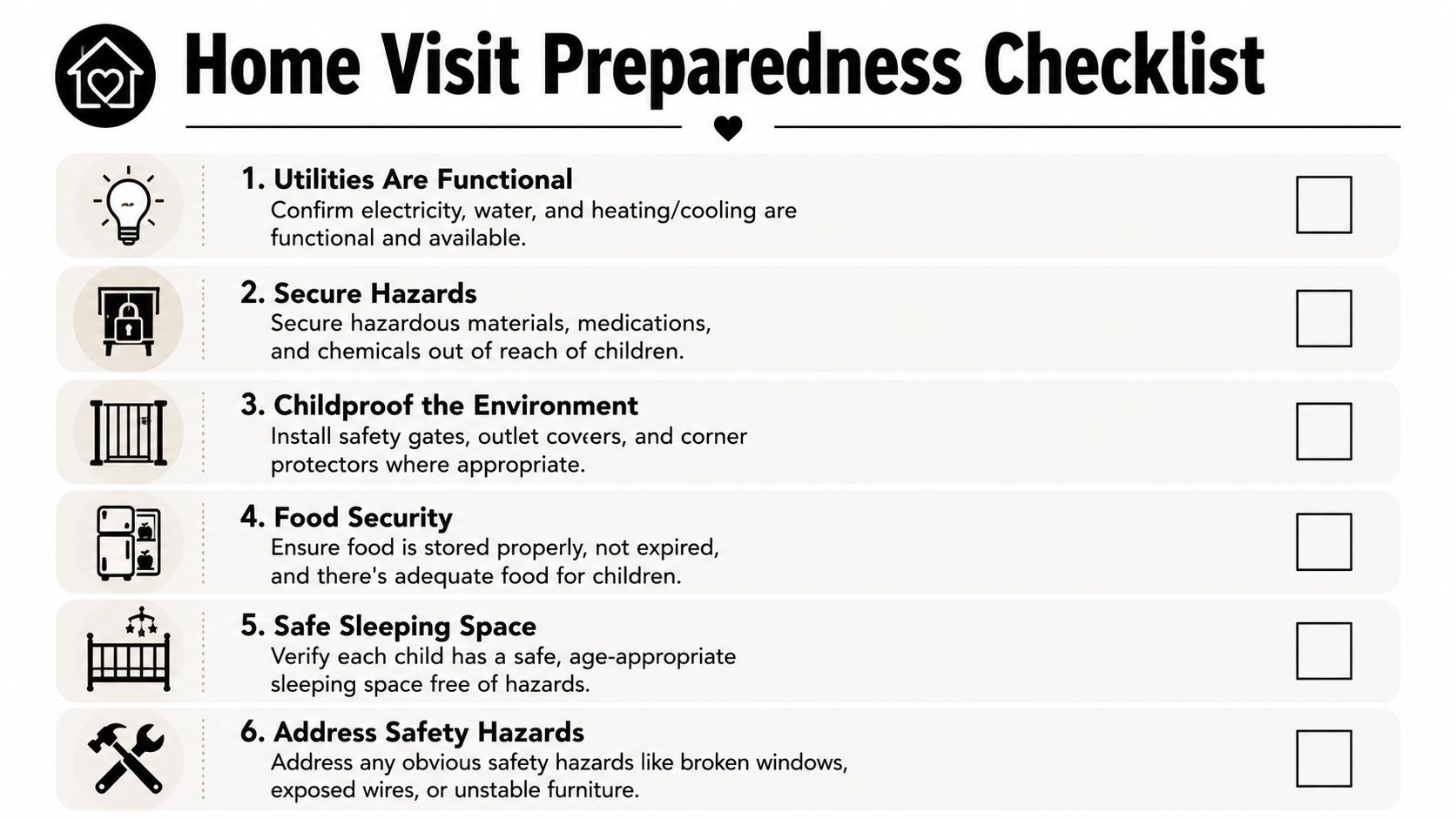
That difference matters. Parents sometimes panic-clean and miss the things a caseworker will notice first, such as unsecured medication, exposed wiring, broken furniture, no food in the kitchen, or a sleeping setup that does not fit the child's age. In Texas, the primary concern is whether there are conditions that create a risk to the child, not whether the home looks magazine-ready.
What caseworkers actually look for
Start with visible safety issues. Caseworkers commonly look for working utilities, enough food, safe sleeping arrangements, and whether dangerous items are secured. This practical review of what caseworkers look for and how to prepare gives a useful summary of the kinds of home conditions that raise concern.
Texas parents should also keep one legal point in mind. Preparing the home is smart. It does not mean you have to consent to an unlimited search. A cooperative approach works best when it is paired with clear boundaries. If a caseworker asks to open every drawer, search private papers, or inspect areas unrelated to the reported concern, pause and ask why. If you need help with the wording, review this guide on what to say and not say to CPS investigators.
Use a room by room safety check
Walk through your home like someone checking for hazards, not clutter.
- Kitchen: Put medications, cleaning products, and sharp objects out of children's reach or in locked storage. Remove spoiled or expired food. Make sure the refrigerator and pantry show regular access to meals.
- Bedrooms: Each child should have a clean, age-appropriate place to sleep. Bedding should be present and usable.
- Bathrooms: Secure prescription bottles, razors, and chemical products. Check for mold, plumbing leaks, or other sanitation problems.
- Living areas: Clear tripping hazards, cover or move exposed cords, and remove broken or unstable furniture.
- Entryways and stairs: Use gates or barriers where a younger child needs them. Make sure walkways are passable.
- Garage, yard, and utility spaces: Lock up tools, fuel, firearms, and other hazardous items. These areas count too.
If you have infants or toddlers, everyday childproofing becomes part of the safety picture. Families who want a more detailed walkthrough can review expert childproofing advice for parents.
Fix what you can, and be ready to explain the rest
I tell parents to focus on three categories. First, fix immediate hazards today. Second, clean enough that the home shows ordinary care. Third, be ready to explain anything you have not finished yet.
For example, if a smoke detector battery died last week, replace it before the visit. If a cabinet lock is on order, keep the dangerous items somewhere children cannot reach and save the receipt or order confirmation. If a child is sleeping temporarily on a mattress because furniture was just replaced, say so plainly and show the replacement is on the way. Caseworkers tend to respond better to a parent who identifies a problem and addresses it than to a parent who minimizes an obvious one.
A lived-in home is not the problem. Uncorrected safety risks are.
Last-minute cosmetic cleaning has limits. Scrubbing floors helps less than locking up pills, fixing a broken railing, or making sure each child has a safe place to sleep. That is the trade-off parents should keep in mind before a visit.
Gathering Documents and Planning Your Responses
A CPS visit can go sideways fast when a parent is searching for records, answering from memory, or talking too much because they are nervous. Good preparation cuts that risk. You want two things ready before the worker arrives. Your documents, and your plan for how you will answer questions.
This part matters because a home visit is not just about whether the kitchen is clean. It is also an investigation. The way you present records and respond to questions affects how the caseworker assesses credibility, stability, and risk.
Build one folder and keep it ready
Keep one folder in one place. A paper file, binder, or accordion folder works fine. The point is simple. If the caseworker asks for a child's medical provider, school information, or proof of residence, you should be able to produce it without digging through drawers or scrolling through your phone.
As noted earlier, guidance on how to pass a CPS home inspection recommends keeping a documentation folder ready with the records families are most often asked to provide.
| Document Type | What to Include | Why It's Important |
|---|---|---|
| Identity documents | Birth certificates, Social Security cards, photo ID for parent or guardian | Confirms who lives in the home and supports basic case verification |
| Medical records | Vaccination histories, pediatrician information, medication lists | Shows the child receives medical care and helps answer routine health questions |
| School records | Enrollment papers, attendance information, daycare records if applicable | Demonstrates the child is enrolled and connected to regular care or education |
| Housing proof | Lease, mortgage statement, or utility bills | Confirms residence and stability in the home |
| Household contacts | Names and phone numbers for relatives, emergency contacts, doctors, therapists, or childcare providers | Helps the caseworker verify support systems and important relationships |
If a document is missing, do not panic and do not bluff. Say you do not have it in front of you and give a realistic time for when you can provide it. A straight answer usually causes less trouble than an evasive one.
Plan your answers before the door opens
Parents often hurt their own case by treating every question like a conversation. That is a mistake. The better approach is cooperative but careful.
In practice, that means answering the question asked, in plain language, and then stopping. Do not volunteer extra facts to sound helpful. Do not guess. Do not try to talk your way out of a concern that can be answered with a record, a photo, or a short factual statement.
I usually tell parents to stay in three lanes:
- Answer only the question asked.
- Keep the answer short and accurate.
- If you do not know, say you do not know.
If you want examples of how to phrase answers without giving away unnecessary information, review this guide on what to say and not say to CPS investigators.
Questions you should treat carefully
Some questions deserve extra caution, especially if they move beyond the child's immediate condition and into old allegations, criminal exposure, drug use, immigration status, or conflict with the other parent. Cooperation does not require careless admissions. Under Texas law, parents still have rights during an investigation, and part of good preparation is knowing when to pause.
Use simple, controlled language.
Use this sentence: “I want to cooperate, but I'd like to speak with an attorney before answering that.”
That response is firm, respectful, and often wise. A calm parent who knows when to answer and when to wait usually presents better than a parent who panics, overexplains, or argues.
Navigating the Visit and Following Up
The visit itself is where preparation either settles you or abandons you. Parents who have a plan tend to move through it more calmly. Parents who don't often start explaining, apologizing, arguing, or guessing.
That difference matters.
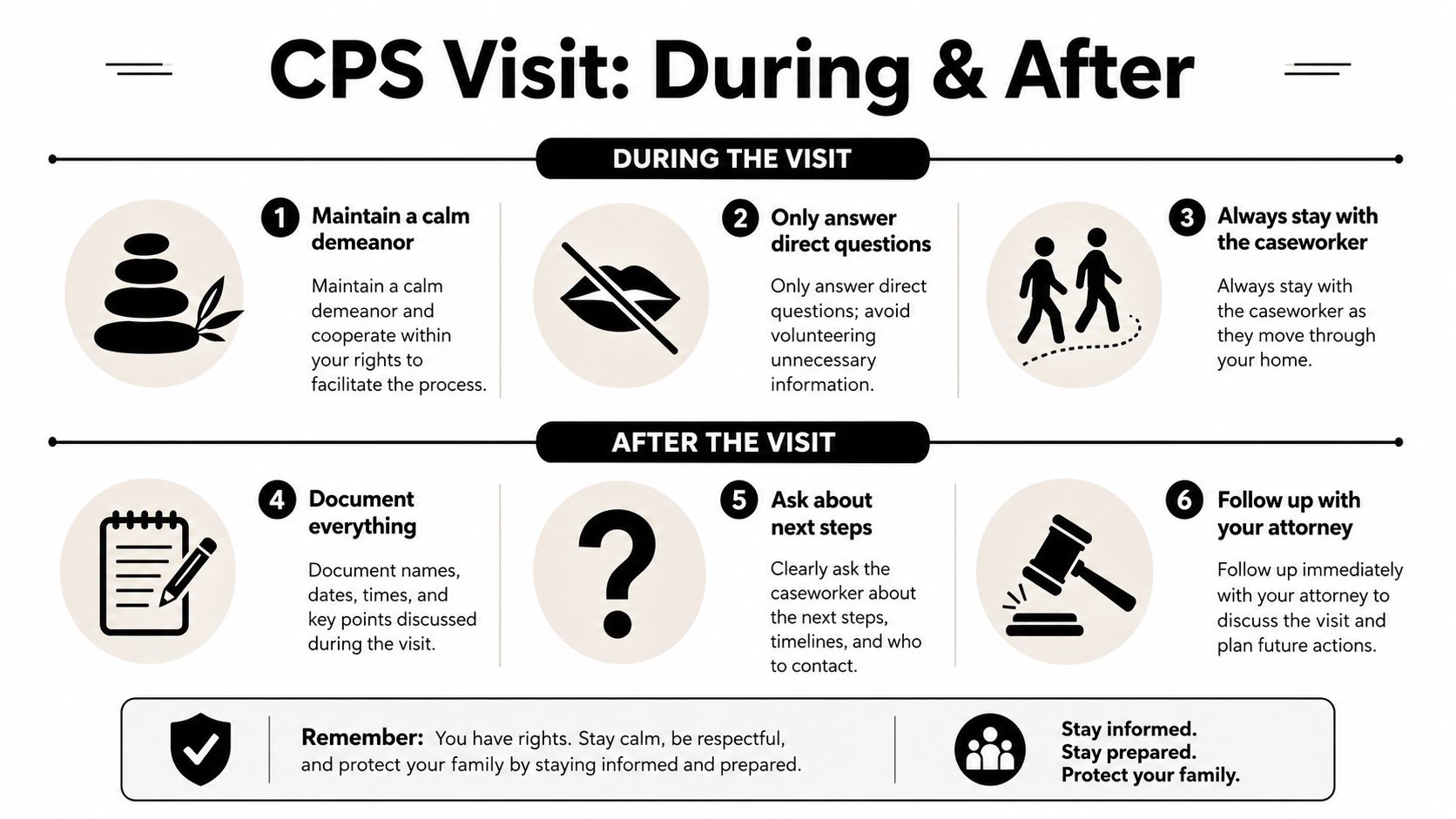
This visual is a good reminder of the basics during and after the meeting:
During the home visit
If you allow the visit to proceed in the home, stay with the caseworker as they move through each area. Take mental notes. If another adult is present, that person can write down names, times, and the subjects discussed.
A simple example shows why tone matters. One parent, when asked about an injury, immediately launched into ten minutes of family stress, old medical history, and a fight with the child's other parent. Another parent answered the same type of question with a short factual response, produced medical paperwork, and stopped. The second response usually creates fewer problems because it gives the worker information without opening unnecessary side issues.
“I don't know” is a better answer than a bad guess.
If the caseworker asks about next steps, ask directly whether they expect follow-up visits, interviews, or a written plan.
After the worker leaves
The follow-up matters more than many parents realize. As soon as the visit ends, write down:
- Who attended: caseworker names, titles, and anyone else present
- What was reviewed: rooms inspected, documents shown, topics discussed
- What concerns were raised: safety issues, missing records, requested changes
- What you agreed to do: repairs, records to send, appointments to make
If the visit was scheduled, parents are required to confirm by calling the caseworker the day before to verify the child's name, date, time, and arrival confirmation, and they must document that call in a visitation log to show compliance with attendance requirements under Chapter 263 of the Texas Family Code, as outlined in the Texas CPS Parent Resource Guide.
After the visit, send a brief, polite email if appropriate. Confirm what was discussed and what you understood the next steps to be. That creates a paper trail.
If a service plan is coming
Sometimes the visit leads to informal requests. Sometimes it leads to a formal service plan. If CPS starts discussing tasks, classes, counseling, or home requirements, take that seriously and get clear on what is voluntary, what is expected, and what may later be used in court.
Parents who need more detail about that stage should review the CPS service plan in Texas. It helps clarify what these plans often involve and why you shouldn't sign or agree casually.
The basic rule is simple. Calm conduct during the visit protects you in the moment. Written follow-up protects you afterward.
When to Contact a Family Law Attorney
The call for a lawyer usually comes before court papers arrive. It comes when the caseworker's tone changes, when a “quick conversation” turns into pressure, or when you are asked to sign something you have not had time to read.
Do not wait for a full-blown crisis if the case is starting to move beyond a basic home visit. Early legal advice helps you stay cooperative without giving up rights you still have.
Why timing matters
Parents often worry that hiring a lawyer will make them look defensive. In my experience, it does the opposite. It shows that you are taking the investigation seriously, keeping good judgment, and trying to avoid preventable mistakes.
That matters because a CPS home visit is not just about whether the kitchen is clean or the medications are put away. It is also a legal interaction. Questions about entry, interviews, records, photos, devices, and written agreements can affect what happens next. A lawyer can explain what you need to do, what is optional, and what CPS usually needs a court order to force.
Get legal advice promptly if any of this happens
- Removal is mentioned: If a caseworker says your child may be placed elsewhere, treat that as urgent.
- You are asked to sign on the spot: Safety plans, releases, and other written agreements can have serious consequences.
- The allegations may involve criminal exposure: Drug accusations, injury claims, domestic violence, or statements that could draw police attention require careful handling.
- You are being pressed for broad access to private information: Phones, text messages, cloud accounts, home cameras, and recordings raise privacy issues that should be addressed carefully.
- The worker refuses to clearly explain the concern: Vague accusations make it harder to respond well and increase the risk of an avoidable misstep.
- The case is becoming adversarial: Repeated unannounced contact, escalating demands, or threats tied to compliance are signs that strategy matters now, not later.
A good lawyer helps you separate cooperation from surrender. Those are not the same thing.
If your case is already turning into a contested fight, this resource on how to fight CPS and win in Texas can help you understand the larger legal process.
Texas cases can escalate fast. Chapter 262 can involve emergency removal issues. Chapter 263 affects the court's review of your progress and compliance. Chapter 161 involves the most serious risk of all, termination of parental rights. Once the case reaches that stage, options narrow and mistakes are harder to fix.
The safest approach is usually simple. Be respectful. Be prepared. Get legal advice early when the requests, accusations, or stakes start to expand.
If CPS has contacted you and you're trying to protect your home, your rights, and your relationship with your child, don't handle it in fear and guesswork. The Law Office of Bryan Fagan PLLC offers free consultations for Texas families dealing with CPS investigations, home visits, service plans, and related court action. A calm legal review of your situation can help you understand what to do next, what not to say, and how to protect your family's future.