Skip to content
Your child is at school. Your phone is buzzing. You’ve just been arrested, or someone you love has, and the charge sounds both confusing and terrifying: state jail felony.
For many parents, the panic doesn’t start with the criminal case. It starts with the children. Who’s picking them up? Will CPS get involved? Will the other parent use this against you in court? Could one arrest turn into a custody fight, or even a removal case?
If that’s where your mind is right now, your fear makes sense. In Texas, a criminal allegation and a CPS case can collide fast. When they do, the legal problem stops being only about guilt or innocence. It becomes about whether the state believes your child is safe, whether you can keep stable housing and work, and whether you can show the court that your family still has a path forward.
The Knock on the Door That Changes Everything
A common scene plays out like this. A parent is stopped, searched, and arrested on a lower-level felony charge. By the time they get to the jail, they’re not thinking about legal vocabulary. They’re thinking about their son’s asthma medication, their daughter’s school pickup, and whether a neighbor will answer the phone.
Then another fear arrives. Someone mentions CPS.
That’s the part many families don’t see coming. A parent can be loving, involved, and strongly bonded with their children, yet still find themselves under a microscope after an arrest. If the allegation suggests drug use, theft tied to instability, unsafe supervision, or criminal activity around the child, CPS may begin asking whether the home is safe enough right now.
A parent’s fear is usually about separation
Take a simple example. A mother is accused of possessing a small amount of a controlled substance. She has no history of hurting her child. Her apartment is clean. Her child is fed, loved, and enrolled in school. But she’s taken to jail, no approved caregiver is immediately available, and the allegation itself raises concerns about the child’s environment. That can trigger a cascade of decisions outside the criminal courtroom.
Family law judges and CPS workers don’t decide cases the same way criminal courts do. They focus on safety, stability, and future risk.
A criminal case asks, “Can the state prove the charge?” A CPS case asks, “Is this child safe, and what happens next?”
That difference matters. You can’t treat a state jail felony like an isolated legal problem if you’re a parent. The charge may affect temporary placement, visitation, service plans, and the final decisions made under Texas Family Code Chapters 262, 263, and, in the worst cases, 161.
Why calm action matters early
The first days are often chaotic, but they matter. What you say, who cares for your child, whether you miss a hearing, and whether you get legal advice quickly can shape both cases.
If you’re in this position, don’t assume the label “lowest felony” means minor consequences. It doesn’t. For a parent, even a lower-level felony can put your daily life and your bond with your children at risk.
What Is a State Jail Felony in Texas
A parent can hear the words "state jail felony" and make a dangerous mistake. The label sounds like a lesser felony, almost like something halfway between a misdemeanor and a more serious charge. Texas law does not treat it that way, and CPS usually will not either.

Where a state jail felony fits under Texas law
Texas groups criminal charges by level of seriousness. A state jail felony is the lowest level of felony, but it is still a felony. That distinction matters for parents because felony allegations can affect how judges, CPS investigators, employers, landlords, and the other parent view risk and stability.
Under Texas Penal Code and Texas punishment law, a state jail felony is generally punishable by 180 days to 2 years in a state jail facility and a fine of up to $10,000. The Texas Legislature sets out that punishment range in the Texas Penal Code provisions on state jail felonies. In practical terms, that means the charge belongs in the felony category from day one, even if the facts sound less dramatic than people expect.
One point confuses families again and again. "Lowest felony" describes its place in the felony hierarchy. It does not mean low stakes for your record, your custody case, or your future.
Why parents should not treat it like a misdemeanor
A misdemeanor is serious. A felony changes the picture more sharply.
The difference works a bit like a crack in a windshield versus a bent frame. Both are problems. One is often easier to repair without changing the whole car's future use. A felony accusation can change the whole frame of your case because it gives CPS and family courts another reason to ask whether your child has a stable, safe parent available.
That concern often shows up in routine screening. If you want to understand how agencies and courts may see your record, it helps to know how criminal background checks work in Texas CPS and custody matters.
Common charges that can become state jail felonies
Parents are often surprised by the kinds of allegations that fall into this category. State jail felonies commonly include offenses such as:
- Certain theft offenses within a set value range
- Some drug possession charges
- Burglary of a building
- Credit card or debit card abuse
- DWI with a child passenger
These are not abstract legal labels. In a CPS case, each one can feed a different safety concern. A drug case may raise questions about supervision or access to substances in the home. A property or fraud case may lead to questions about judgment and stability. A DWI case involving a child can become a direct argument that the child's safety was put at risk.
The sentence is only part of the problem
The punishment range matters, but families should also focus on the collateral effects. A felony charge can affect housing, work, professional licensing, protective orders, and the tone of a custody fight. Even without a conviction, the allegation itself may shape how other people respond to you until the case is resolved.
Texas also houses people in state jail facilities as a separate part of its correctional system. The Texas Department of Criminal Justice includes state jail populations in its FY 2024 statistical report. For parents, the practical point is simple. Time in custody, missed court dates, lost income, and a damaged record can all make it harder to keep or regain a normal parenting routine.
Here is the simplest way to frame it:
| Charge level | Typical location | Why families should care |
|---|---|---|
| Misdemeanor | County jail, probation, or fine-based punishment | Serious, but often easier to contain in a custody case |
| State jail felony | State jail facility | Felony consequences, possible confinement, and sharper CPS scrutiny |
| Higher felony | TDCJ prison | Longer confinement and even greater risk to parental rights |
Practical rule: If the charge includes the word "felony," treat it as a direct threat to both your criminal case and your position as a parent.
How a Felony Charge Triggers a CPS Crisis
The arrest may happen at night. By morning, you are not only worried about bond, court dates, and your job. You are also answering a far more personal question: Is CPS about to say your child is not safe with you?
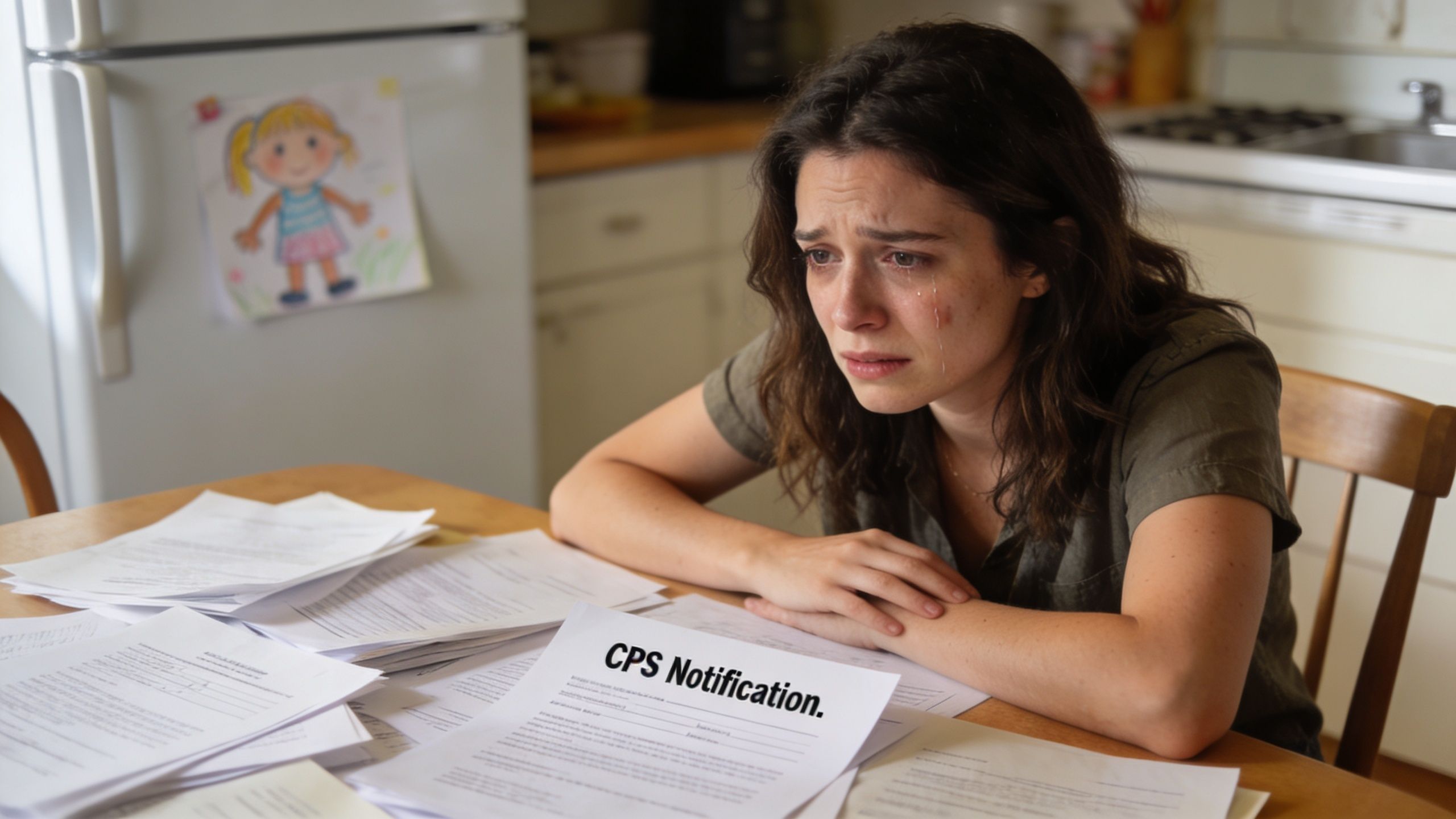
For many parents, that second crisis is the one they never saw coming. CPS does not have to wait for a conviction before acting. A charge alone can trigger an investigation, a safety plan, limits on contact with your child, or a push for temporary orders if the agency believes the child faces immediate risk.
Texas law gives CPS several tools. Under Family Code Chapter 262, the state can ask for emergency action when it believes a child is in immediate danger. Chapter 263 focuses on whether a parent is making enough progress for reunification. Chapter 161 allows termination of parental rights in serious cases tied to endangerment, abandonment, or failure to complete court-ordered services. In plain terms, the criminal case can become the lens through which CPS examines your parenting.
That is why the charge matters even before guilt is decided.
CPS usually looks past the label of the offense and asks practical questions about daily safety. Was the child present during the arrest? Did the allegation involve drugs, theft, violence, or unsafe people in the home? If you are in custody, who is caring for the child today? If you are out on bond, can you still keep a stable home, show up for visits, and follow court instructions?
Those questions may sound unfair if your child was never harmed. But from CPS's point of view, a felony arrest can signal instability the way smoke signals a possible fire. The agency may not know yet how serious the danger is. It will still start looking for the source.
If there is already a custody case, the pressure rises fast. The other parent may ask the court to restrict visitation, require supervision, or argue that your judgment places the child at risk. In many cases, the fight shifts from "What happened in the criminal case?" to "Can this parent provide a safe and predictable routine right now?"
A useful starting point is understanding how criminal background checks are used in Texas CPS cases. That helps explain why old arrests, pending charges, and case records often surface quickly once CPS becomes involved.
Here is the part many parents miss. CPS and the criminal court are different systems, but they interact like two gears in the same machine. If one gear turns, the other often moves with it. A statement meant to help in the CPS case can hurt the criminal defense. Missing a criminal court setting because of detention or confusion can then be used to paint you as unreliable in the CPS case.
Consider a mother arrested after police find controlled substances in an apartment she shares with relatives. She may believe her best defense is simple: the drugs were not hers, and the child was asleep in another room. CPS may focus on a different set of questions. Who had access to the home? How long had the drugs been there? Did the child live around unsafe adults? Is the mother able to separate herself from the people and conditions that led to the arrest? Even if the criminal case is still unproven, CPS may ask for drug testing, supervised contact, or temporary placement with family.
That is why early strategy matters. Parents often try to explain everything at once, hoping honesty alone will calm the situation. A better approach is more careful. Speak with your lawyer before giving detailed statements. Keep records of housing, treatment, school involvement, and safe caregivers. Show stability through documents and conduct, not panic-driven explanations.
In a CPS case tied to a felony charge, every word can affect two courts at once.
The Full Price of a Conviction Beyond Jail Time
A parent can finish the criminal case and still feel like the hardest part has just begun.
In a CPS case, a conviction often works like a weight tied to every part of daily life. Finding work gets harder. Keeping housing gets harder. Showing the court a stable routine for your child takes more effort at the exact moment the system expects more from you, not less.
The sentence is only the starting point
A state jail felony can bring confinement and a fine. For a parent, though, the lasting cost usually shows up outside the jail walls. CPS often measures progress by ordinary signs of stability: safe housing, steady income, reliable transportation, completed services, and regular contact with the child. A conviction can interfere with each one.
That practical disruption matters. If a parent loses a job after a background check, rent may fall behind. If an apartment application is denied, reunification can stall because there is no approved place for the child to return. If work hours change or supervision rules limit travel, classes, counseling, testing, and visits can start to look inconsistent even when the parent is trying.
Consequences that can reshape a parent’s future
Some penalties are obvious. Others appear months later, when a parent applies for a license, a lease, or a new job and learns the record follows them.
A conviction may affect:
- Professional licenses in fields such as healthcare, education, childcare, and trades
- Employment opportunities when employers screen for felony history
- Housing options if landlords reject applicants with criminal records
- Community participation at schools, volunteer programs, or activities involving children
- Firearm rights and other civil rights, depending on the case and what happens after sentencing
For a parent in family court or CPS court, these are not side issues. They can become evidence. The other side may point to a lost job or unstable housing and argue that the child would face too much uncertainty in your care.
How this affects a CPS service plan
A service plan often asks a parent to do many things at once. Attend classes. test clean. go to counseling. keep a safe home. visit consistently. stay in contact with the caseworker. The plan can feel like carrying groceries up a staircase while someone keeps adding bags.
A felony conviction does not make reunification impossible. It does mean the parent needs a more careful plan and better documentation. If criminal court supervision is part of the outcome, the rules can affect curfews, travel, reporting, treatment, and fees. That overlap is easier to understand if you review how felony probation rules in Texas can affect daily life and compliance.
Here is the practical effect:
| Problem after conviction | Why CPS may care |
|---|---|
| Job loss or reduced hours | Income problems can affect housing, childcare, and support |
| License restrictions | Career setbacks may slow progress on the service plan |
| Housing denials | The court wants a safe, stable home for the child |
| Missed appointments or visits | CPS may read inconsistency as lack of follow-through |
| Community stigma | Teachers, co-parents, and investigators may watch more closely |
Courts often treat stability as proof of safety. A conviction can make stability harder to show, even for a loving parent who wants to do everything right.
Finding Hope Pathways to a Better Outcome
A charge is serious. It is not the same as a final outcome.

Parents need to hear that early, because fear often leads to bad decisions. People plead too fast. They agree to terms they don’t understand. They say things to CPS hoping to sound cooperative, without realizing those statements may hurt them later.
Reduction, deferral, and record protection
One important tool is Texas Penal Code §12.44(a). Under that statute, a judge has discretion to reduce a state jail felony punishment to Class A misdemeanor punishment, which can help prevent a permanent felony record and reduce many of the long-term consequences, as explained in this discussion of state jail felony punishment reductions under Texas law.
That matters significantly in a CPS case. The difference between “felony parent” and “misdemeanor disposition” can affect how employers, landlords, and even the other parent view your future.
Other possible avenues may include:
- Deferred adjudication, which can sometimes help a parent avoid a final conviction if they successfully complete the court’s requirements
- Motions focused on mitigation, especially when treatment, family support, or a lack of prior history helps explain the situation
- Record-clearing options, where available, after the criminal case ends
Why timing matters
These options work best when someone starts building the case early. Judges and prosecutors don’t see your love for your child automatically. They see paperwork, criminal allegations, treatment records, drug test results, school attendance issues, housing records, and witness credibility.
A parent who enters counseling, starts substance abuse treatment when appropriate, keeps proof of employment efforts, and follows every court order puts real evidence in front of the court. That’s different from promising to do better later.
A better outcome is more than avoiding jail
For a worried parent, success isn’t only about minimizing punishment. It’s about preserving the ability to parent. It’s about staying present in hearings, complying with service plans, and showing the family court that your child still has a safe future with you.
Some cases allow for rehabilitation to become the center of the legal story instead of the arrest itself. When that happens, the court may see a parent taking responsibility, building structure, and protecting the child’s stability.
The strongest legal strategy often does two jobs at once. It protects your criminal defense and your position as a parent.
Your First Steps After a State Jail Felony Arrest
At 2 a.m., a parent is booked into jail, a child is asleep at home, and by breakfast the family is dealing with two threats at once. One comes from the criminal court. The other can come from CPS if anyone raises concerns about supervision, safety, drug use, or violence in the home.

Those first hours matter because early choices can either protect your position or create problems that follow you into both cases. A state jail felony is a criminal charge, but for a parent it also acts like a signal flare. It can draw police, prosecutors, CPS, the other parent, and sometimes the family court into the same crisis.
Start by slowing the situation down.
What to do in the first day
- Stay quiet about the facts of the case. Use your right to remain silent until you have legal advice. A rushed explanation can hurt your criminal defense and later appear in a CPS report.
- Make a safe plan for your child right away. If your child is with a reliable relative or other trusted adult, document that. CPS often looks first at whether the child is safe today, not whether you mean well.
- Create a written timeline. Write down the arrest time, who was present, where your child was, medications, school needs, and any contact from law enforcement or CPS. Memory fades fast under stress.
- Save every paper and message. Keep bond paperwork, charging documents, court dates, CPS notices, drug test results, treatment records, and texts about child care in one folder.
- Follow every hearing date, bond condition, and CPS request carefully. In these cases, missing one requirement can be treated like a warning light on the dashboard. It tells the court you may not be reliable, even if the missed step was accidental.
If you need a plain-language overview of the early criminal process, review what happens when you get arrested in Texas.
What parents often get wrong
Fear makes people talk too much and organize too little.
- Do not explain the case on social media, by text, or in recorded jail calls. Those statements can be pulled into court later.
- Do not treat CPS like an informal conversation. What you say may be summarized in an affidavit, and small details can look very different on paper.
- Do not violate bond conditions. A bond problem can affect release, visitation, and how seriously the court takes your promises.
- Do not rely on memory. Keep proof of classes, counseling, clean tests, employment, and child care arrangements.
Bail also affects how quickly a parent can get home, meet with counsel, and stabilize the household. Families trying to sort that out often read about US Immigration Bonds' services for Texas bail to understand the bond process.
A practical checklist for the first week
| Immediate task | Why it matters in a CPS and custody context |
|---|---|
| Arrange safe child care | Shows your child has supervision and reduces the risk of emergency action |
| Keep a contact log | Helps you track calls, visits, deadlines, and what each person actually said |
| Save proof of compliance | Gives your lawyer and the court something concrete to work with |
| Identify supportive adults | Relatives, teachers, counselors, or sponsors may help confirm stability |
| Get legal advice early | Helps protect your defense while avoiding mistakes that can affect parental rights |
In the first days after an arrest, the goal is not to explain everything. The goal is to protect your child, protect your rights, and create a clear record of responsible choices.
Protect Your Freedom and Your Family's Future
A state jail felony can sound like a narrow criminal label. For a parent, it rarely stays narrow. It can affect where your case is heard, how long you’re away from home, whether CPS views the household as stable, and whether the other parent gains an advantage in a custody fight.
Still, this isn’t the end of your story. Parents do rebuild. Charges can be challenged. Outcomes can improve. Courts can be shown a fuller picture than the arrest report alone. What matters most is acting early, staying organized, and treating the criminal case and the CPS case as connected.
If bail is part of the immediate crisis, practical information matters too. Families often benefit from reading a plain-language guide to US Immigration Bonds' services for Texas bail so they understand the bond process while trying to stabilize the home.
If you’re reading this in the middle of fear, remember one thing. You’re not just facing a charge. You’re protecting your relationship with your child, your home, and your future. That calls for clear advice and a careful plan, not panic.
If you’re dealing with a state jail felony and CPS pressure at the same time, talk with Law Office of Bryan Fagan PLLC for a free consultation. The firm helps Texas parents facing criminal charges, custody threats, and child protection cases understand their options and take the next step with confidence.